Key takeaways
- Storm pipes corrode, crack and lose joints like sewers do
- Soil washout through gaps can cause sinkholes
- Lining works from the pipe ends and inlets
- Public culverts belong to the responsible agency
Why storm pipe fails
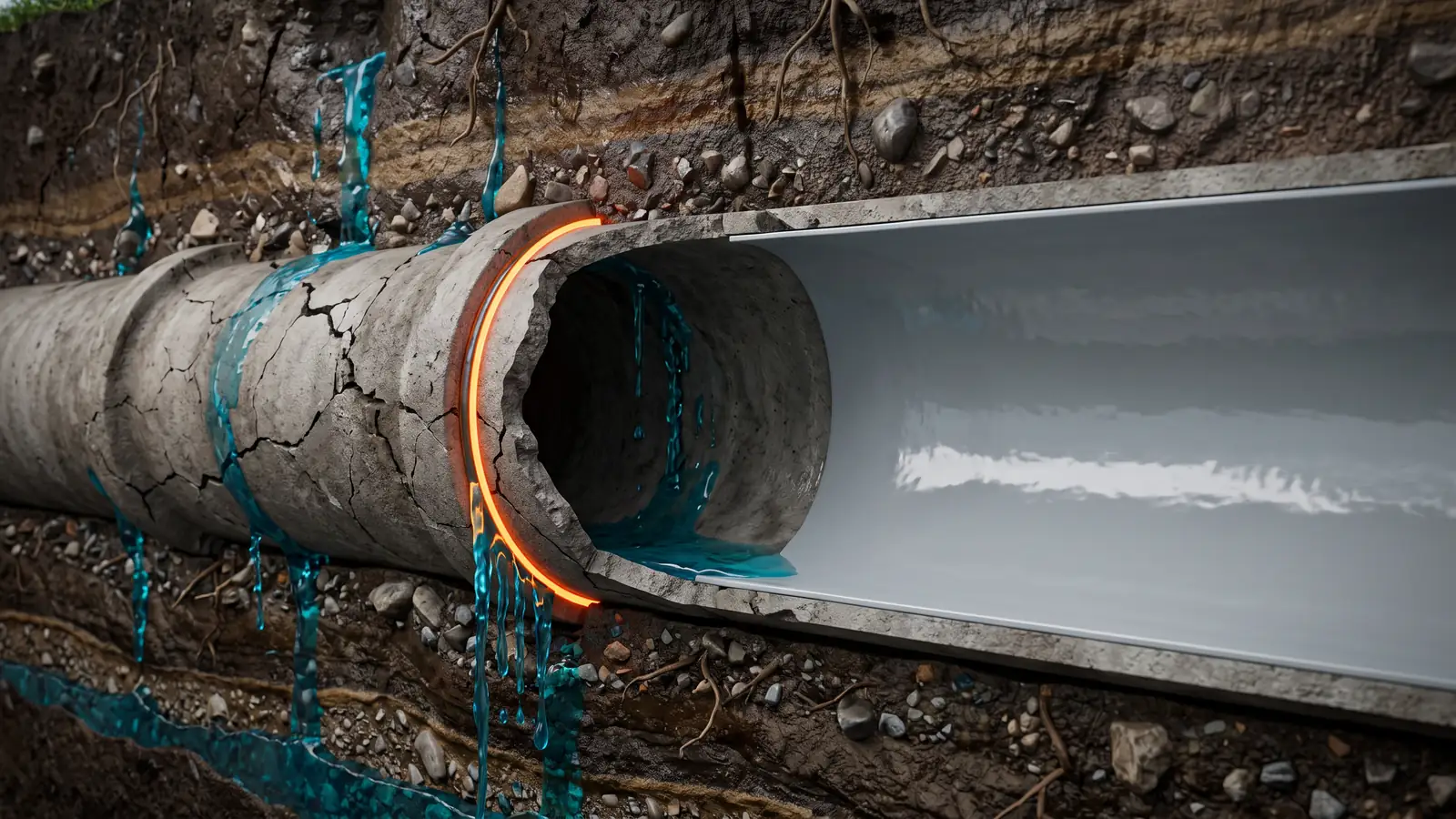
Storm drains and culverts carry heavy flow in bursts, and they are often made of corrugated metal or concrete. Metal rusts through at the invert. Concrete cracks and loses joints. Soil enters the gaps and washes away, leaving voids and sinking ground.
Because the pipe sits under roads and parking lots, failure shows up as a dip or hole in the surface.
How lining helps
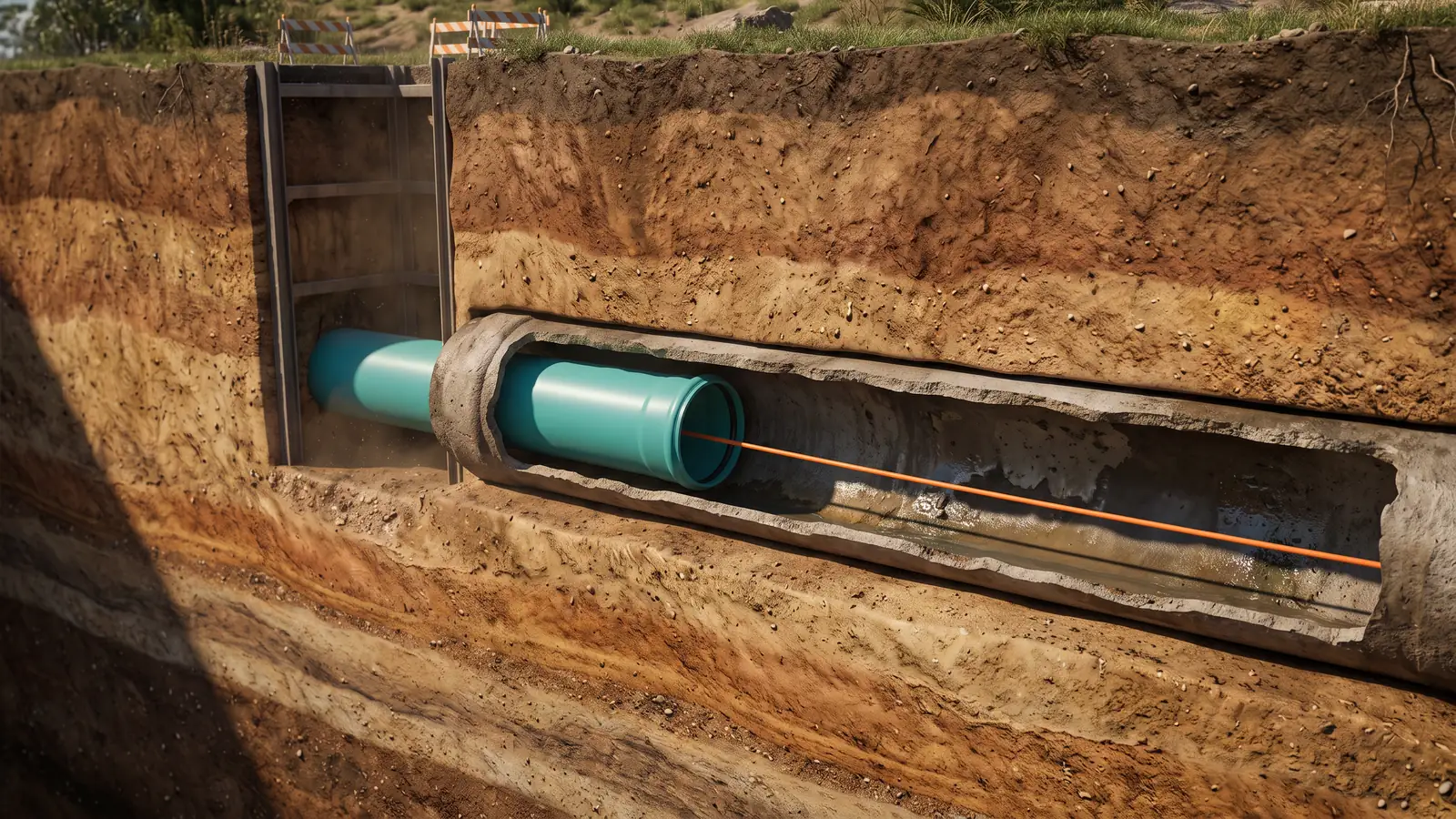
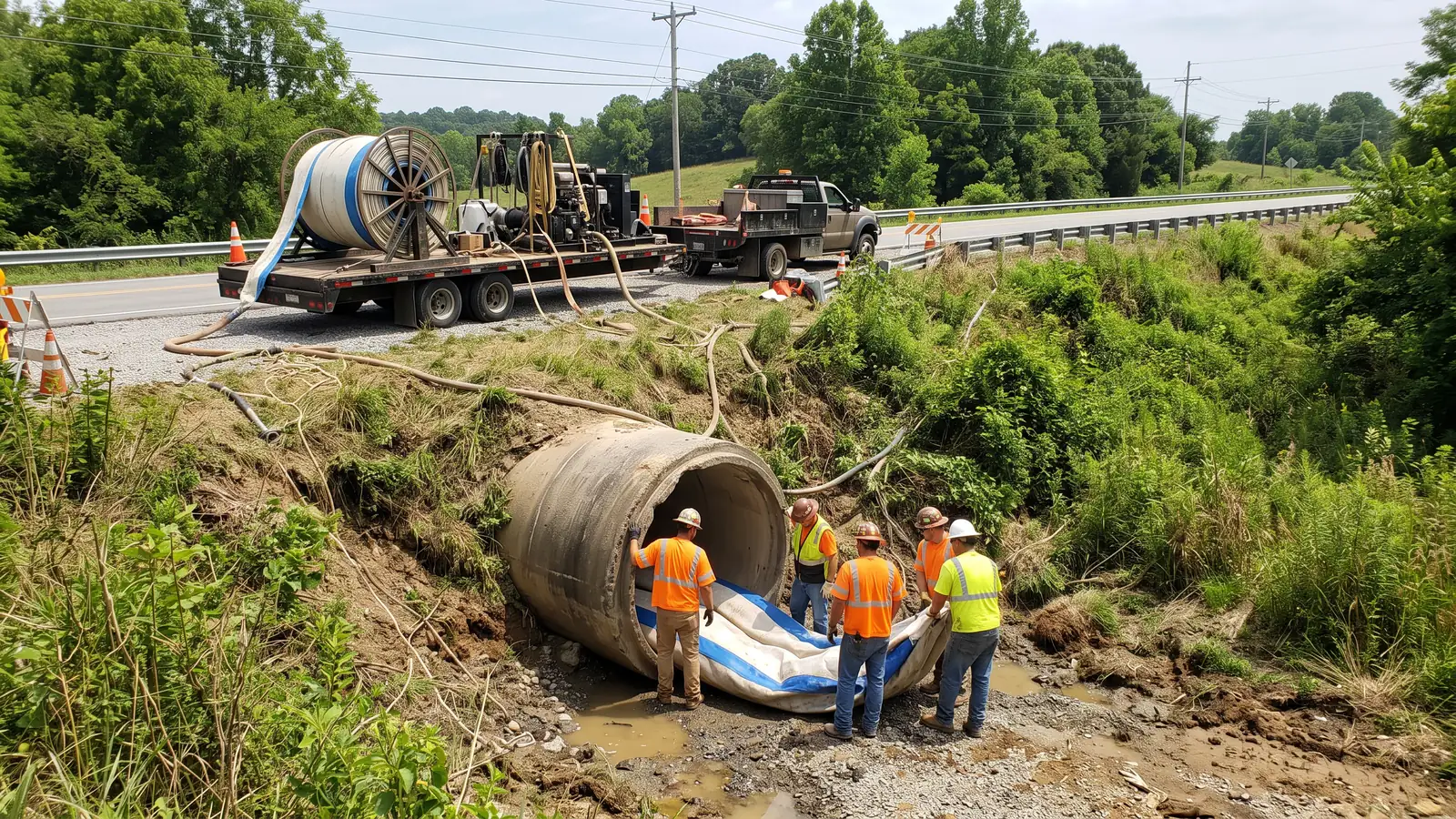
A liner installed from the ends restores structure and seals the gaps. The surface above stays in place. Large-diameter lining uses liner types that suit the size, such as thick felt, fiberglass or other systems.
The liner improves smoothness, which can offset the small loss of diameter.
When something else is better
Sliplining suits large straight pipes with spare capacity. Pipes that have collapsed may need replacement. Where the pipe has deep voids around it, grouting may be needed as well as lining.
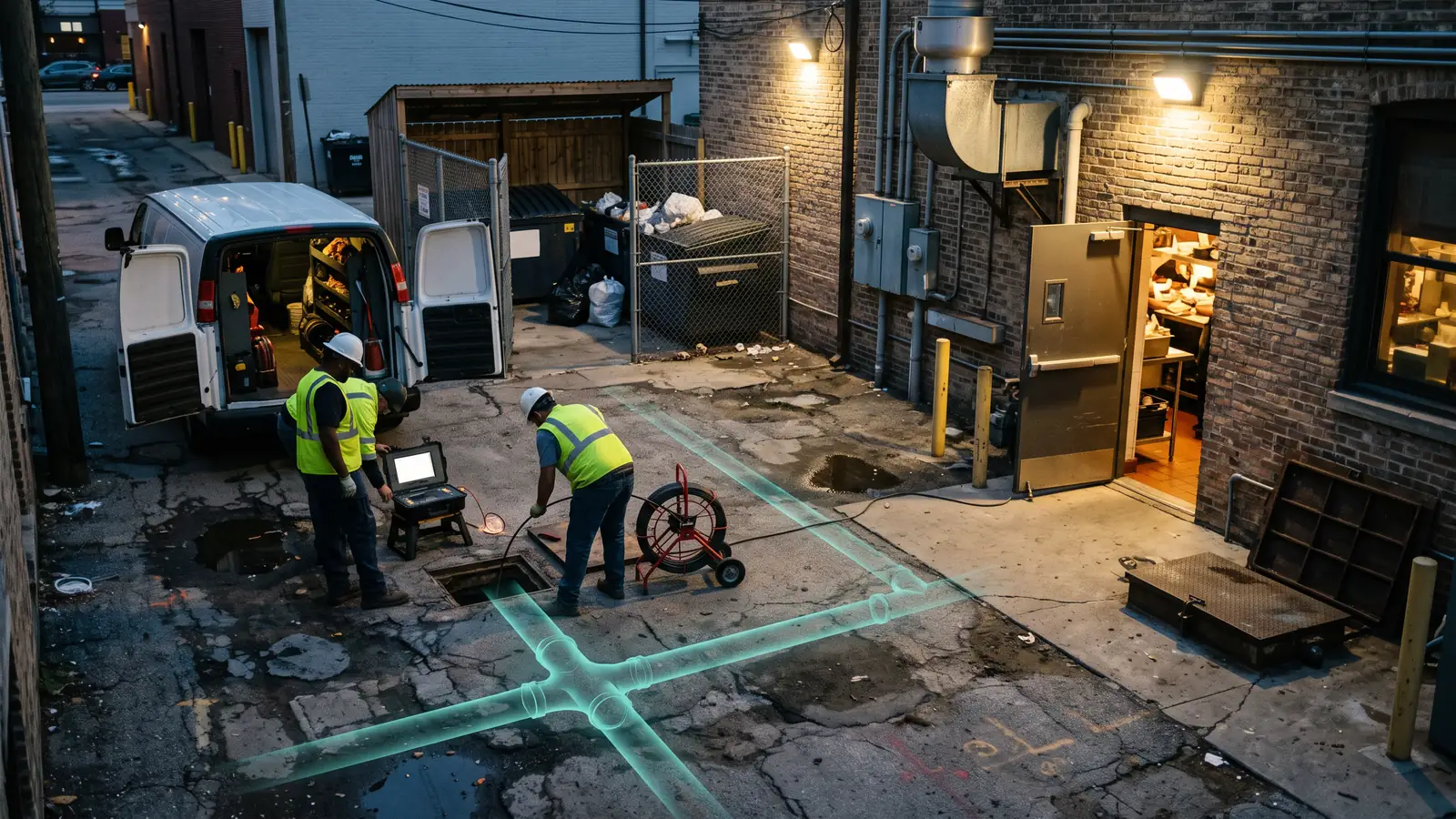
We inspect first and recommend accordingly.
Who is responsible
Private storm drains on commercial and residential properties are the owner’s responsibility, and we can work on them. Roadway culverts and public systems belong to the responsible agency. If your drive crosses a ditch with a culvert, check who owns it.
We do not work on public infrastructure.
Quick answers
Can lining stop a sinkhole above a pipe?
It can stop soil from entering the pipe, but voids that have already formed may need grouting or filling.
How often should storm pipe be inspected?
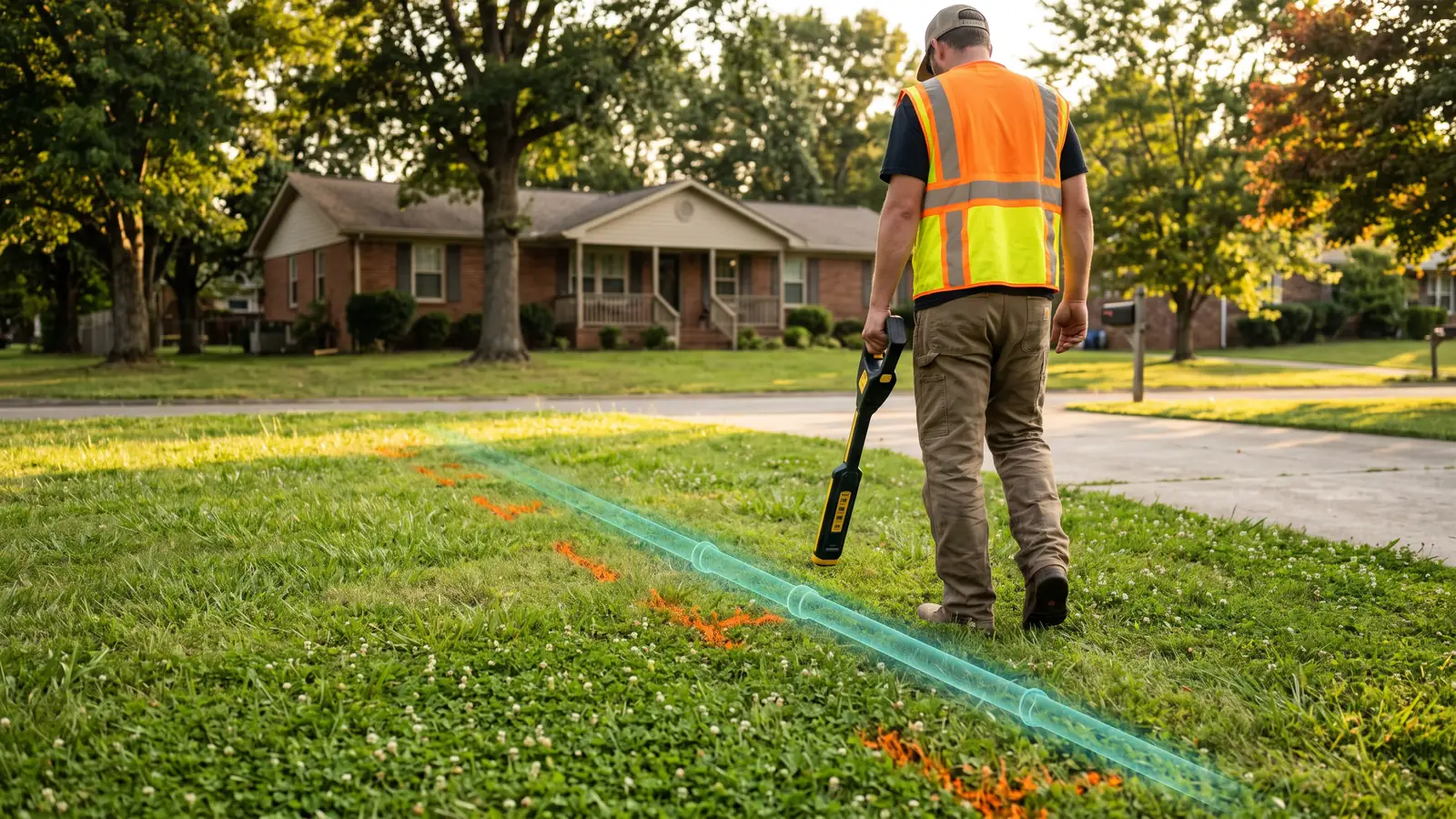
A camera or visual check every few years and after large storms is sensible.
Have a pipe question?
Call (615) 952-0844 or send the form below, and we will suggest a recorded camera inspection and the options that fit.