
UV-Cured CIPP Lining in Nashville and Middle Tennessee
A glass-fiber liner is cured with a train of ultraviolet lights pulled through the pipe, giving a controlled, fast cure with a consistent result.
- CIPP Pipe Lining
- Works from existing access
- Middle Tennessee
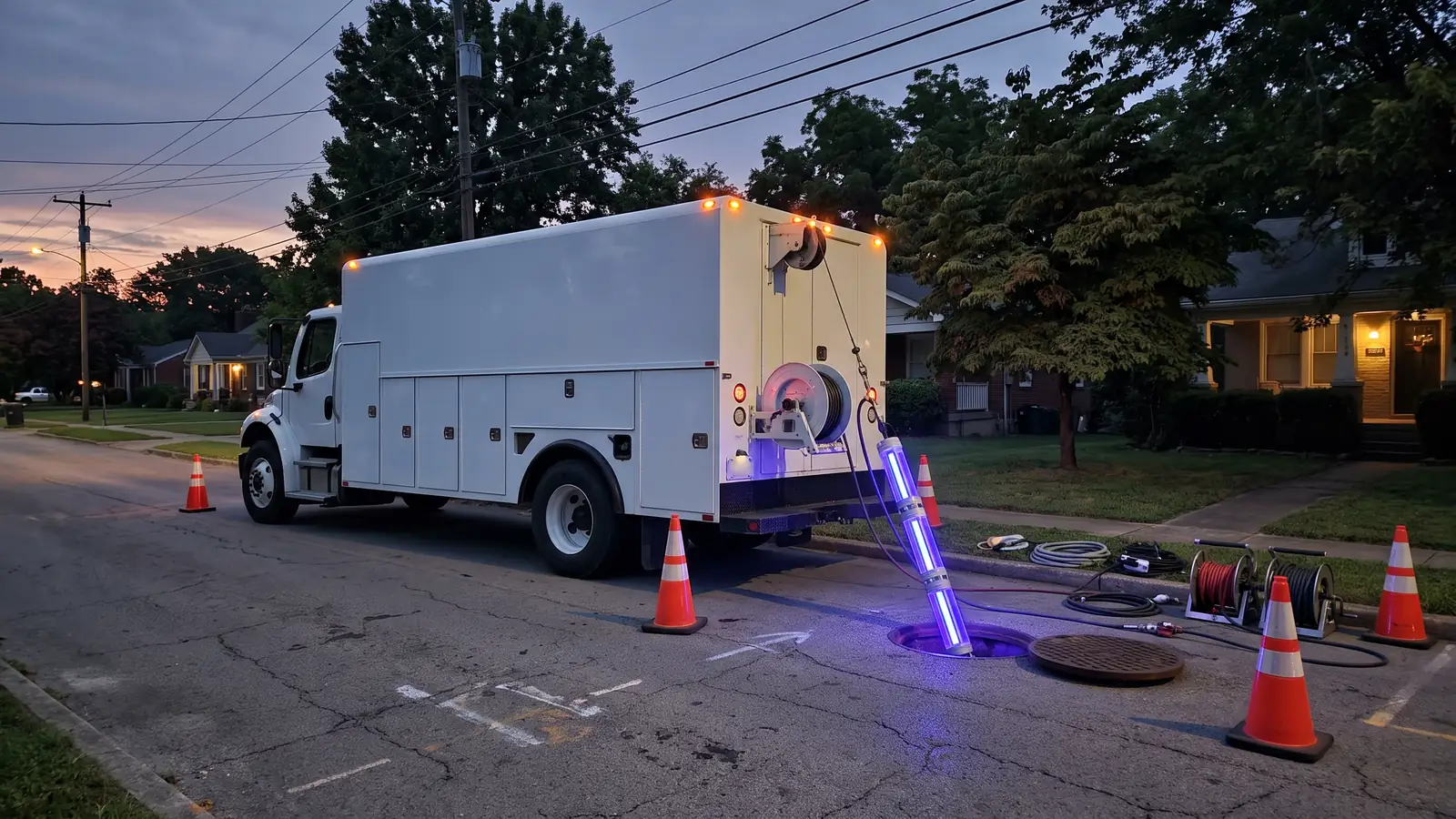
UV-Cured CIPP Lining, explained.
UV-cured CIPP uses a liner made of glass fiber saturated with a light-sensitive resin. After the liner is installed and inflated, a train of ultraviolet lights is drawn slowly through the pipe. The light hardens the resin as it passes, and the speed and temperature are monitored during the cure.
Because the cure is driven by light instead of heated water or steam, there is no large boiler on the street and the process can be carefully controlled. It is a strong choice for many small and mid-size pipes and for jobs where a quick, clean setup matters. Not every pipe is a candidate, so we match the method to the diameter, length and condition.
Signs this service fits
- A pipe suited to glass-fiber lining by diameter and condition
- A job where a tidy, quick setup is important
- Storm or sewer pipes with joint and crack damage
- A limited space where a boiler truck would be awkward
A good fit, and what to know.
We would rather you hear the limits from us than discover them later.
A good fit when
- Pipes where a glass-fiber liner is a good match
- Tight work areas
- Jobs that benefit from a monitored cure
Worth knowing
- Some pipes, bends and diameter changes suit felt liners better than glass fiber
- The camera inspection decides, not the preference for a method
Why choose this one.
Controlled cure
Light speed and temperature are monitored through the cure.
Smaller setup
No large boiler on the street for the cure itself.
Strong, smooth liner
Glass fiber creates a rigid, smooth interior.
No digging
Installation happens from existing access points.
From first look to finished pipe.
A clear sequence for every job.
- 01
Inspect and clean
The pipe is camera inspected and cleaned so the liner can seat tightly.
- 02
Install the liner
The glass-fiber liner is pulled in and inflated against the old pipe wall.
- 03
Cure with light
A UV light train is drawn through the pipe, curing the resin as it moves.
- 04
Finish
The ends are trimmed, connections reopened and a final camera pass records the result.
Services that go together.
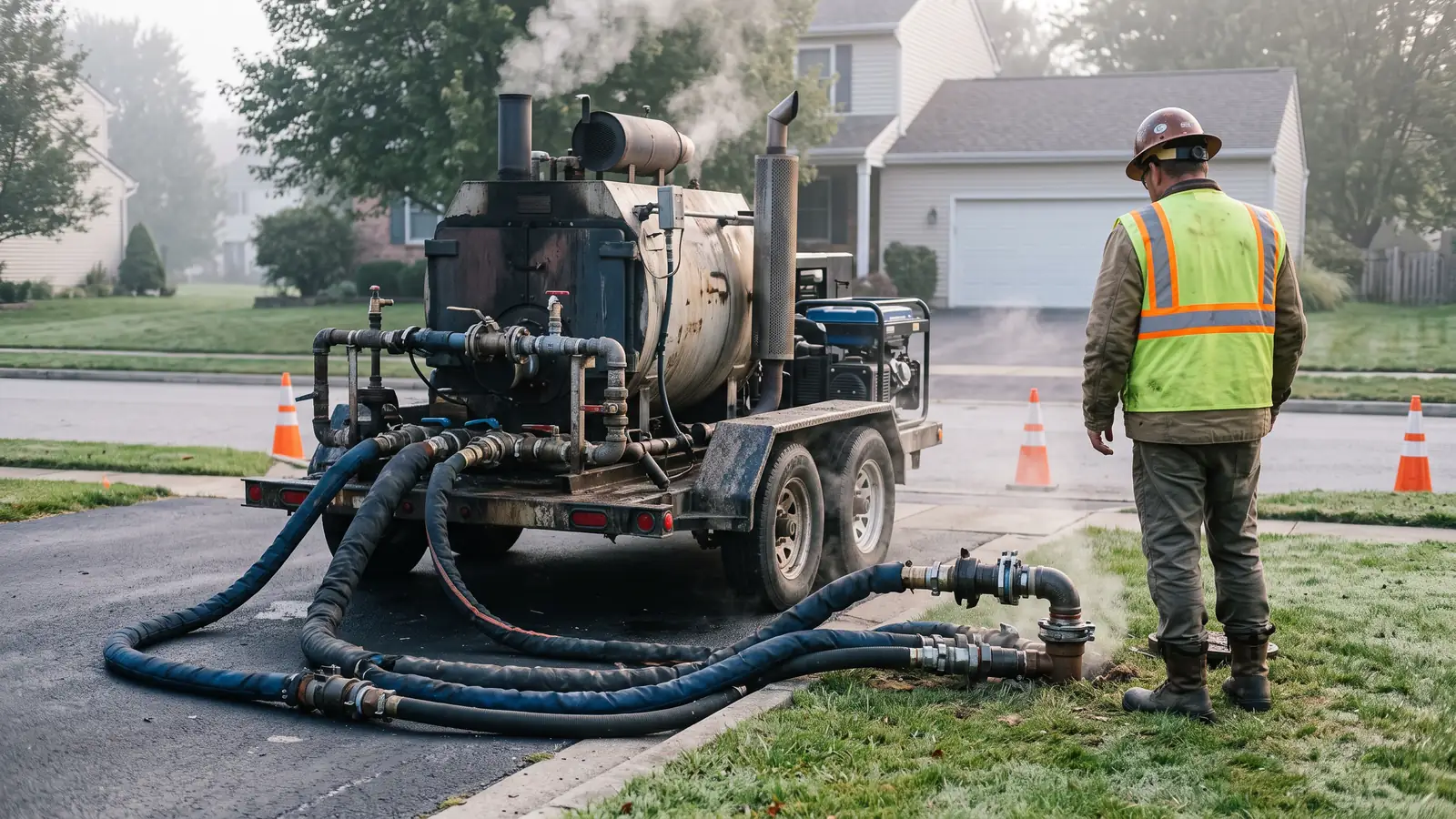 A-06CIPP LiningHot-Water and Steam CIPPA felt liner is cured by circulating hot water or steam through it, the long-proven method for residential…Small access pitSee the service
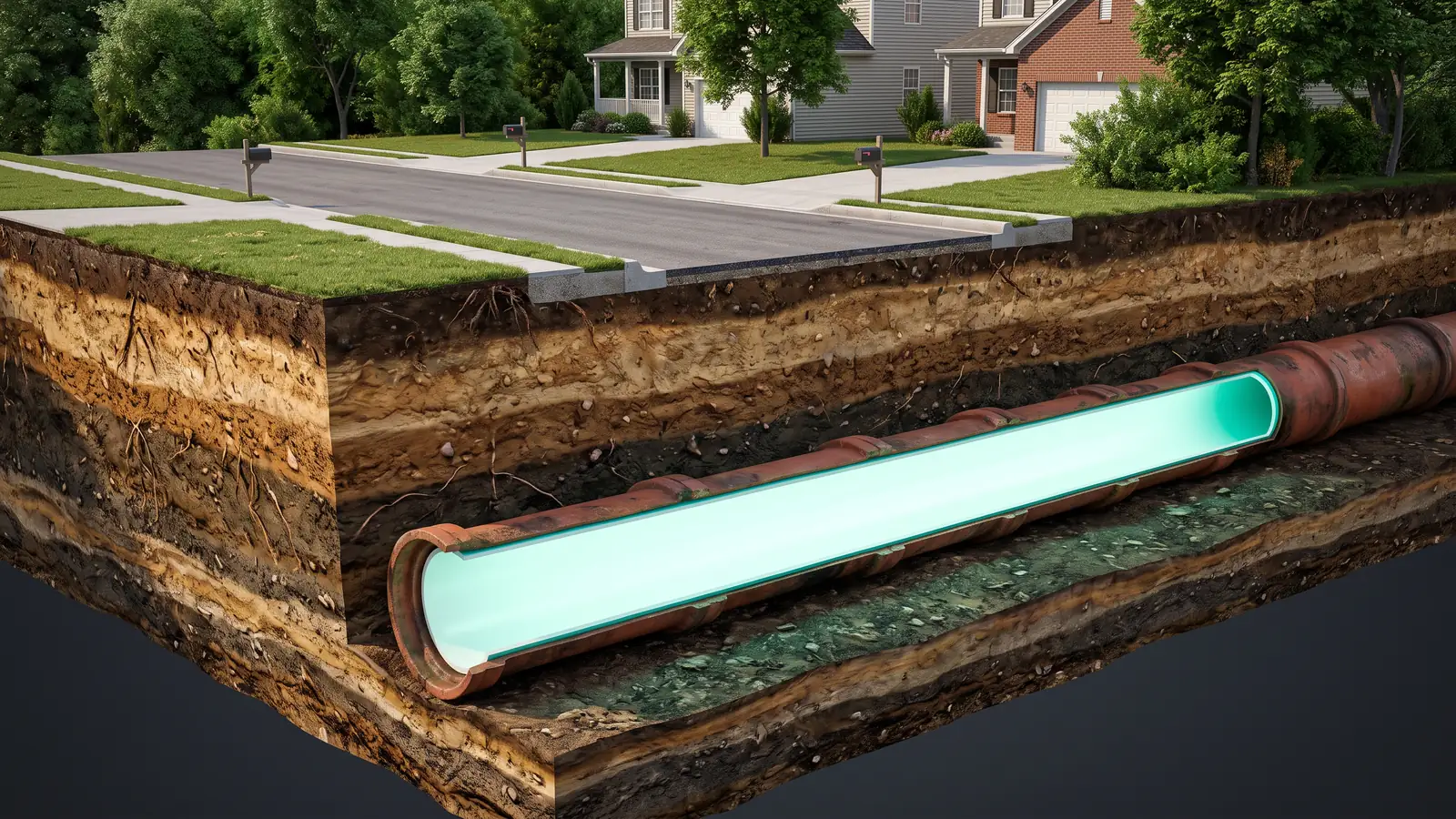 A-01CIPP LiningFull-Length CIPP LiningA resin-soaked liner is cured inside your old sewer pipe from end to end, leaving a smooth new…Small access pitSee the service
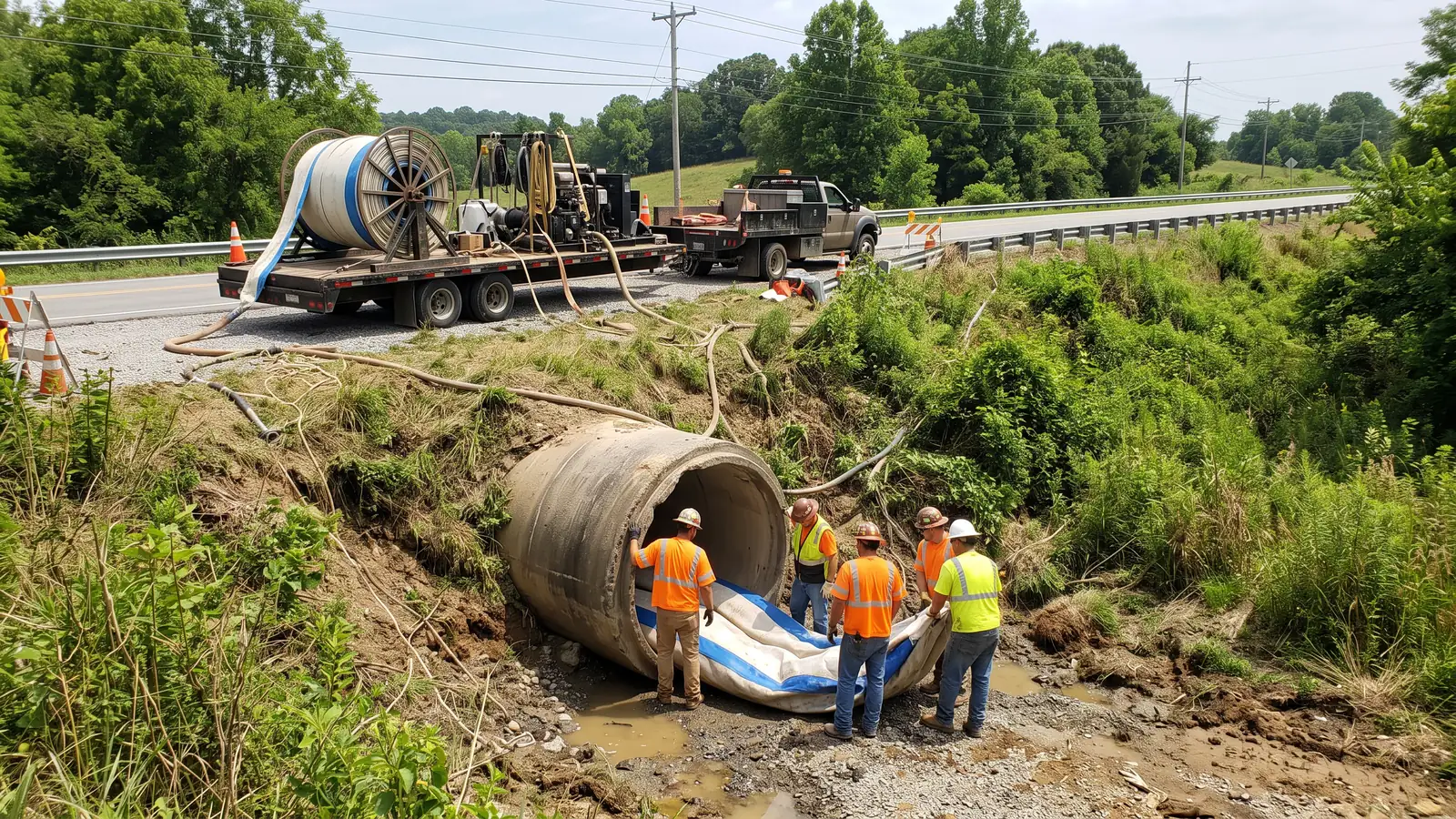 A-10CIPP LiningStorm Drain and Culvert LiningCorroded or cracked storm pipes and culverts can be lined in place, keeping roads, drives and landscaping open.Small access pitSee the service
 C-01InspectionPre-Lining Camera InspectionEvery trenchless repair starts with a recorded camera run through the pipe, so the repair method fits what…No digSee the service
Read more on this topic.
GUIDE 07 · CIPP LiningUV-Cured vs Hot-Water-Cured CIPPBoth turn liquid resin into a hard pipe. Here is how they differ and how we choose.2 min read GUIDE 06 · CIPP LiningCIPP Liner Materials Explained: Felt, Fiberglass and ResinsWhat the liner is made of and why the combination matters for your pipe.2 min read GUIDE 02 · CIPP LiningHow CIPP Lining Works, Step by StepFrom the first camera run to the final video, here is exactly what happens on a lining day.2 min read UV-Cured CIPP FAQ.
Is UV curing better than hot-water curing?
Neither wins every time. UV offers tight control and a compact setup. Hot water or steam works well for many felt liners. We pick by pipe size, length, bends and access.
Does the light harm anything?
The UV light stays inside the sealed liner and does not reach outside the pipe.
Can UV liners go around bends?
Gentle bends are normal. Tight bends and sudden diameter changes limit what any liner can do, which is why we camera first.
UV-Cured CIPP across Middle Tennessee.
Pick your city for its page.
Fix the pipe. Keep the yard.
Tell us about your pipe and we will suggest a camera inspection and the least disruptive repair that fits.