
Horizontal Directional Drilling in Nashville and Middle Tennessee
A guided drill creates a new underground path beneath lawns, drives and roads so pipe can be installed without a trench.
- Trenchless Replacement Methods
- One or two small pits
- Middle Tennessee
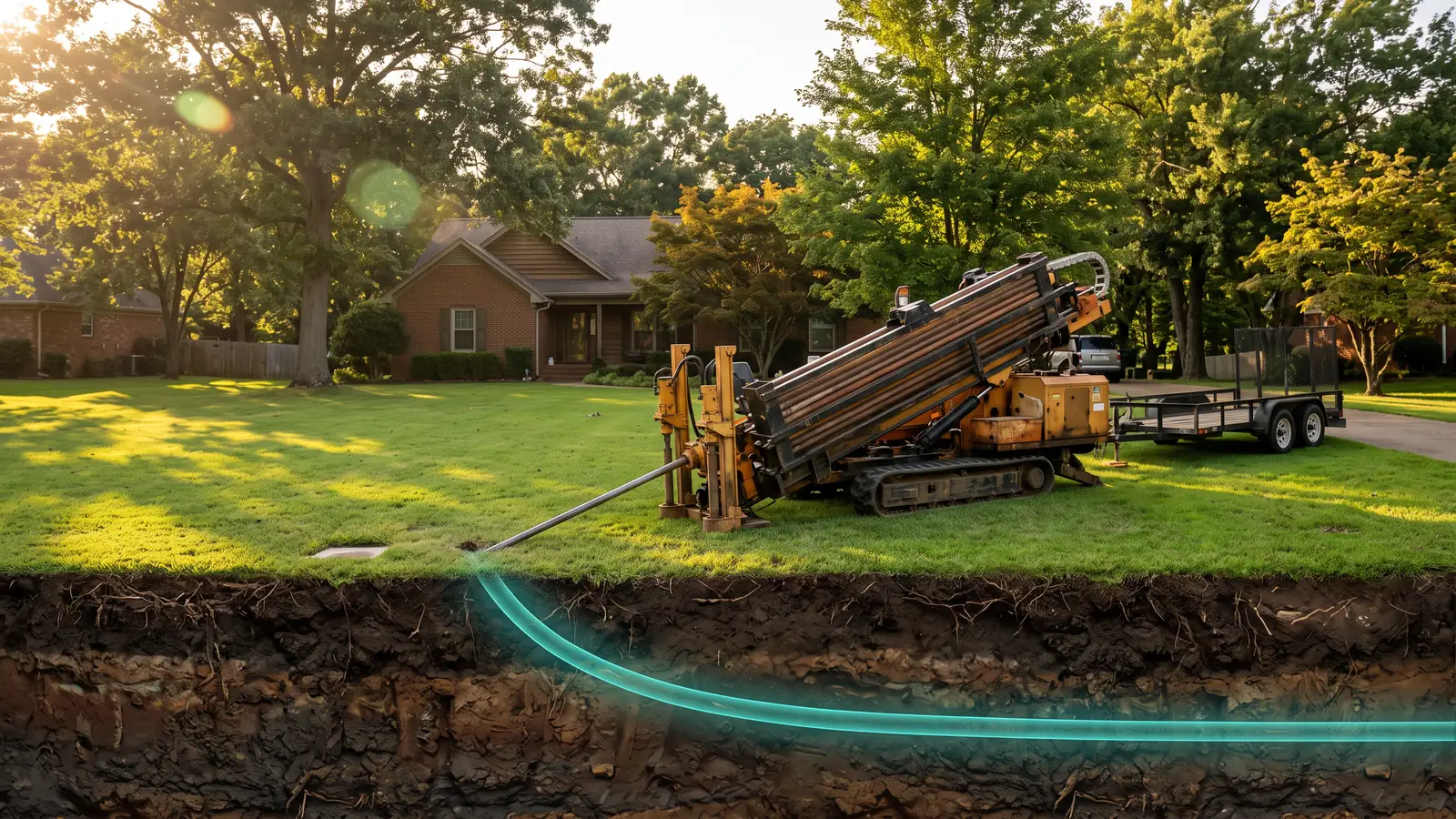
Horizontal Directional Drilling, explained.
Horizontal directional drilling, or HDD, steers a drill head along a planned underground path. A small pilot bore is drilled first, tracked from the surface, then enlarged and used to pull new pipe along the same path. Crossing a driveway, road or established landscape becomes a matter of two small pits and a bore.
HDD is used for new service lines and for installing new pipe on a fresh path, such as when an old line is abandoned and a new route works better. It suits routes where trenching would cut hard surfaces or mature roots. It needs careful utility locating before drilling, and the route has to be planned with depth and grade in mind.
Signs this service fits
- A new line must cross a driveway or road
- The old route is blocked by structures or trees
- You want to avoid trenching mature landscaping
- A new service line is needed
A good fit, and what to know.
We would rather you hear the limits from us than discover them later.
A good fit when
- New service line routes under hardscape
- Crossing roads or drives
- Sites where trenching mature trees or landscaping should be avoided
Worth knowing
- Sewer lines need steady slope, which limits how a bore can run
- Rocky ground can slow or limit drilling
Why choose this one.
Crosses obstacles
Goes under drives, roads, walks and landscaping.
Small footprint
Two small pits and a drill setup.
Guided path
The head is tracked and steered, not guessed.
New route flexibility
Allows a new path when the old one is not usable.
From first look to finished pipe.
A clear sequence for every job.
- 01
Plan and locate
We survey the route and have utilities located so the bore avoids them.
- 02
Drill the pilot bore
A guided drill head is steered along the path and tracked from the surface.
- 03
Enlarge the bore
The hole is opened to the size needed for the new pipe.
- 04
Pull and connect
The new pipe is pulled through and connected at both ends.
Services that go together.
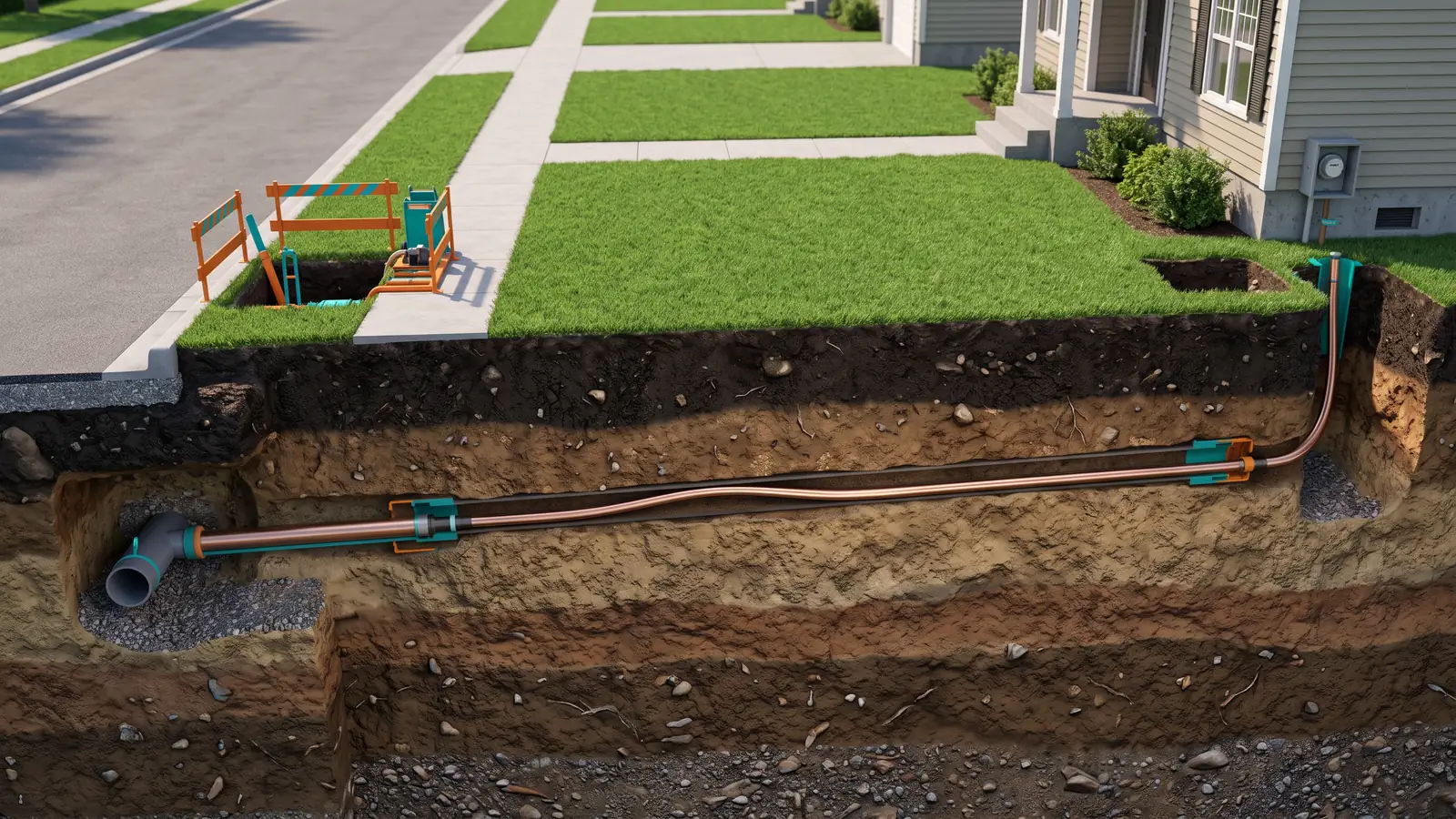 B-05MethodsWater Service Line ReplacementOld water service lines can be replaced with new pipe by pulling it through from small pits instead…Small access pitSee the service
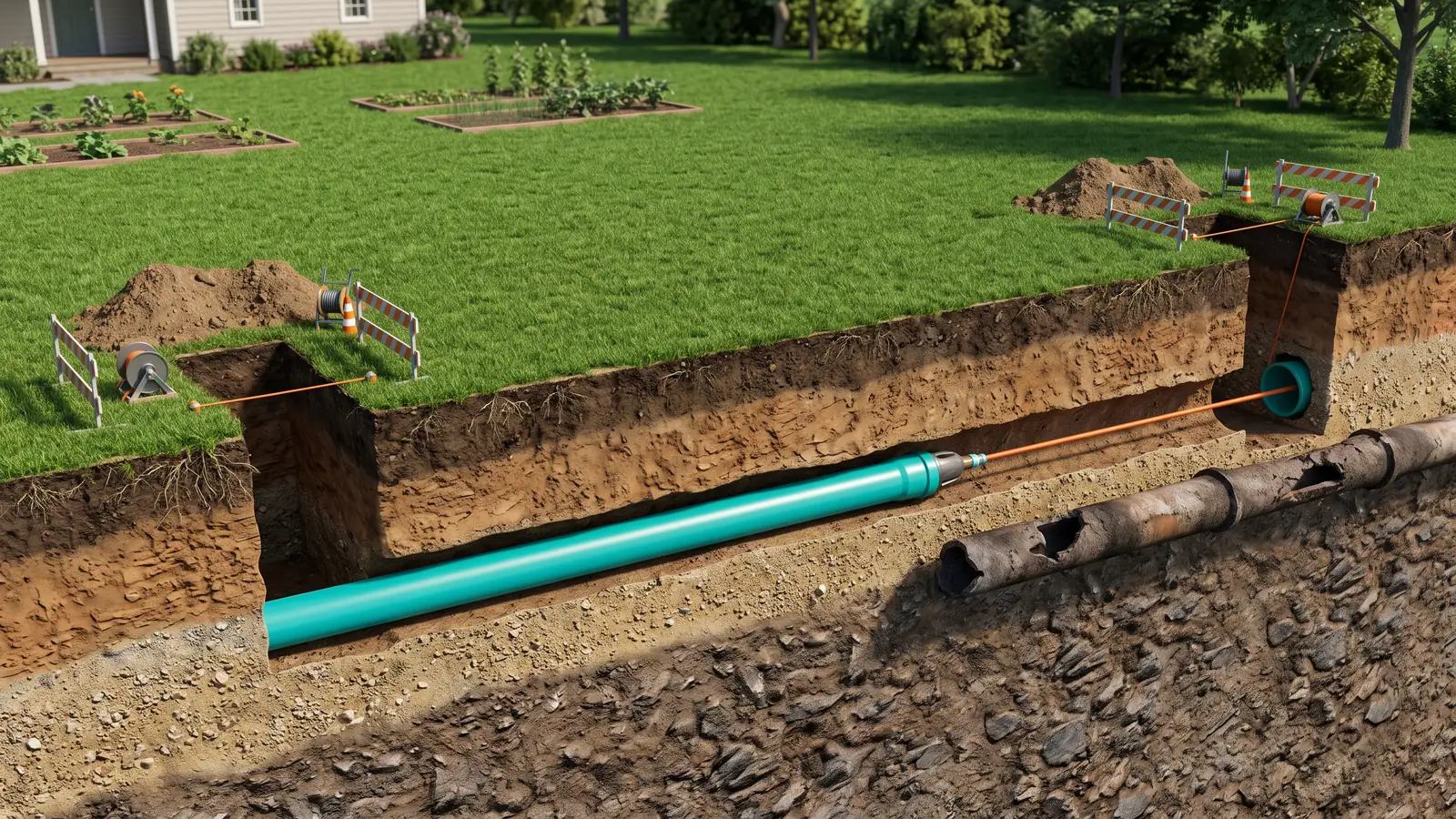 B-02MethodsTrenchless ReplacementWhen a sewer line has to be replaced, trenchless methods swap it for new pipe while leaving most…Small access pitSee the service
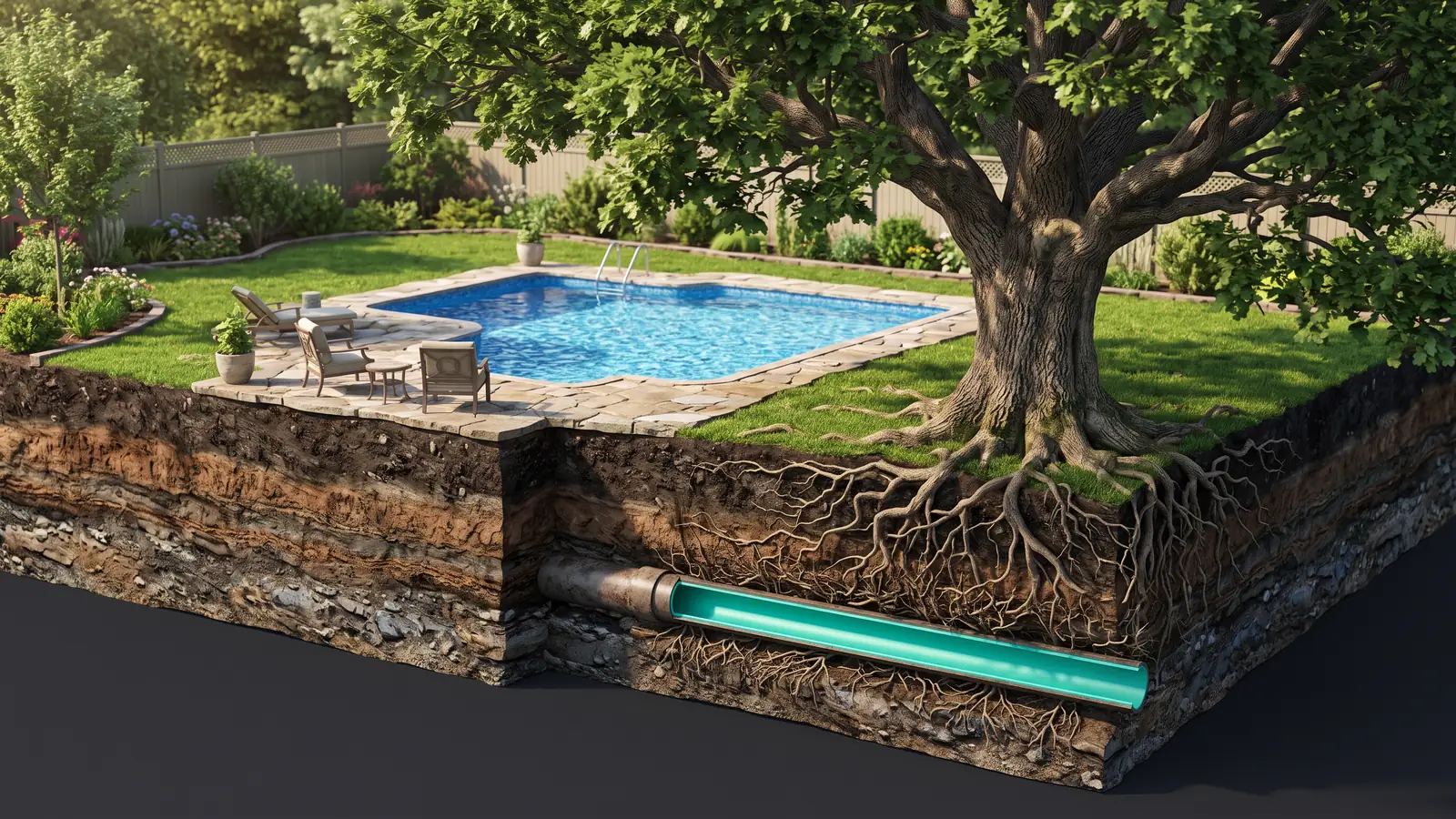 D-11ProblemsRepair Under Trees and HardscapeMature trees, pools, patios, retaining walls and decks are costly to remove. Trenchless repair works underneath them.No digSee the service
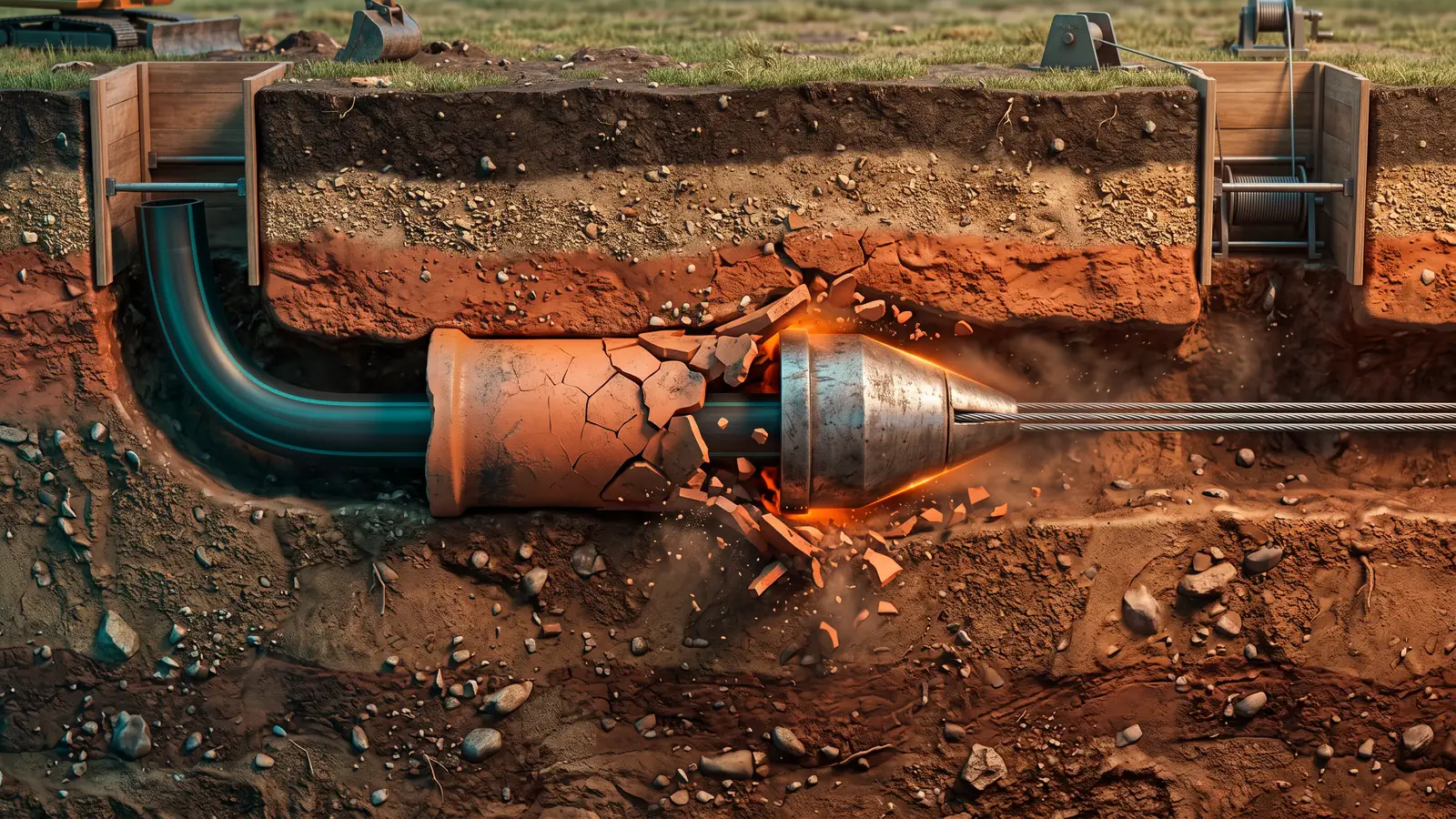 B-01MethodsPipe BurstingA bursting head breaks the old pipe outward and pulls a brand-new pipe into its place, replacing the…Small access pitSee the service
Read more on this topic.
GUIDE 28 · Trenchless MethodsHorizontal Directional Drilling ExplainedHow a steerable drill makes a new underground path, and where it fits next to sewer repair.2 min read 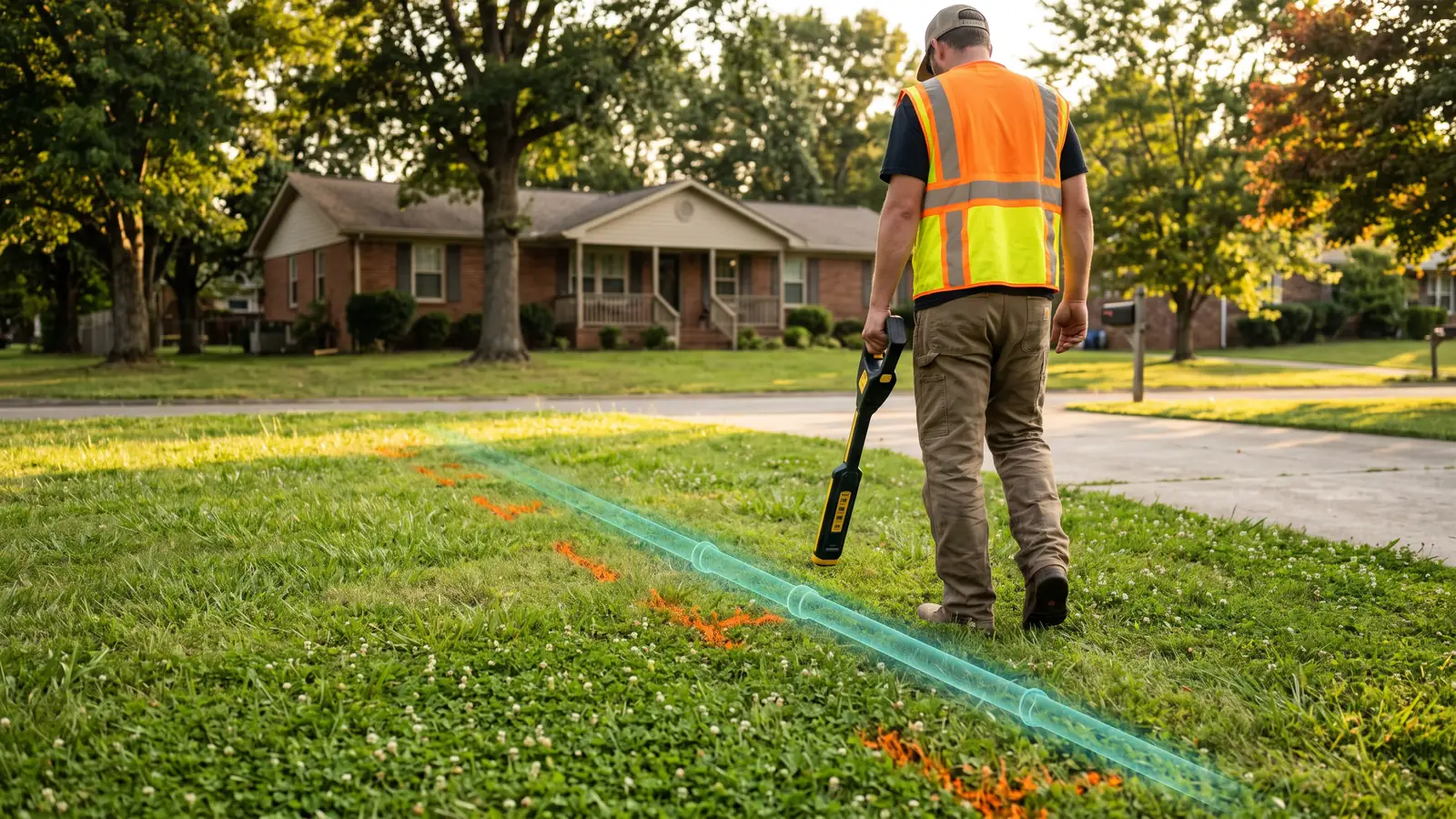 GUIDE 21 · Planning a RepairCall 811 and Utility Locates Before Pipe WorkWhy every dig, bore and pit needs a locate, what 811 does and does not cover.2 min read
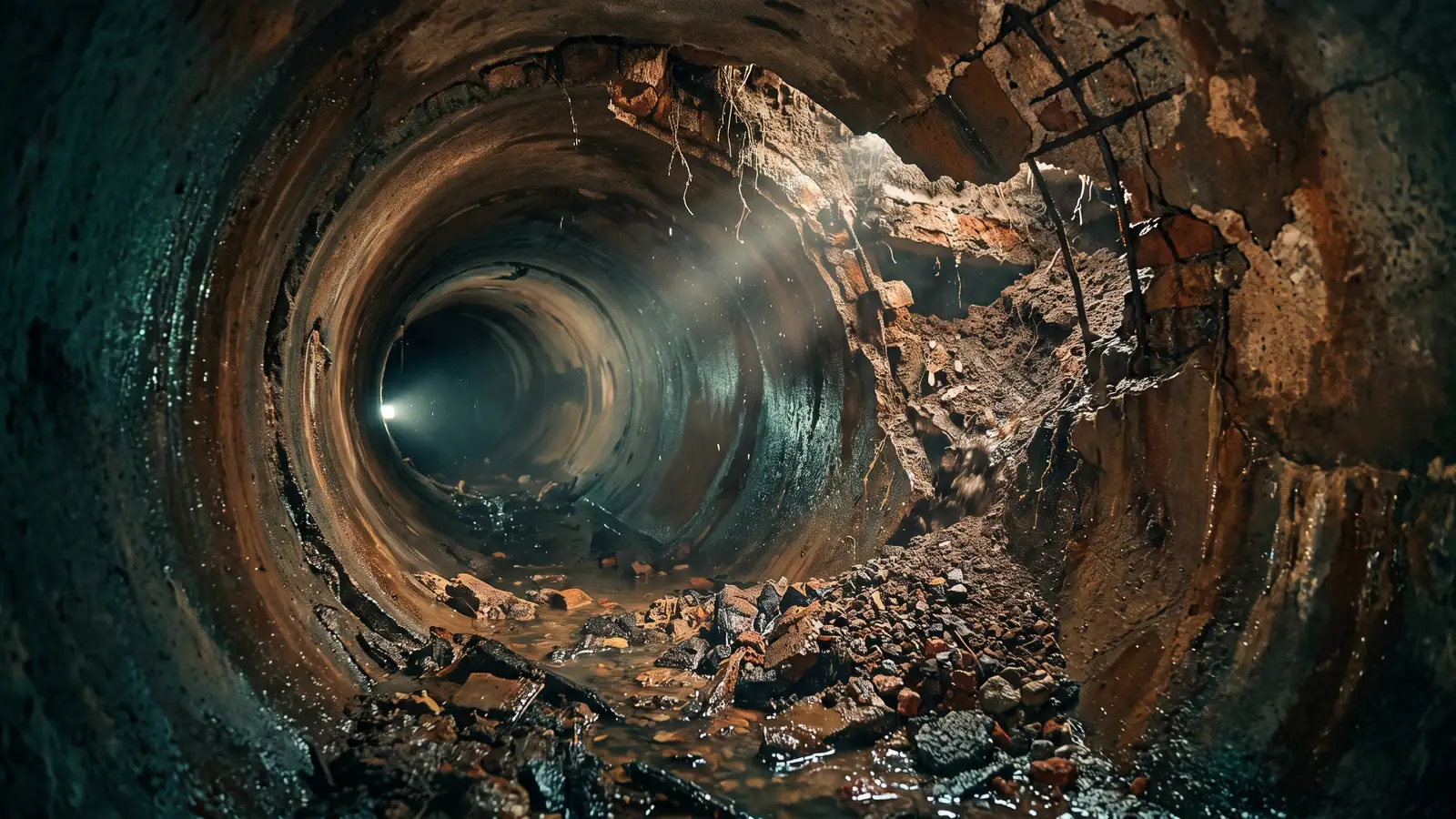 GUIDE 29 · Trenchless MethodsWhen Trenchless Is Not the AnswerTrenchless is wonderful, but it is not magic. Here are the situations where digging still makes sense.2 min read
Horizontal Drilling FAQ.
Is HDD used for repairing existing sewer lines?
It is mostly used for installing new pipe on a new path. Repairing an existing line usually means lining or bursting along the old route.
How deep does it go?
Depth is set by the route, the crossings and the grade the pipe needs. We plan it before drilling.
How do you avoid hitting other utilities?
Utilities are located first through the state one-call system and field locating, and the bore is tracked during drilling.
Horizontal Drilling across Middle Tennessee.
Pick your city for its page.
Fix the pipe. Keep the yard.
Tell us about your pipe and we will suggest a camera inspection and the least disruptive repair that fits.