Key takeaways
- A guided drill head creates a pilot bore along a planned path
- The bore is enlarged and new pipe is pulled through
- It is used mainly for new lines and crossings
- Sewers need steady slope, which limits bore routes
How it works
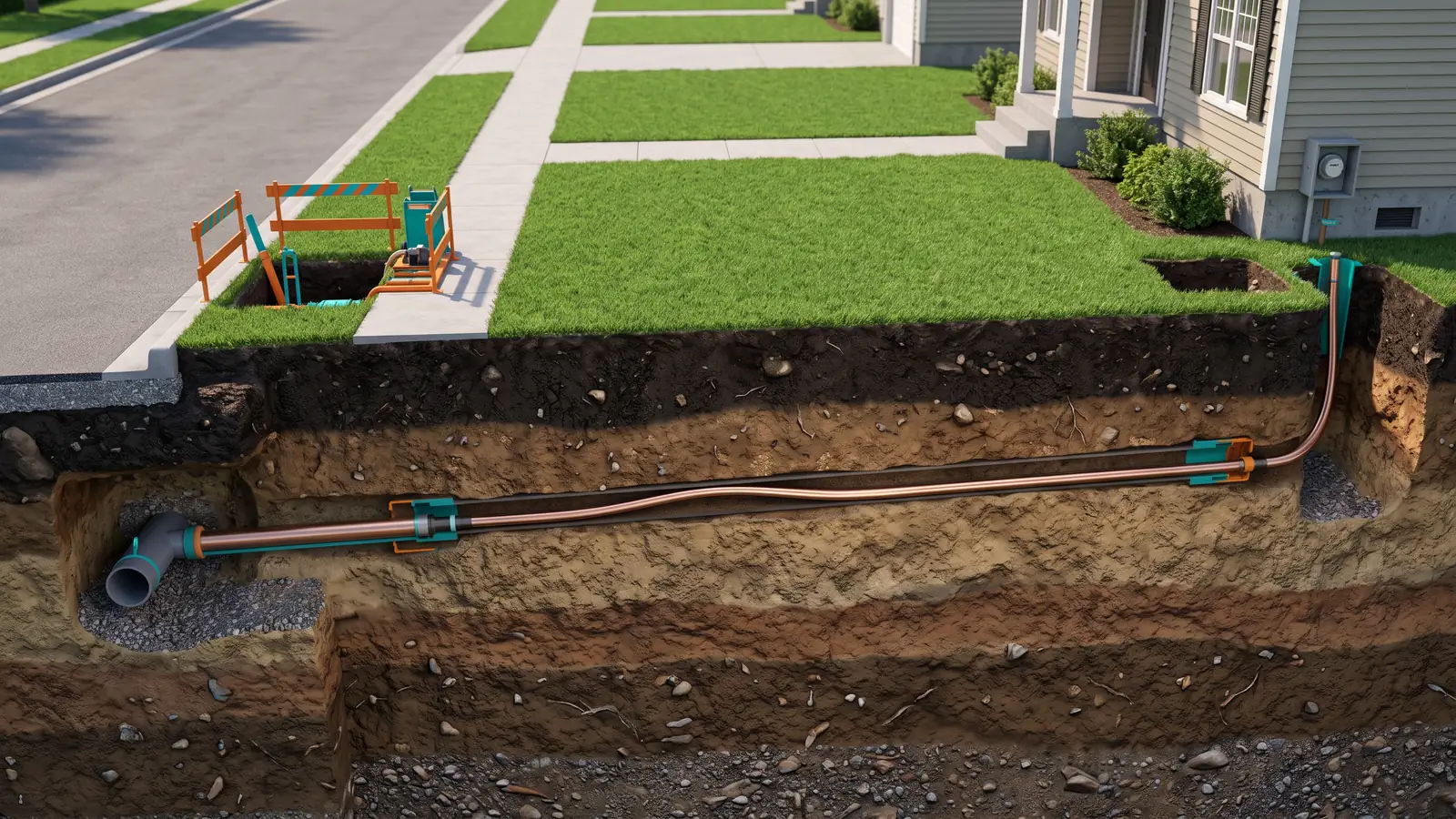
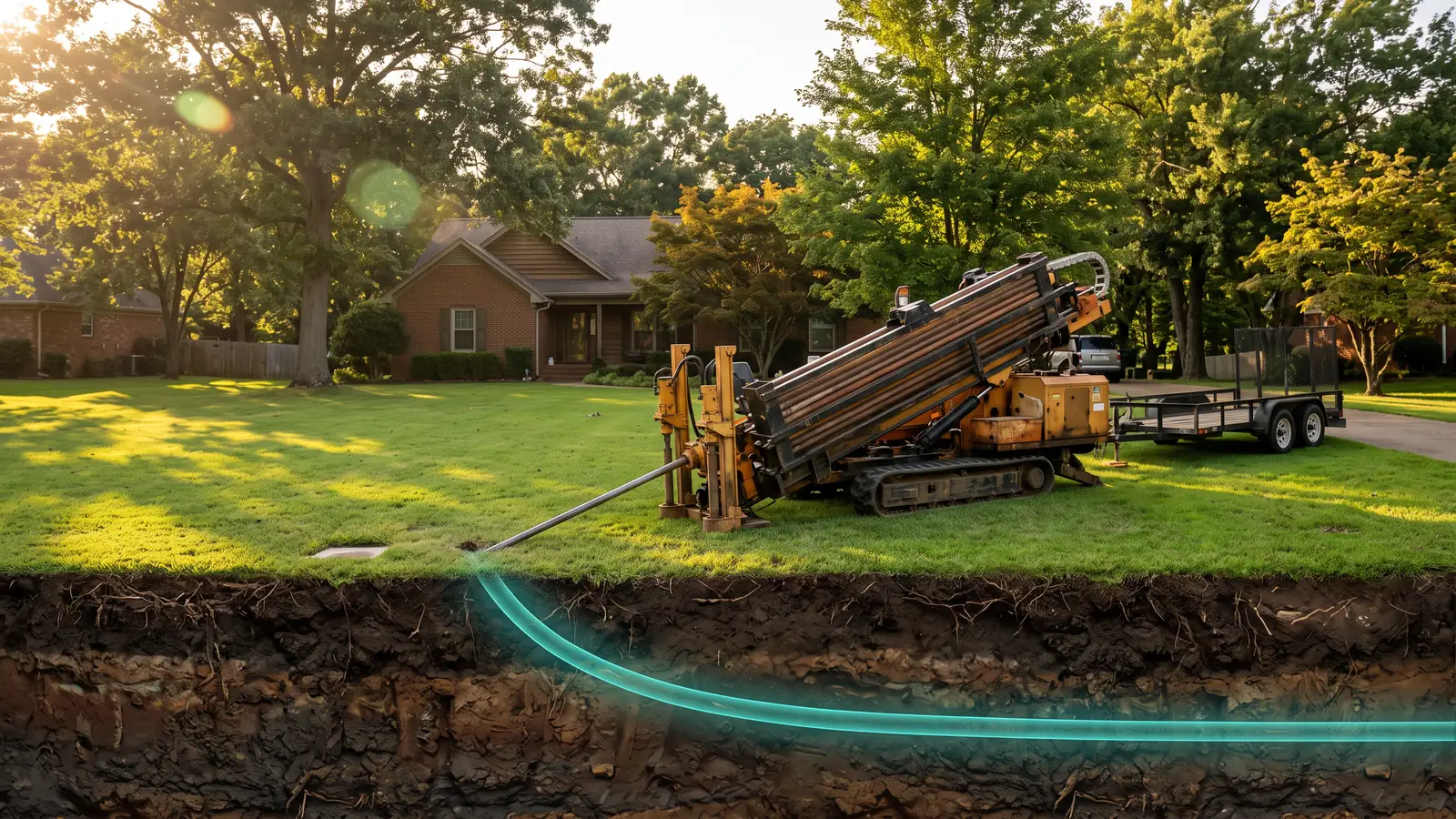
A drill rig sits at an entry pit and pushes a steerable drill head underground along a planned path. A transmitter in the head lets the operator track its position and depth from the surface. After the pilot bore reaches the exit point, the hole is enlarged by reamers and the new pipe is pulled back through.
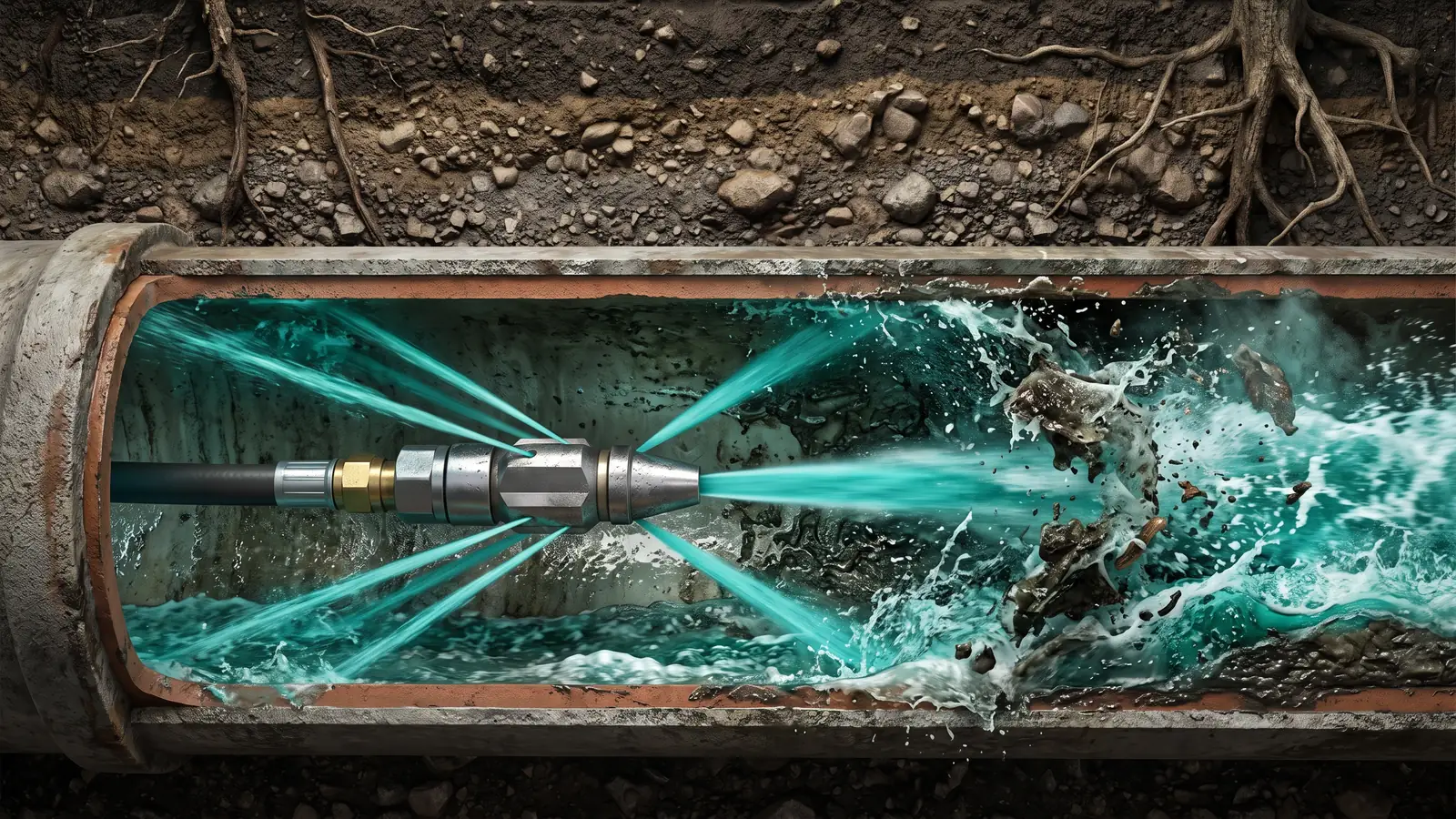
Drilling fluid helps keep the bore open and carries cuttings.
Where it is used
HDD is common for utility crossings under roads, rivers and drives and for installing new service lines. It suits places where an open trench would be costly or disruptive. It is less often used on gravity sewer lines.
For existing sewers, lining or bursting is usually a better fit.
Planning and locating
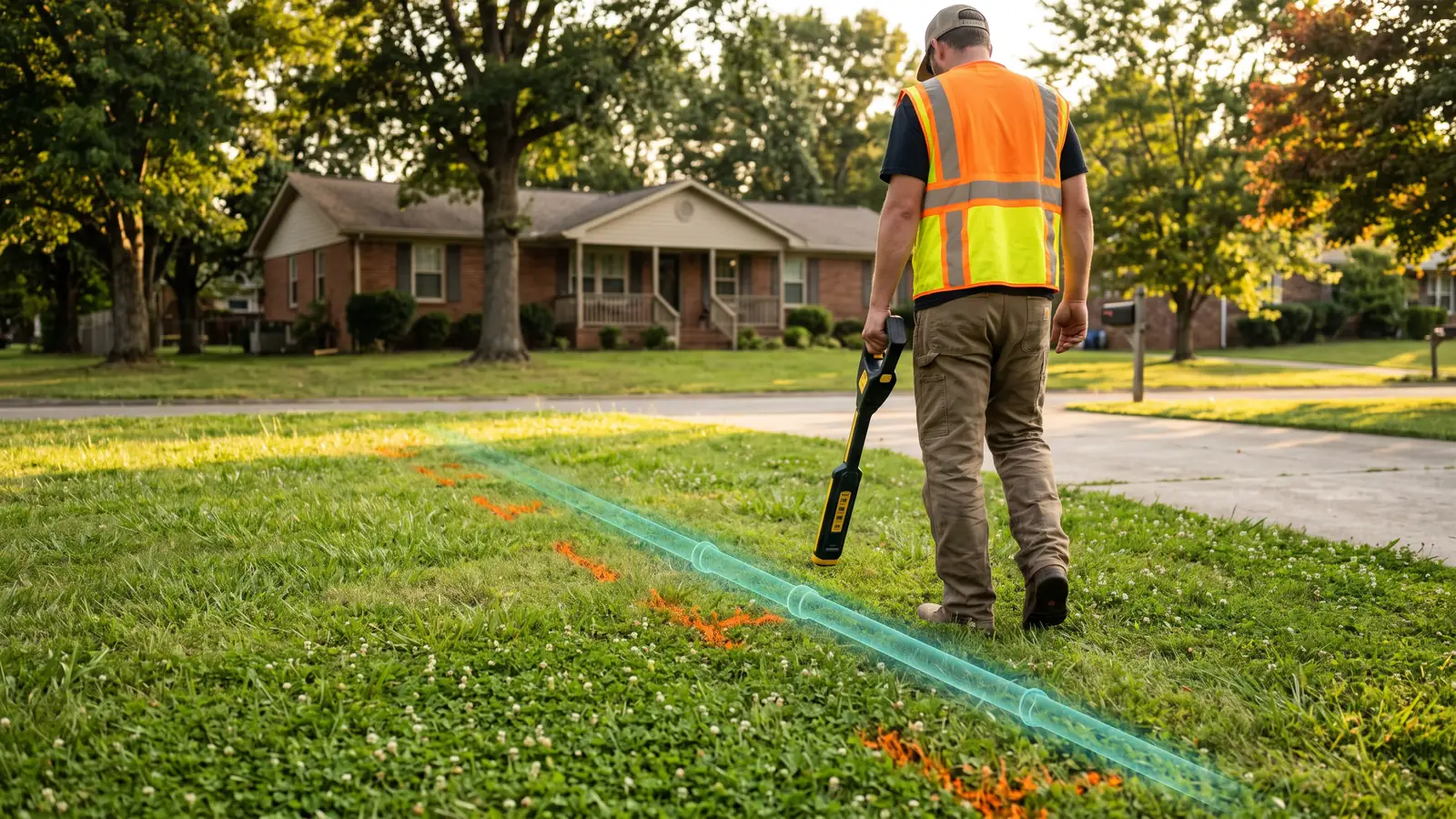
Before drilling, the route is surveyed and every utility is located through the one-call system and field locating. The bore’s depth and path are planned to keep a safe distance from known lines.
Rocky or very loose ground can complicate drilling.
Limits for sewers
Gravity sewers need a steady, correct slope, usually within narrow limits. A bore can follow a slope, but lines of small diameter and exact grade are demanding. That is why sewer repair mostly uses lining and bursting along the existing line.
We explain when HDD is or is not suited to your project.
Quick answers
Is HDD noisy?
Rigs make some noise, but it is generally less than excavation.
How much room does it need?
Enough for the rig at the entry end and a pit at the exit.
Have a pipe question?
Call (615) 952-0844 or send the form below, and we will suggest a recorded camera inspection and the options that fit.