
Hot-Water and Steam-Cured CIPP in Nashville and Middle Tennessee
A felt liner is cured by circulating hot water or steam through it, the long-proven method for residential laterals and many larger lines.
- CIPP Pipe Lining
- One or two small pits
- Middle Tennessee
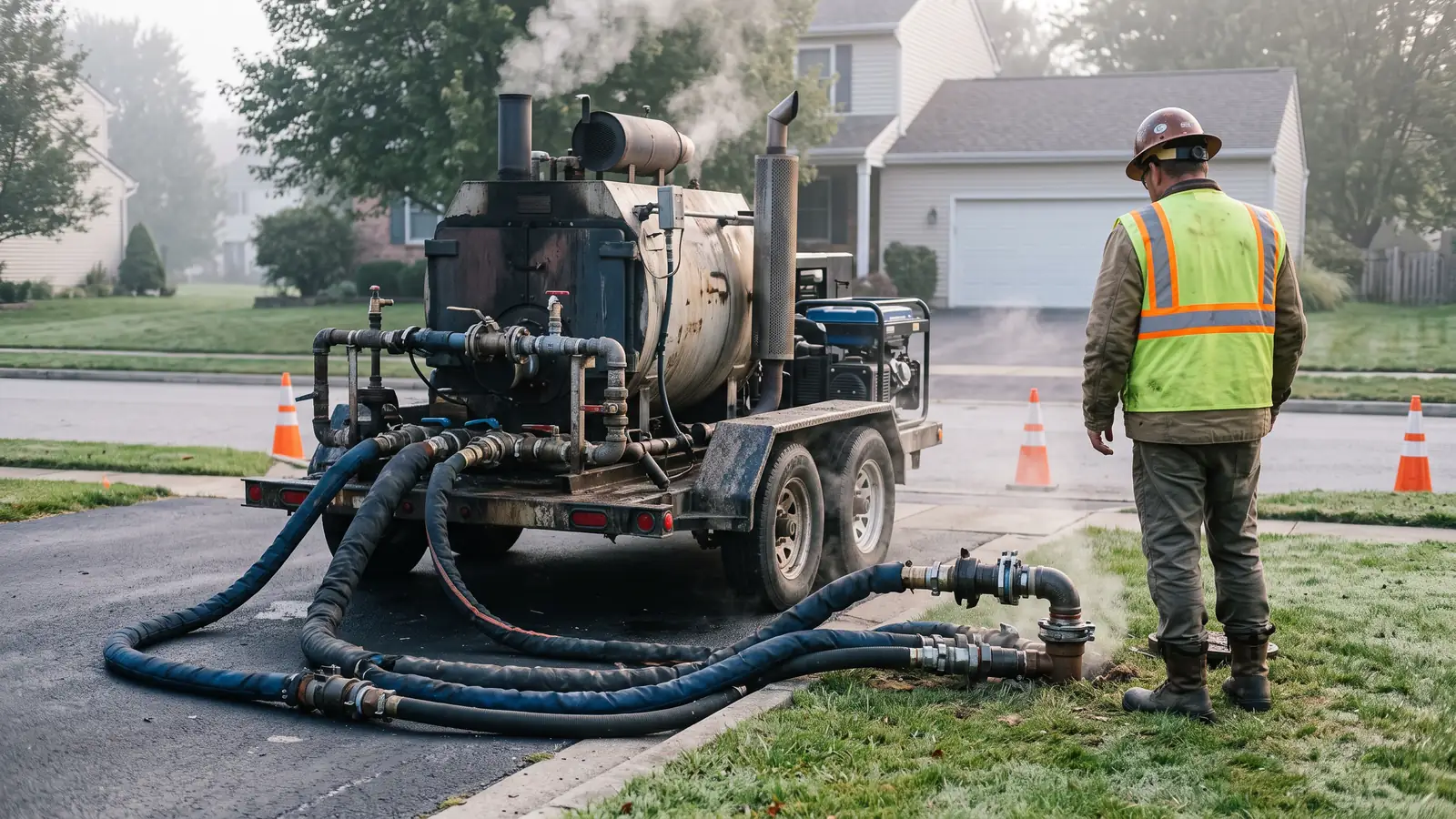
Hot-Water and Steam-Cured CIPP, explained.
Hot-water and steam cure are the long-established ways to harden a felt CIPP liner. The liner is inverted into the pipe with water pressure, then heated water or steam is circulated through it until the resin cures. The liner takes the shape of the old pipe and becomes a new, jointless pipe inside it.
This method is widely used for residential laterals and for many mains. It needs a heat source on site and enough time for the liner to heat, cure and cool, so we plan the window carefully and tell you when the line will be out of service. Temperatures are monitored through the cure, and a camera pass afterward shows the result.
Signs this service fits
- A residential lateral with bends
- A line where felt conforms better than glass fiber
- A job where a boiler setup fits the site
- A pipe with damage along several joints
A good fit, and what to know.
We would rather you hear the limits from us than discover them later.
A good fit when
- Residential laterals
- Lines with several bends or changes in shape
- Jobs where a heat source fits the property
Worth knowing
- Very tight sites may favor a smaller setup such as UV curing
- A camera inspection decides which cure is best for your pipe
Why choose this one.
Proven approach
A long track record for residential laterals and mains.
Conforms to the pipe
Felt liners follow bends and changing shapes well.
Monitored cure
Temperatures are checked through the whole cure.
Little digging
Installation uses cleanouts or small access points.
Before and after: offset joint
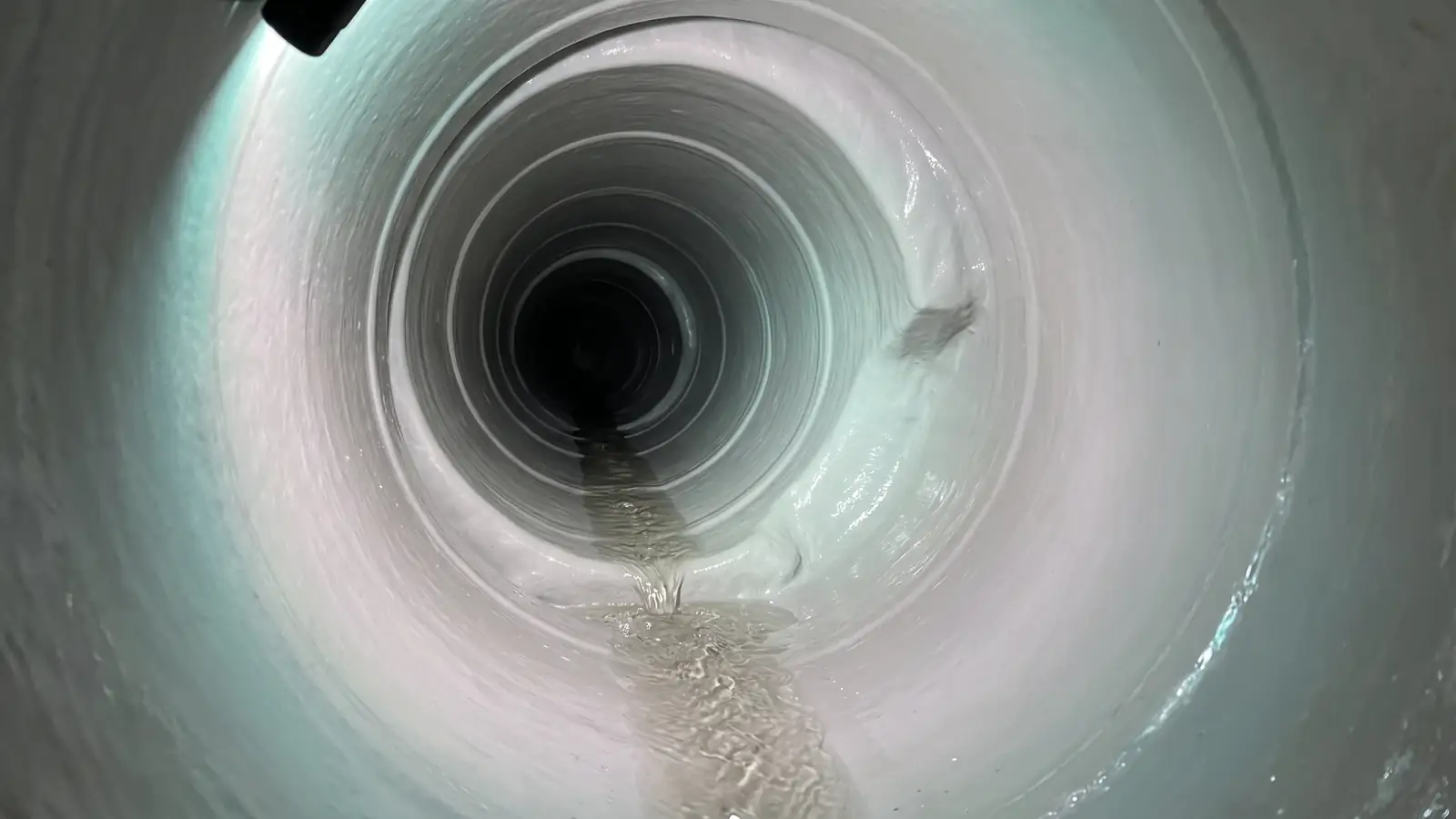
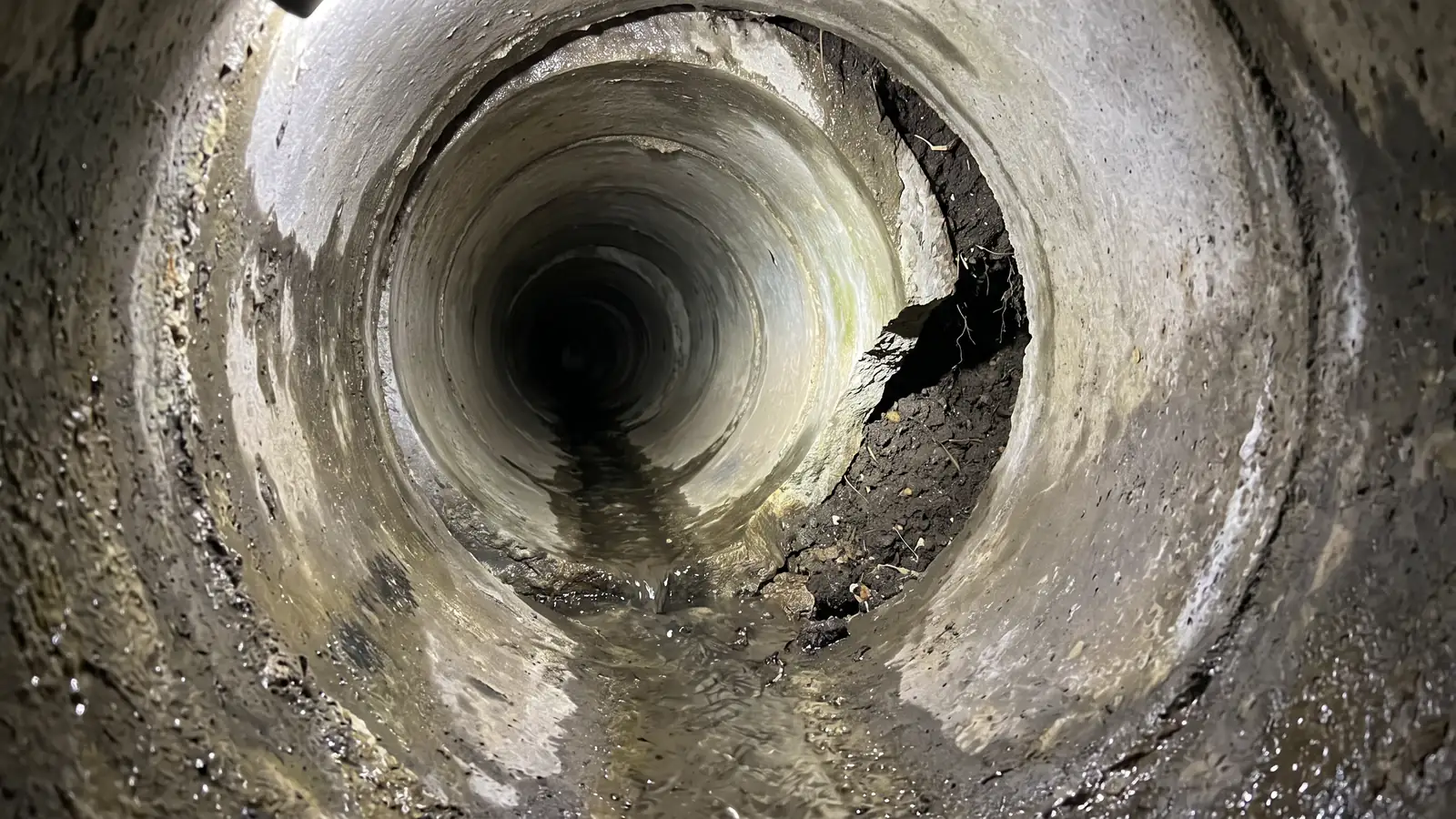 AfterBefore
Illustrative scene created to show a typical condition before and after a trenchless repair. Drag the handle to slide between them.
From first look to finished pipe.
A clear sequence for every job.
- 01
Inspect and prepare
We camera, clean and measure the pipe, then prepare a felt liner to fit.
- 02
Install the liner
The liner is inverted into place and pressed against the old pipe wall by water pressure.
- 03
Heat and cure
Hot water or steam is circulated while temperatures are monitored through the cure.
- 04
Cool and open up
The liner cools, ends are cut, connections reopened and the line is checked on camera.
Services that go together.
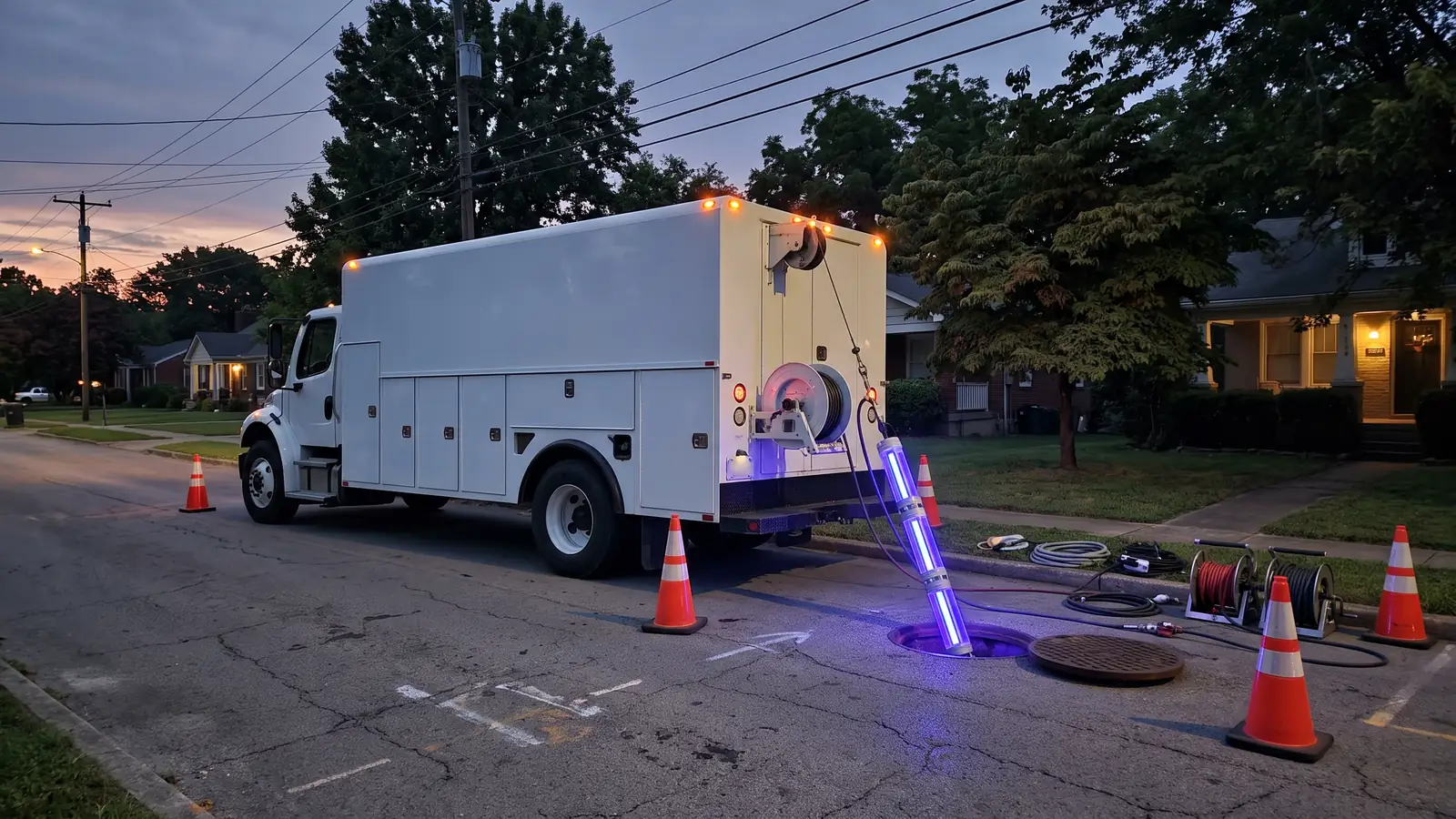 A-05CIPP LiningUV-Cured CIPPA glass-fiber liner is cured with a train of ultraviolet lights pulled through the pipe, giving a controlled…No digSee the service
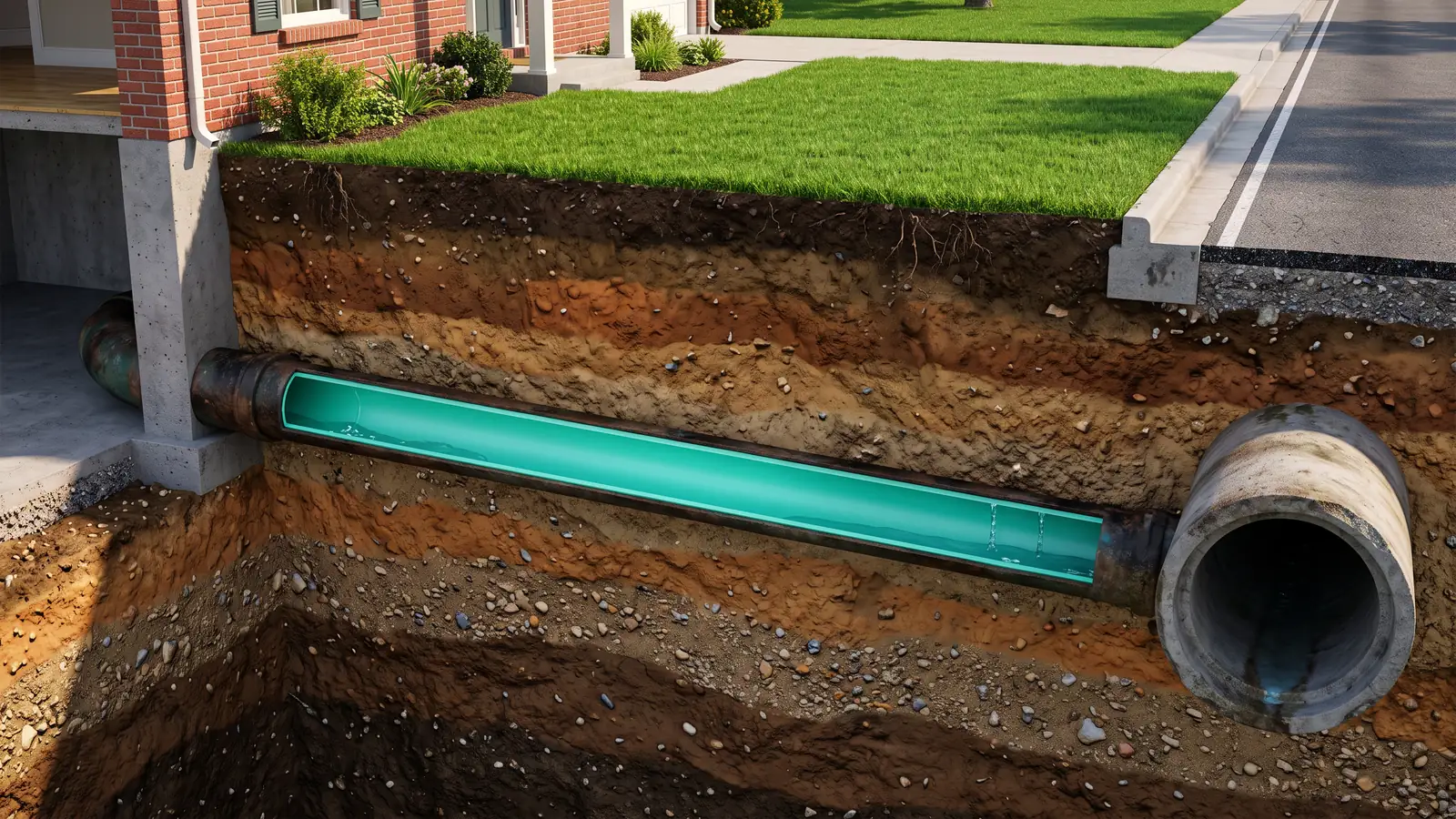 A-02CIPP LiningLateral CIPP LiningThe lateral is the pipe that carries everything from your house to the street main. Lining it renews…No digSee the service
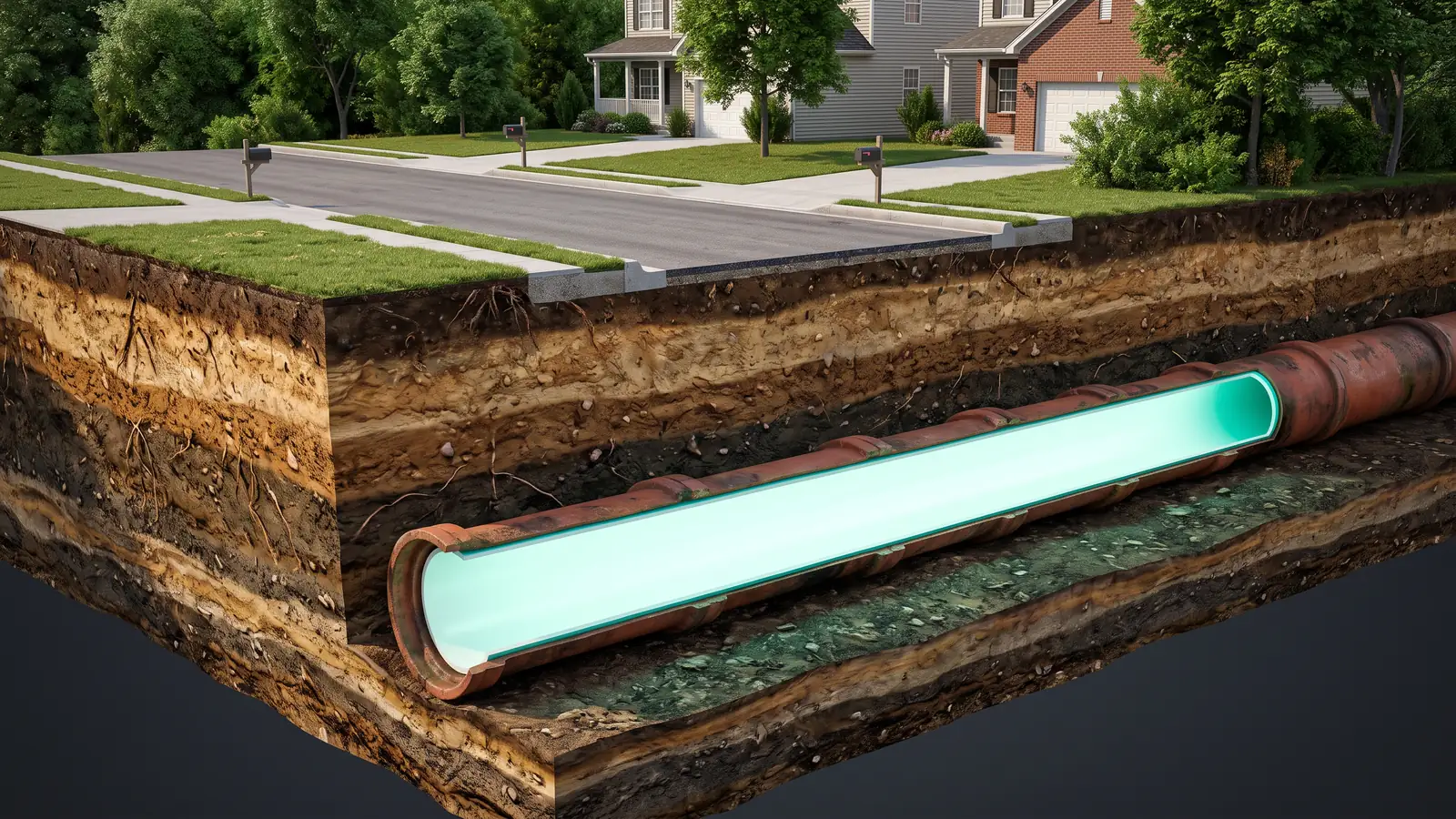 A-01CIPP LiningFull-Length CIPP LiningA resin-soaked liner is cured inside your old sewer pipe from end to end, leaving a smooth new…Small access pitSee the service
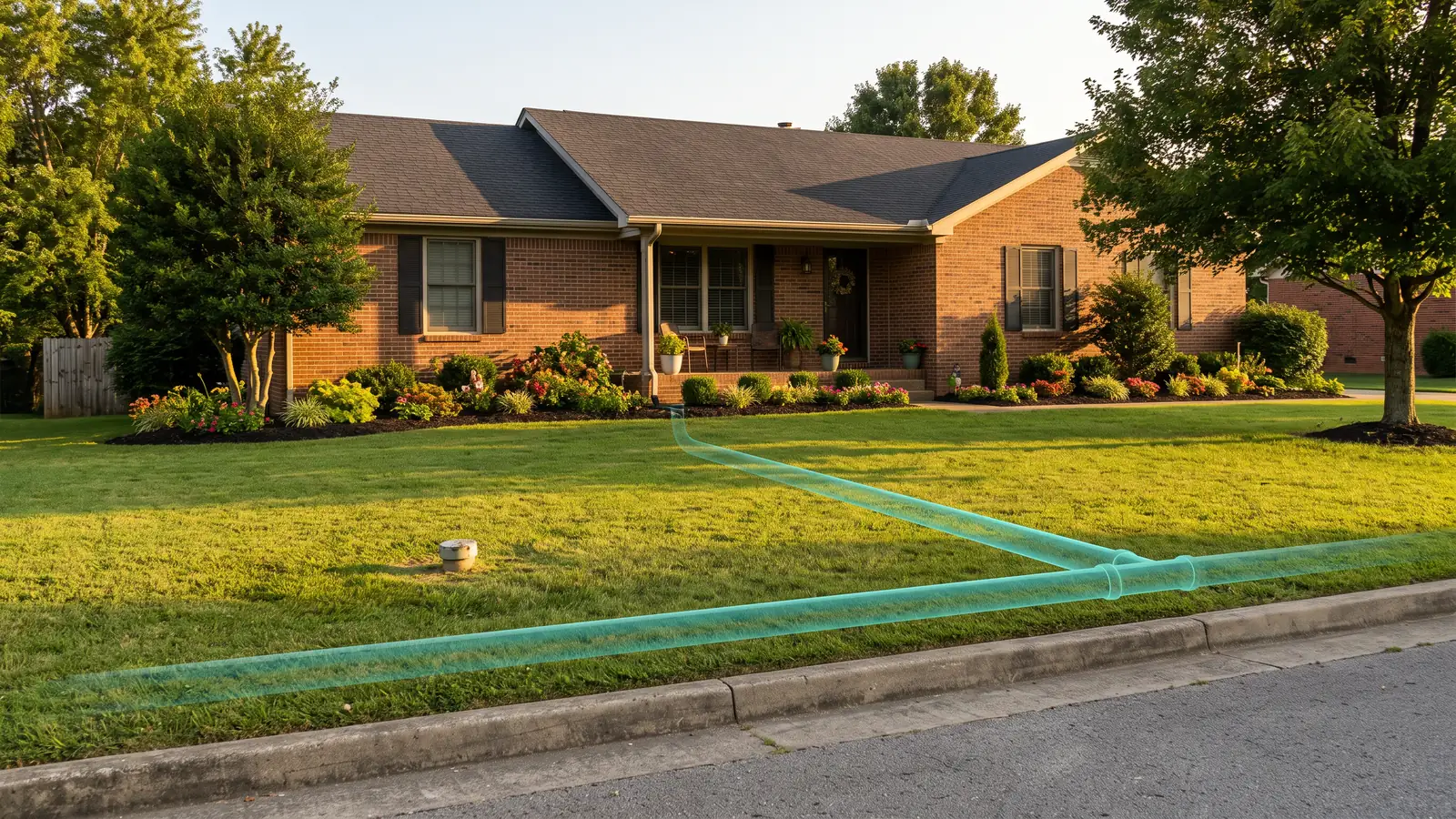 E-01PropertiesHome Sewer Lateral RepairFrom a single slow drain to a full lateral failure, we find the cause with a camera and…Small access pitSee the service
Read more on this topic.
GUIDE 07 · CIPP LiningUV-Cured vs Hot-Water-Cured CIPPBoth turn liquid resin into a hard pipe. Here is how they differ and how we choose.2 min read GUIDE 06 · CIPP LiningCIPP Liner Materials Explained: Felt, Fiberglass and ResinsWhat the liner is made of and why the combination matters for your pipe.2 min read  GUIDE 40 · Care and PreventionAfter Lining: What to ExpectWhat happens in the hours, days and years after a liner is installed.2 min read
Hot-Water and Steam CIPP FAQ.
How long does the cure take?
The liner has to heat, cure and cool, so plan for a longer window than the installation alone. We give you a realistic time once we know the length and diameter.
Is steam safer or better than hot water?
Both are used safely by trained crews. The choice depends on the liner system, the length and the site.
Will there be odor during the cure?
Some resins have a noticeable smell during curing. We tell you ahead of time so you can keep windows closed or plan around it.
Hot-Water and Steam CIPP across Middle Tennessee.
Pick your city for its page.
Fix the pipe. Keep the yard.
Tell us about your pipe and we will suggest a camera inspection and the least disruptive repair that fits.