Key takeaways
- Liners are a fabric tube plus a resin
- Felt liners are common for laterals; fiberglass is common for UV-cured jobs
- Resins include epoxy, polyester and others
- The right combination depends on the pipe and the site
The two parts
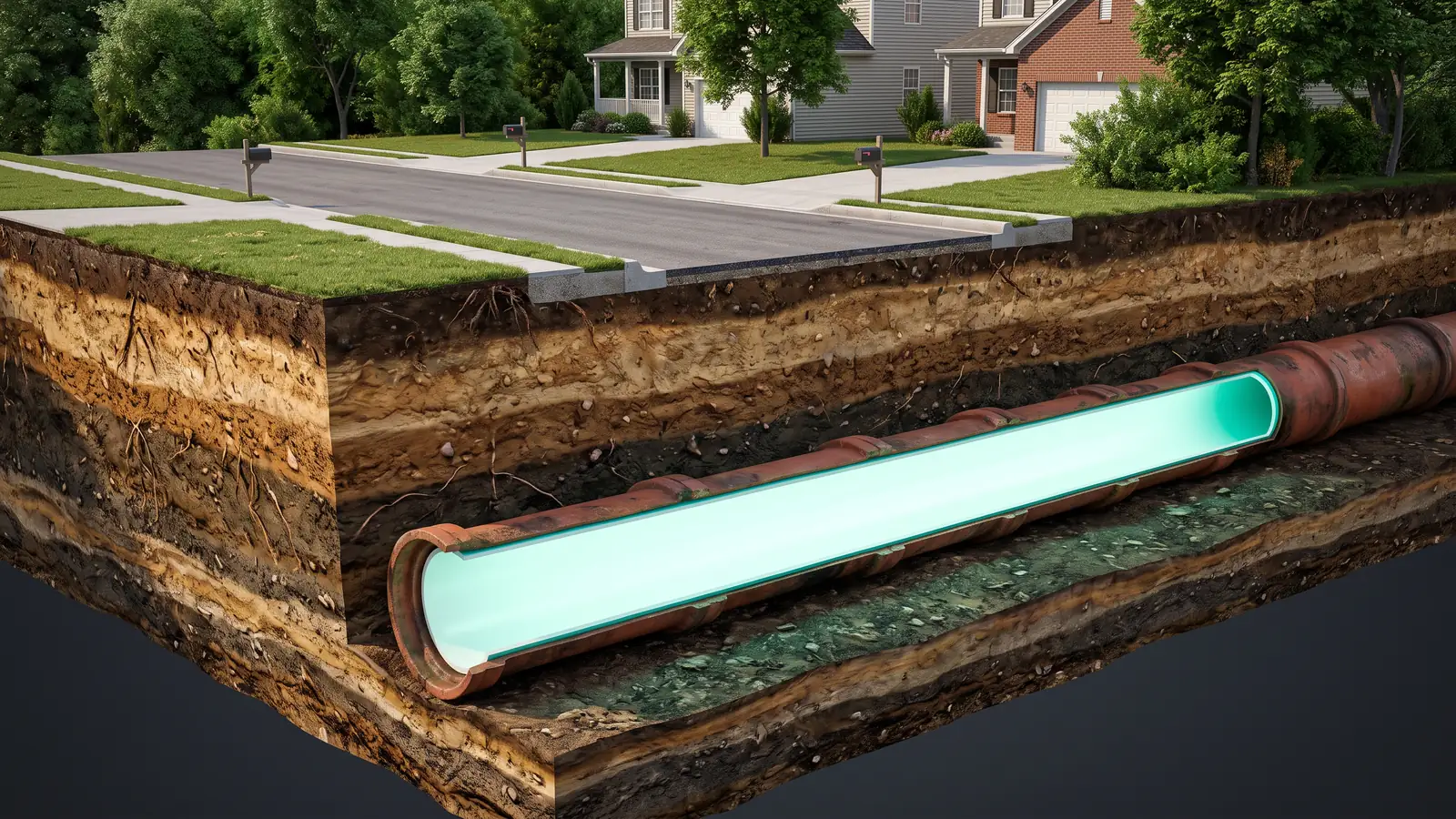
A CIPP liner has two components: a fabric tube and a resin. The fabric holds its shape and carries the resin. The resin, once cured, is what gives the liner its strength and its watertight surface.
Together they form a structural pipe once cured, strong enough to carry load and resist the wastewater inside.
Felt liners
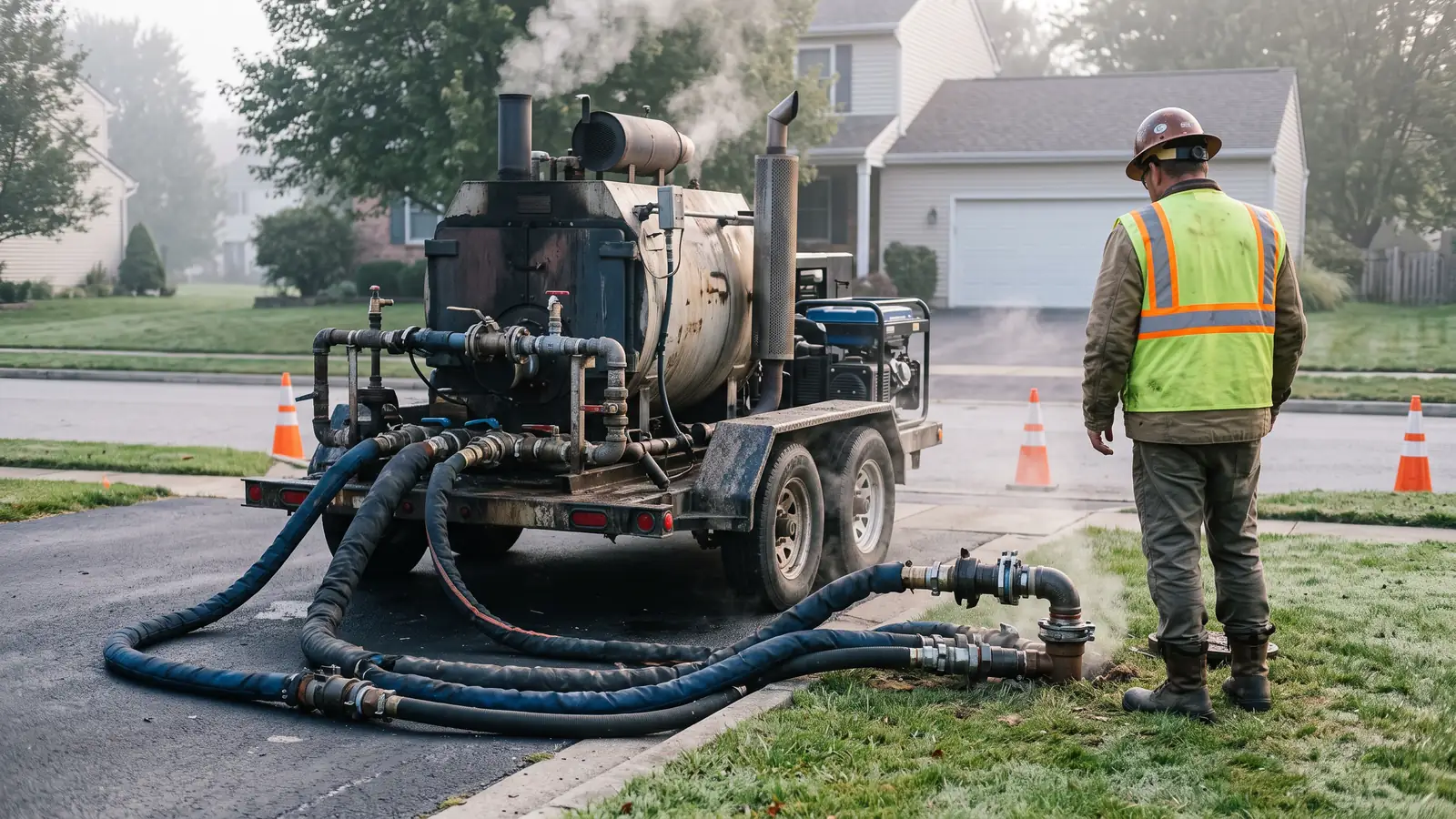
Felt is a thick, flexible fabric that conforms well to bends and changes in pipe shape. It is common for residential laterals and many larger pipes and is usually cured with hot water or steam.
Felt liners are inverted or pulled in and pressed against the old pipe wall as they are installed.
Fiberglass liners
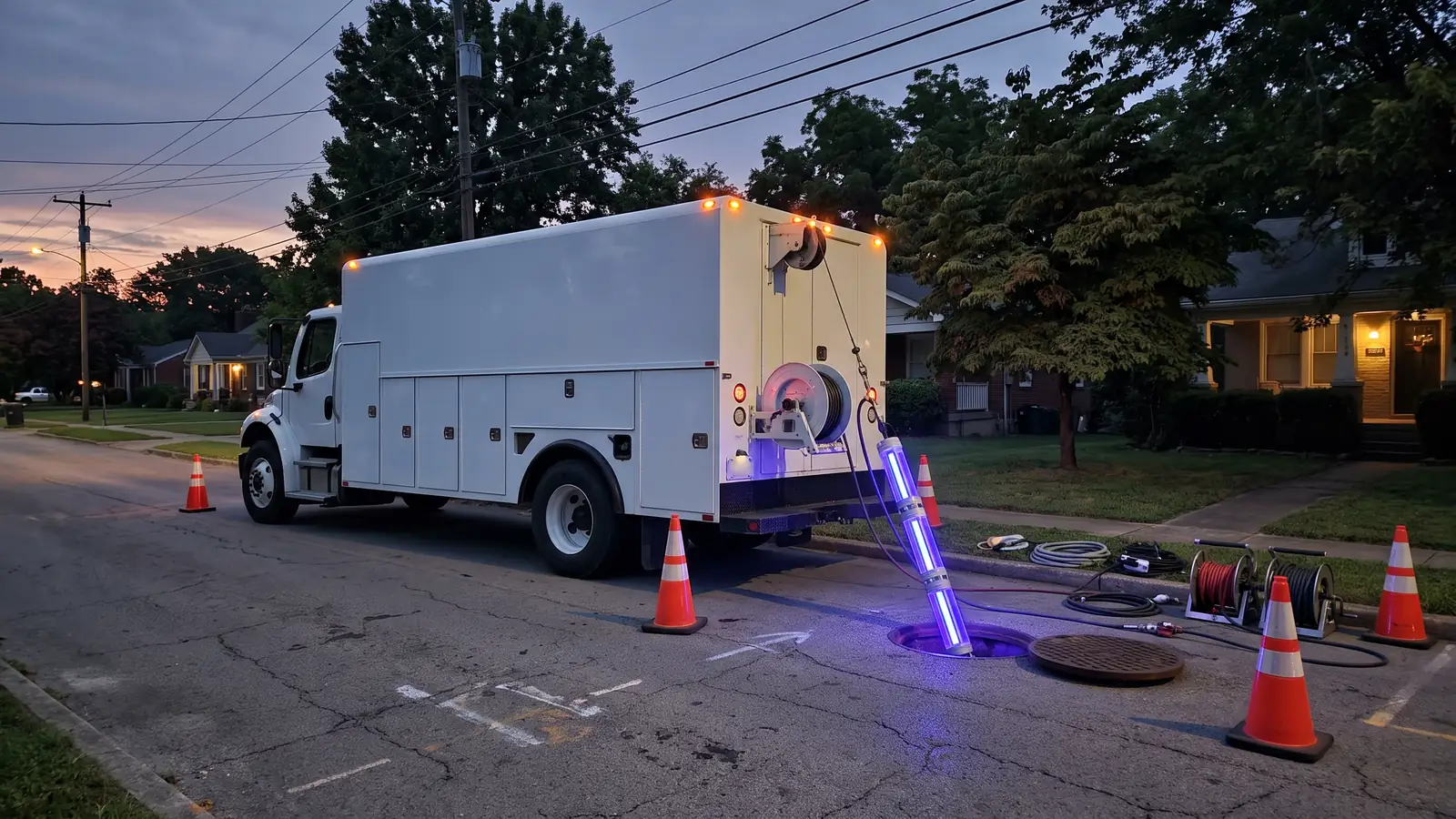
Fiberglass liners are rigid, strong and thin. They are often used with UV curing, where a light train hardens the resin quickly. They suit many small and mid-size pipes and can offer high strength for a thin wall.
They are less forgiving of tight bends and sudden diameter changes than felt.
Resins
Common resins include epoxy, polyester and vinyl ester types. They differ in cure behavior, chemical resistance, strength and odor. Some are chosen for potable-adjacent or sensitive jobs.
We select resin and liner for the pipe, the wastewater and the site, and we can explain the choice on your job.
Quick answers
Does the liner leach anything into the environment?
Properly cured liners are designed to be stable. Uncured resin and wash water are managed on site and disposed of properly.
Can I choose the resin?
You can ask. In most cases the contractor recommends a system that suits your pipe, and we explain why.
Have a pipe question?
Call (615) 952-0844 or send the form below, and we will suggest a recorded camera inspection and the options that fit.