
Bellied Sewer Line Solutions in Nashville and Middle Tennessee
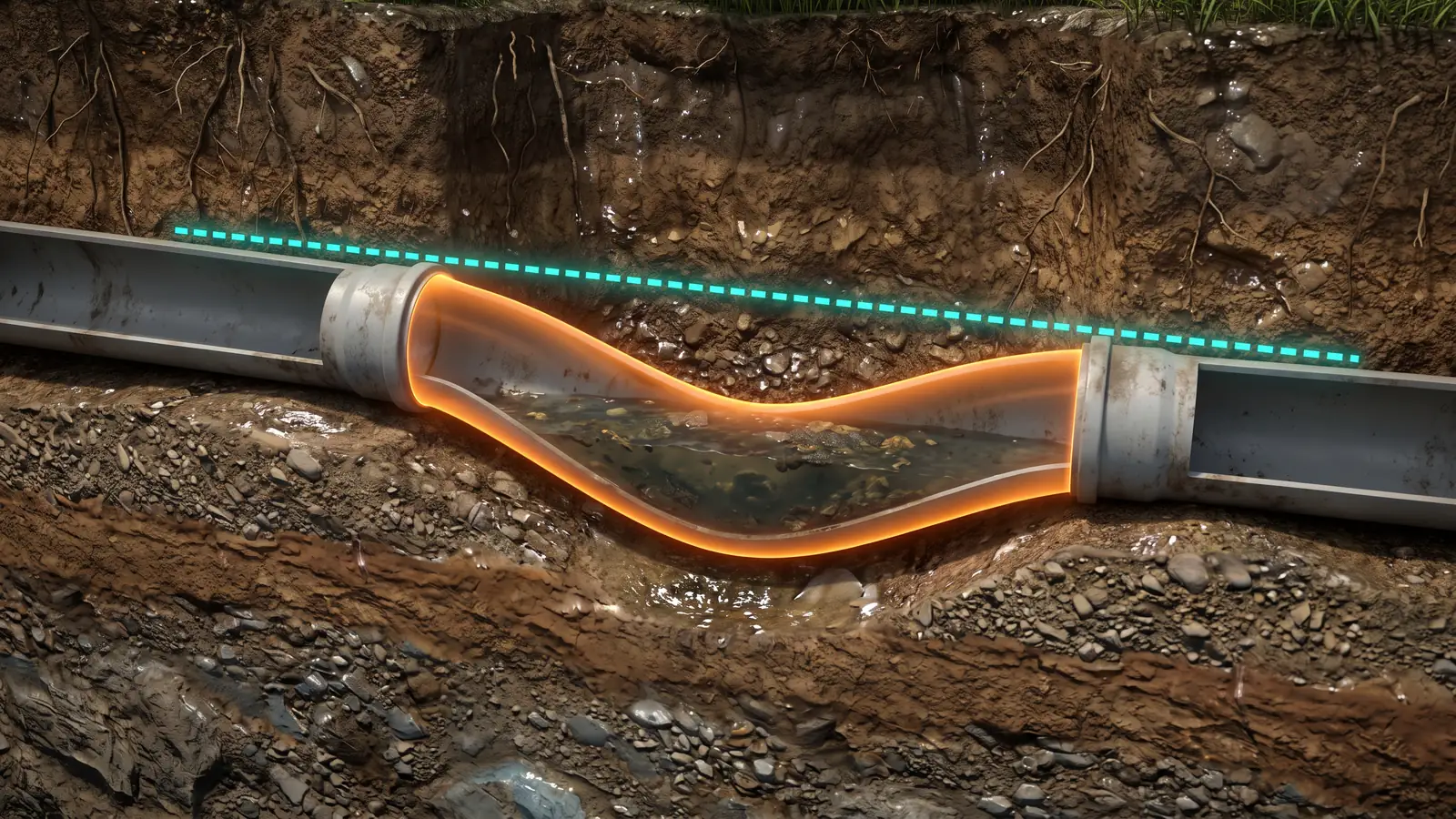
A belly is a low spot that holds water and waste. A liner cannot lift it, so we explain what actually fixes a sag.
- Problems We Repair
- A short, planned excavation
- Middle Tennessee
Bellied Sewer Line Solutions, explained.
A belly, also called a sag, is a stretch of sewer pipe that has settled below the grade it needs. Water pools in the low spot. Solids settle out there and repeated clogs follow, often at the same place. A camera shows it as standing water in the pipe that should be draining.
This is the problem that trenchless lining cannot fix, and a good contractor tells you so. A liner follows the shape of the old pipe, so it leaves the sag in place. Pipe bursting follows the old path too. Correcting a belly usually means re-laying a section at the right slope, by a targeted excavation, which we keep as small as the site allows. A short, shallow belly may be tolerable with routine cleaning, and the camera tells us how serious it is.
Signs this service fits
- Repeated clogs at the same spot
- Standing water visible in the pipe on camera
- Paper and solids that will not clear
- A camera cannot show a continuous slope
A good fit, and what to know.
We would rather you hear the limits from us than discover them later.
A good fit when
- Lines with a clear sag or recurring clog spot
- Owners wanting the true fix, not a repeated cleaning
- Properties where a short dig is acceptable
Worth knowing
- A belly cannot be corrected by lining or bursting
- A short excavation is usually part of the fix
Why choose this one.
The honest answer
We tell you a liner will not fix a belly.
Smallest dig that works
Excavation limited to the sagging section.
Options for mild cases
Some shallow sags can be managed with cleaning.
Proven on camera
The corrected section is verified.
From first look to finished pipe.
A clear sequence for every job.
- 01
Confirm the belly
A camera and locator show where water stands and how long the sag is.
- 02
Judge how serious
We weigh the length, the depth and how often it clogs.
- 03
Choose the fix
A targeted dig and re-lay, a cleaning schedule or a combined plan is recommended.
- 04
Repair and verify
The section is re-laid to grade and checked on camera.
Services that go together.
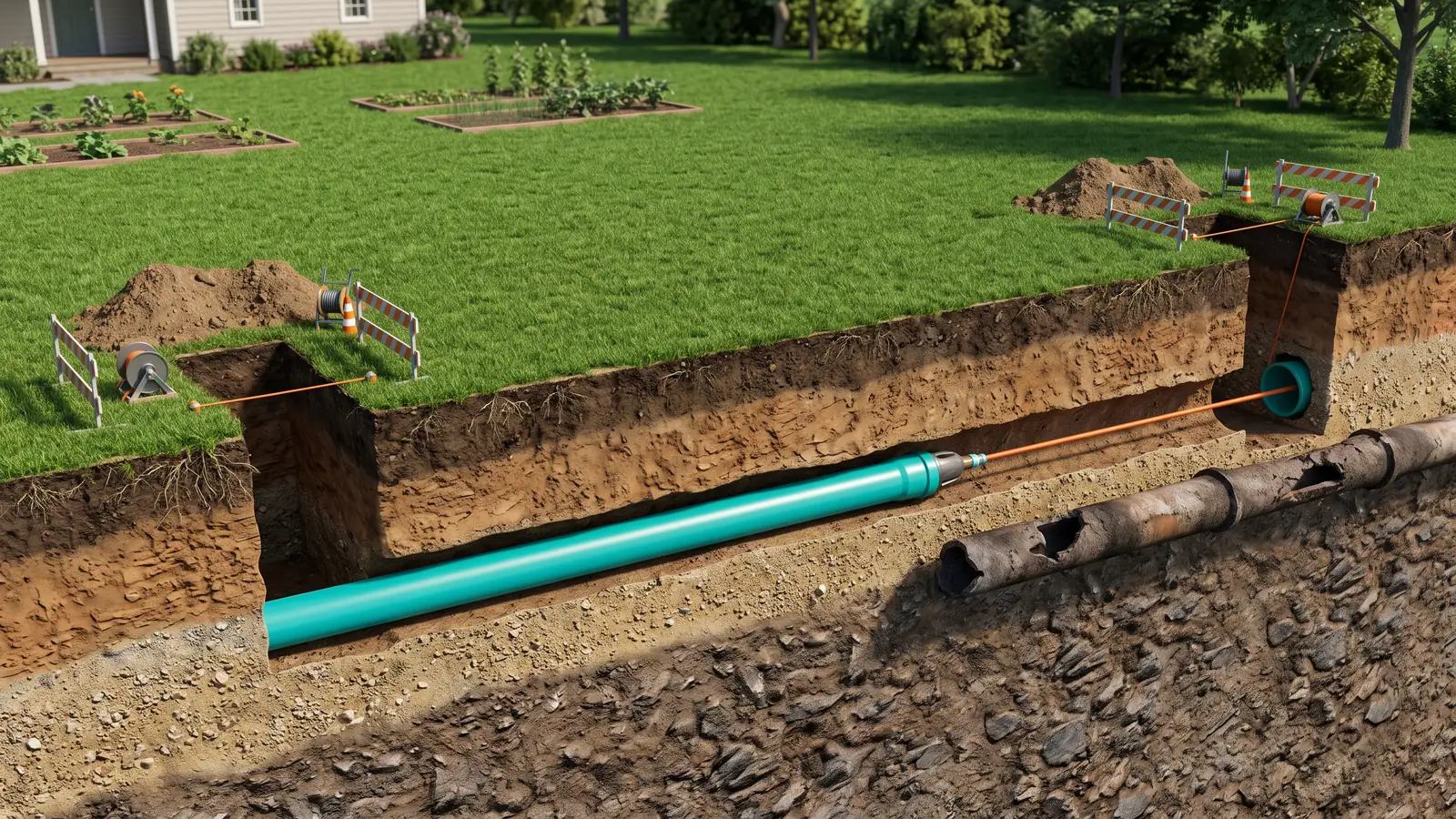 B-02MethodsTrenchless ReplacementWhen a sewer line has to be replaced, trenchless methods swap it for new pipe while leaving most…Small access pitSee the service
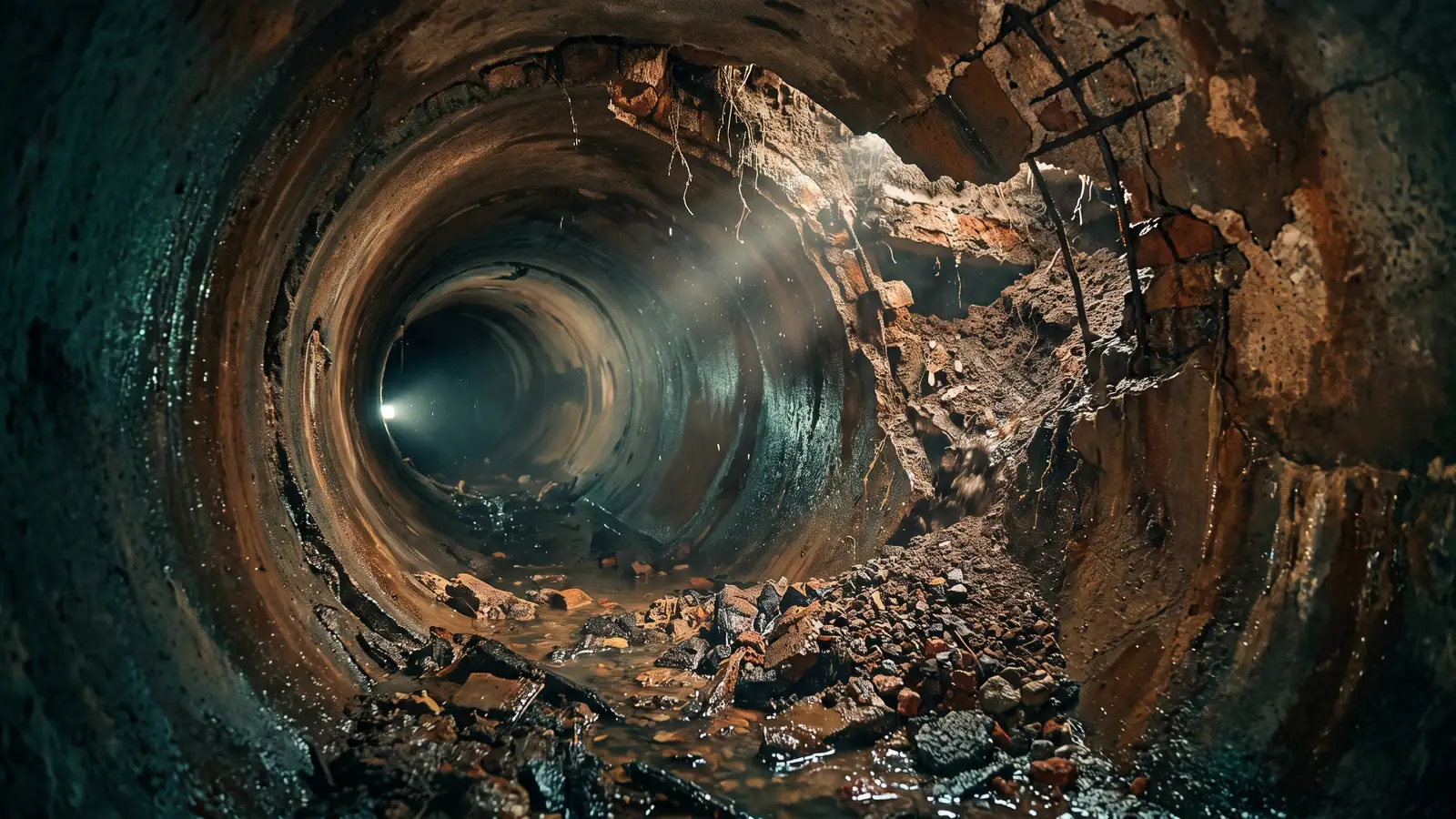 D-04ProblemsCollapsed and Deteriorated PipeA collapsed pipe cannot be lined. We look at pipe bursting, trenchless replacement and a targeted dig, and…Targeted digSee the service
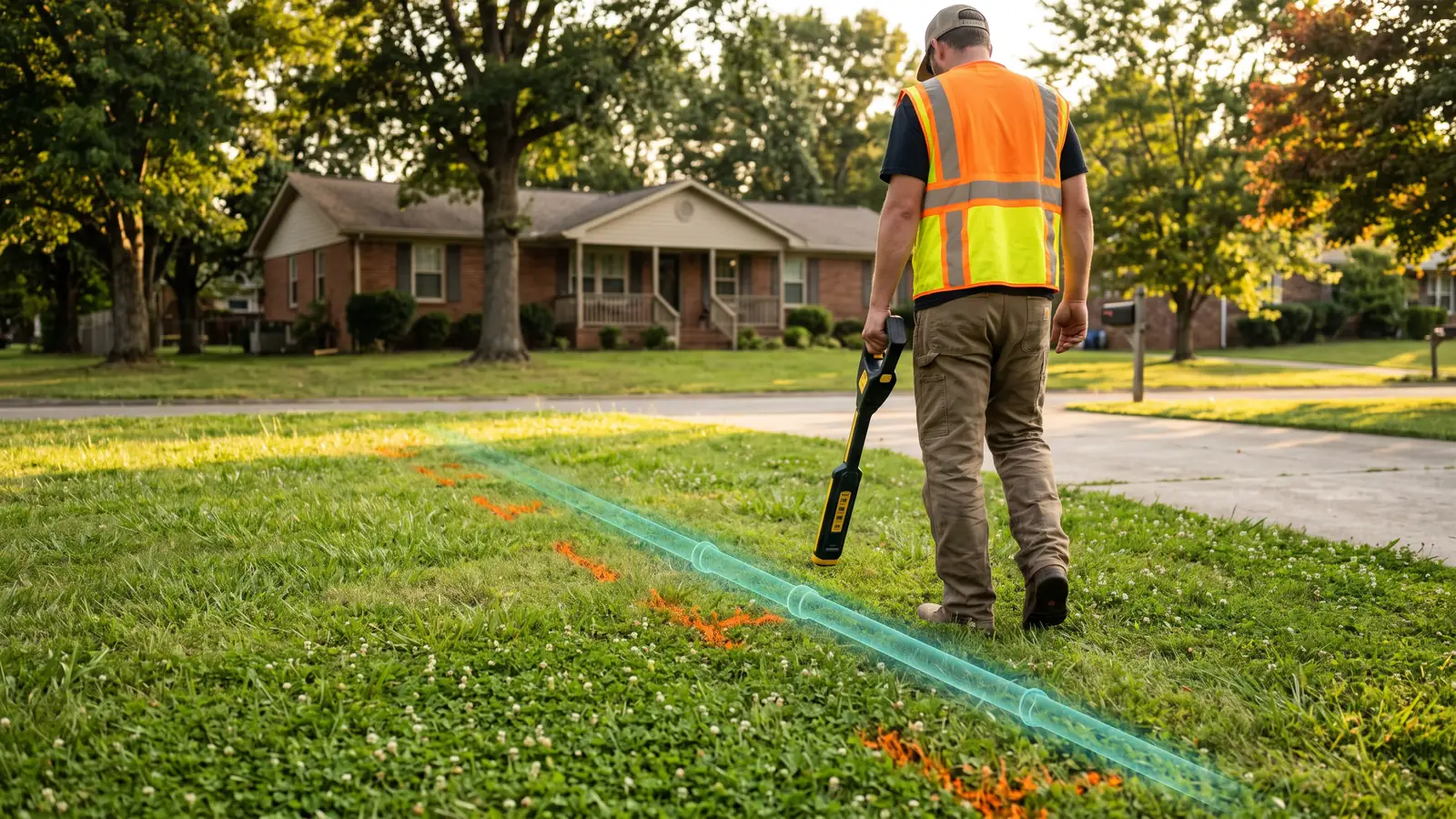 C-05InspectionLocating and MappingA camera with a built-in transmitter and a surface receiver trace your pipe, marking its path, depth and…No digSee the service
 C-01InspectionPre-Lining Camera InspectionEvery trenchless repair starts with a recorded camera run through the pipe, so the repair method fits what…No digSee the service
Read more on this topic.
GUIDE 08 · CIPP LiningCan CIPP Fix a Bellied Sewer Line?The honest answer is no. Here is why, and what actually fixes a sag.2 min read GUIDE 29 · Trenchless MethodsWhen Trenchless Is Not the AnswerTrenchless is wonderful, but it is not magic. Here are the situations where digging still makes sense.2 min read  GUIDE 10 · Sewer Lines 101Signs of a Failing Sewer LineSeven warning signs that the pipe under your yard needs a look, from slow drains to sinking lawns.2 min read
Bellied Sewer Lines FAQ.
Can any trenchless method fix a belly?
Lining and bursting follow the old path, so they do not correct it. In some cases a new bored path or a targeted dig is needed.
Do all bellies need fixing?
Not always. A small, shallow belly may cause no trouble with periodic cleaning. A deep, long one usually does.
How much digging will it take?
Usually only the length of the sag plus working room. The locate and camera tell us how much.
Bellied Sewer Lines across Middle Tennessee.
Pick your city for its page.
Fix the pipe. Keep the yard.
Tell us about your pipe and we will suggest a camera inspection and the least disruptive repair that fits.