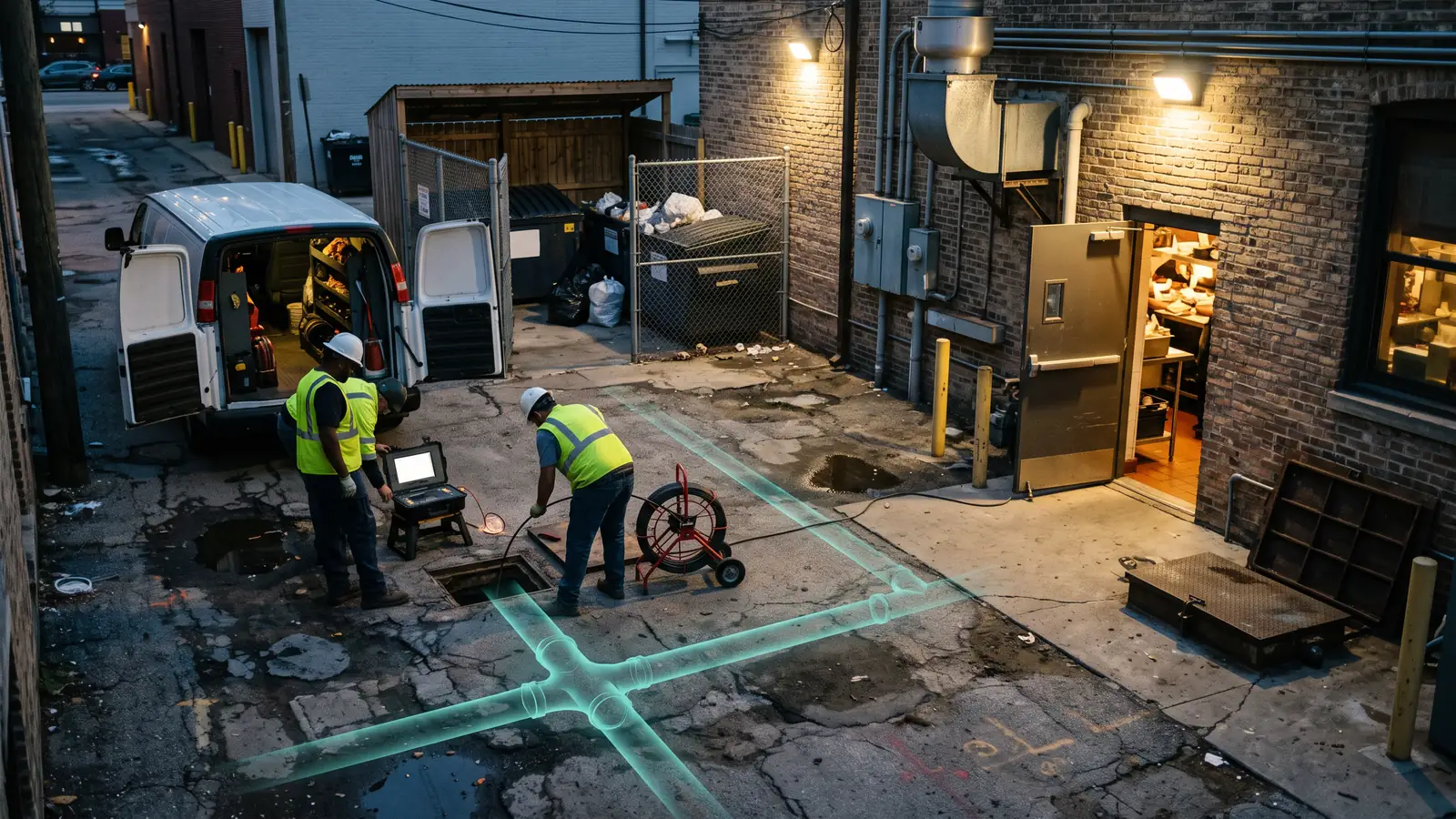
Key takeaways
- Schedule inspections and work around operations
- Trenchless methods keep lots, floors and entrances open
- Flow management limits downtime
- Document the work for landlords and lenders
Plan around the business
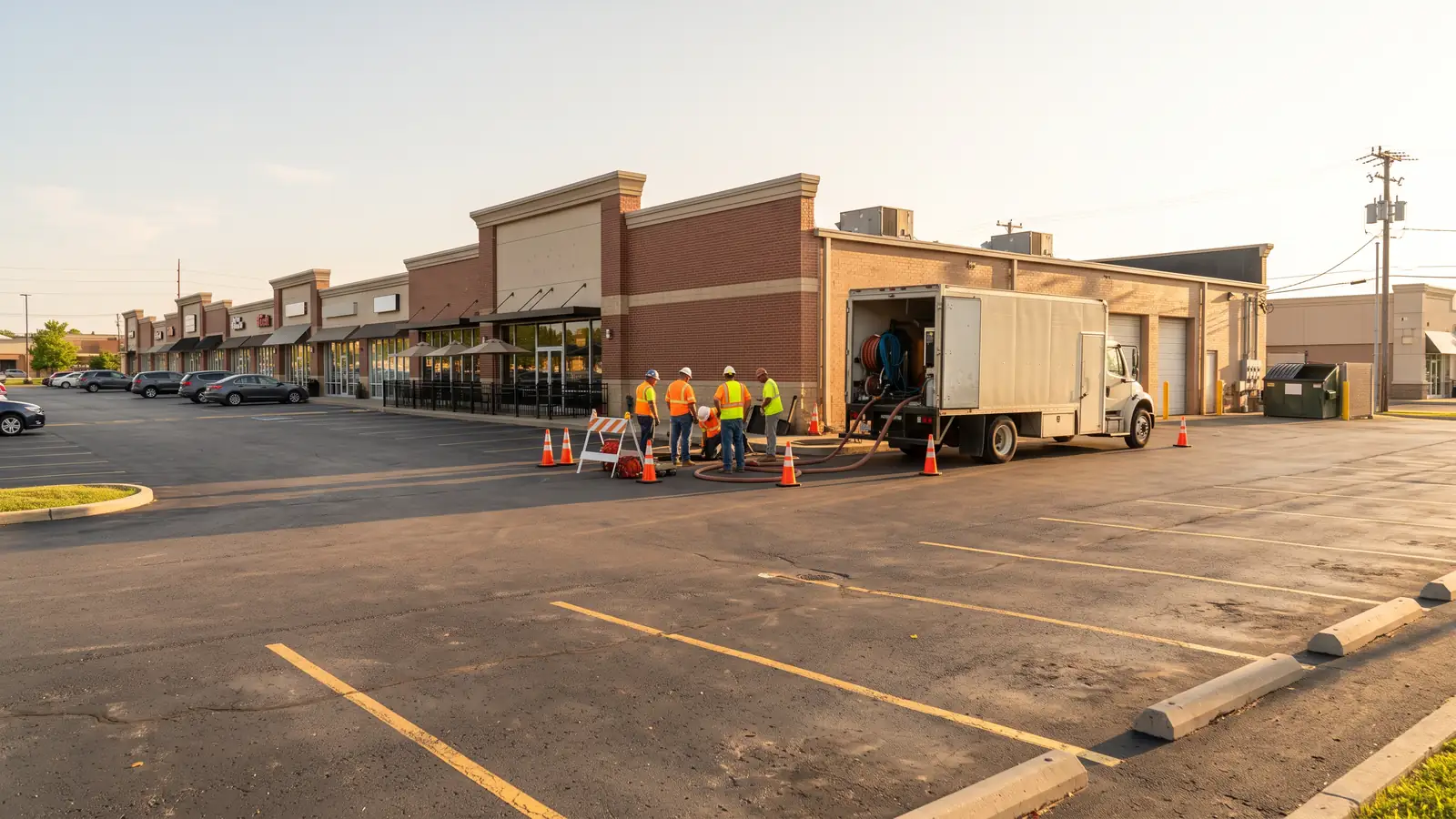
Every business has quiet hours and busy hours. Camera inspection and cleaning can often be done early, late or on closed days. Repairs are planned around deliveries, lunch and dinner service, and any inspections. A clear schedule lets everyone prepare.
Tell the contractor about special needs such as health inspections or events.
Choose methods that keep things open
Trenchless lining and patching avoid cutting a parking lot, an entrance or a kitchen floor. Where excavation is unavoidable, it is staged so customers and deliveries still reach the building.
Ask about the footprint of equipment and where it will park.
Manage the flow
If the line cannot be out of service for long, bypass pumping and temporary measures can keep fixtures working for part of the job. Restaurants may need extra planning for dish pit and floor drains.
Know in advance when plumbing will be off and for how long.
Document for the file
Landlords, lenders and insurers often want records. Camera video before and after, a written scope, dates and invoices answer most questions. Keep them with your building records.
Ask about lease terms that define who handles underground pipe.
Quick answers
Can the kitchen stay open?
Sometimes for part of the work. We plan the window carefully with you.
What about the grease trap?
We coordinate with whoever services it and report what we find in the line.
Have a pipe question?
Call (615) 952-0844 or send the form below, and we will suggest a recorded camera inspection and the options that fit.