Key takeaways
- A new pipe is pushed or pulled through the old pipe
- The gap between old and new is grouted
- It reduces the flow area slightly
- It suits large, straight pipes
The process
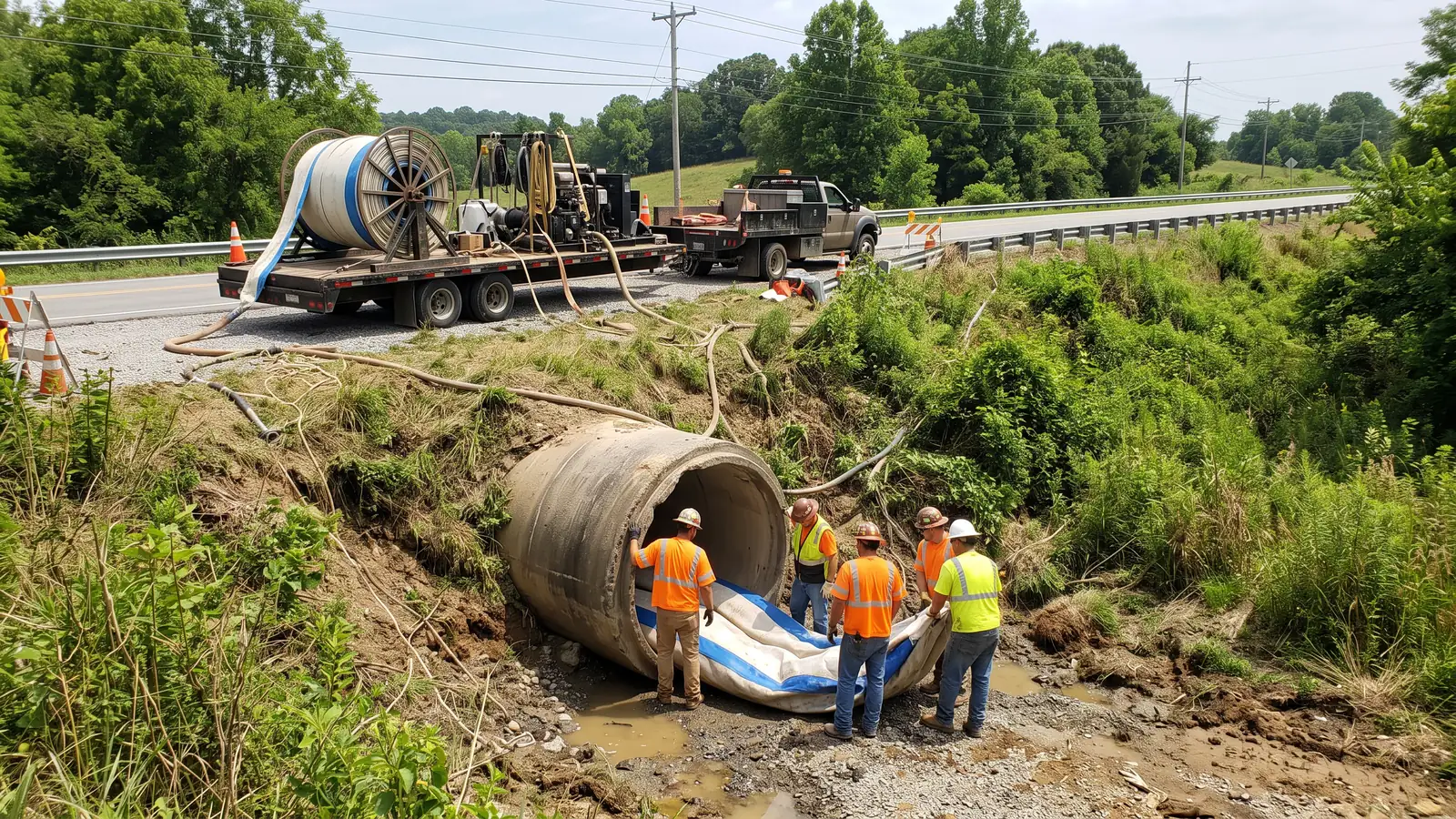
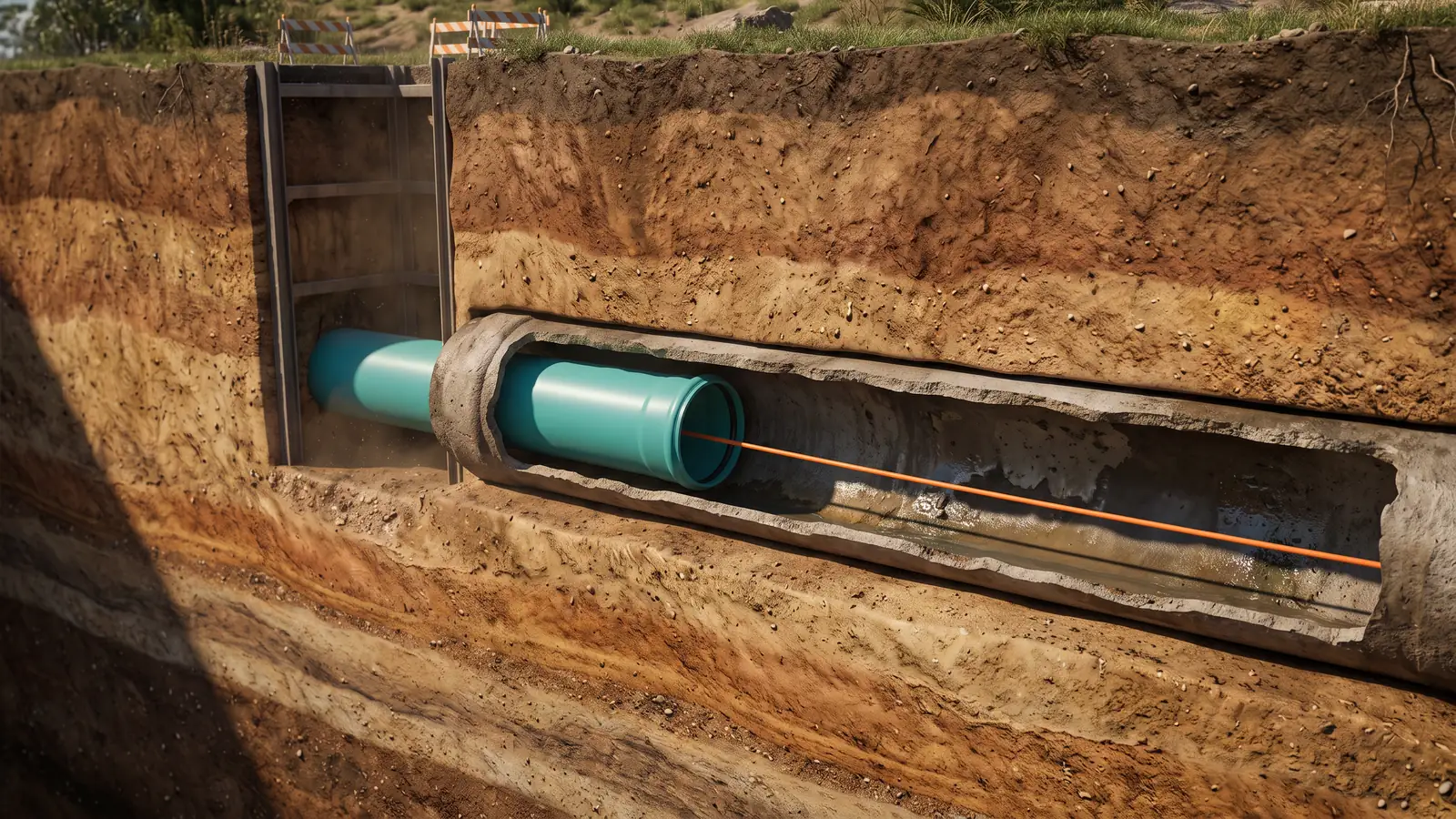
A pit is opened at one end of the old pipe. New pipe, usually plastic, is joined or fed in sections and pushed or pulled through the old pipe along its length. Spacers keep it centered.
When it is in place, the annular space between old and new is filled with grout.
Why it works
The new pipe is structural on its own, so the old pipe does not have to be sound. The grout locks everything in place and seals the old pipe’s damage. It is a well-proven method.
It can restore a failing culvert without closing the road above for long.
The trade-off
Because the new pipe has to be smaller than the old one, the inside diameter shrinks, and so does the flow capacity. Large pipes often have capacity to spare. Small ones usually do not, which is why CIPP is chosen for small laterals.
A smooth plastic wall carries water better than a rough old pipe, which can offset some of the loss.
Where it fits
Large-diameter culverts and storm drains, long straight runs and pipes where a structural solution is needed. It is less suited to runs with many bends or connections.
We recommend it where it makes sense, not by habit.
Quick answers
Is sliplining the same as CIPP?
No. Sliplining inserts a pre-made pipe. CIPP cures a new pipe in place.
Can it handle a collapsed pipe?
Only if the collapse is not too severe, since the new pipe has to pass through.
Have a pipe question?
Call (615) 952-0844 or send the form below, and we will suggest a recorded camera inspection and the options that fit.