Key takeaways
- A bursting head breaks the old pipe outward as it pulls new pipe in
- It needs an entry pit and an exit pit
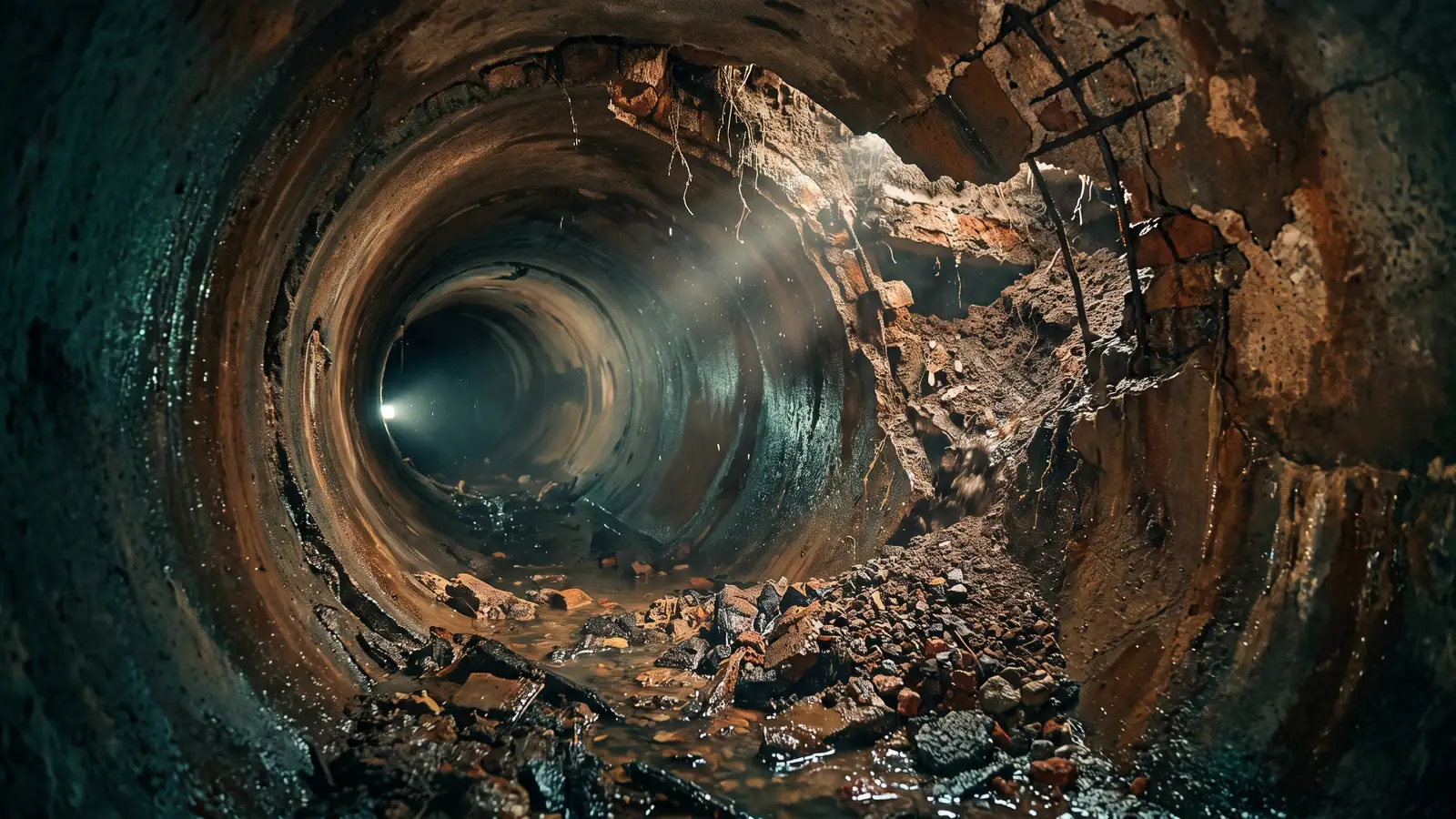
- It works on clay, cast iron, concrete and fiber pipe
- It follows the old path and grade
How it works
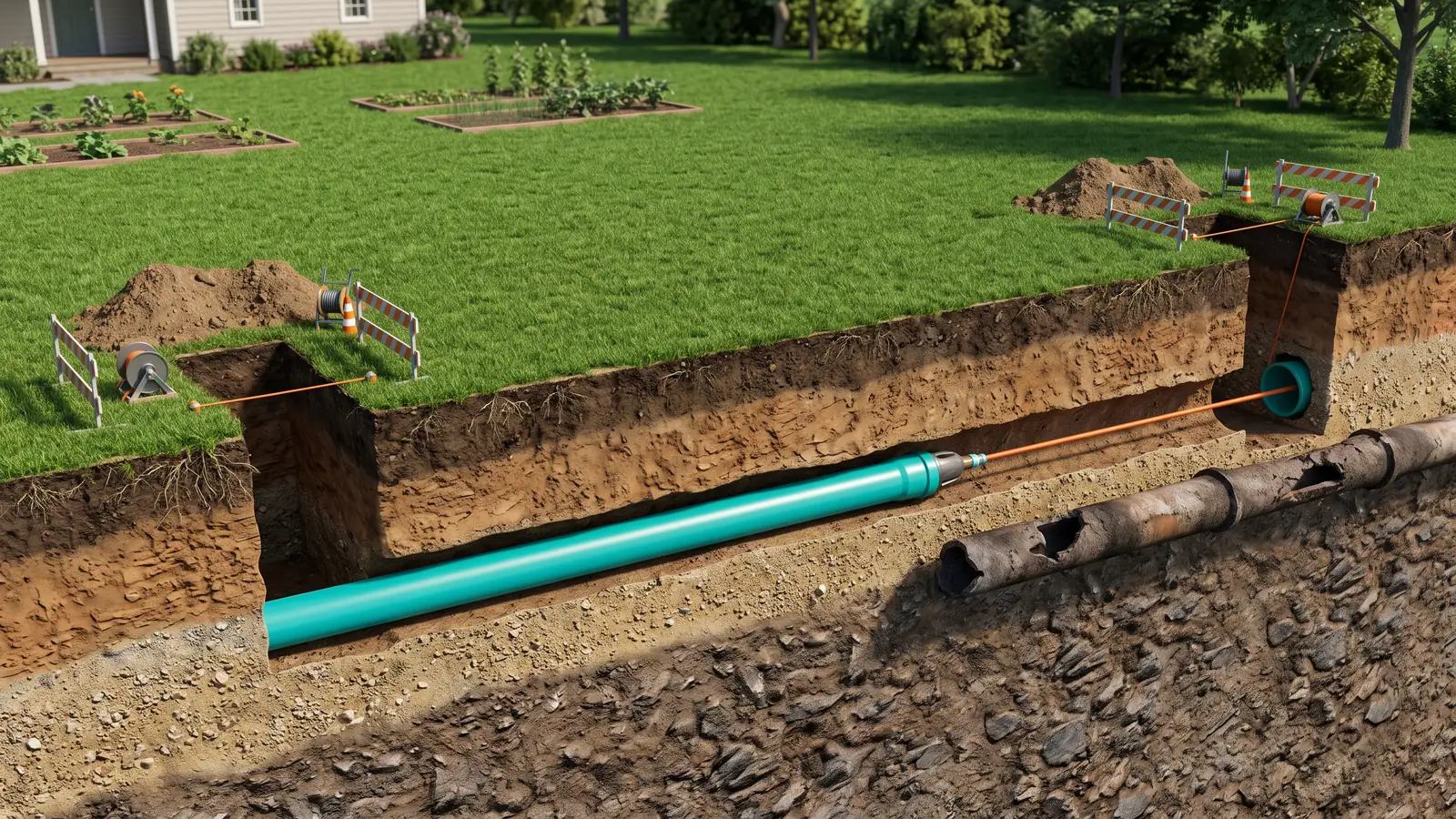
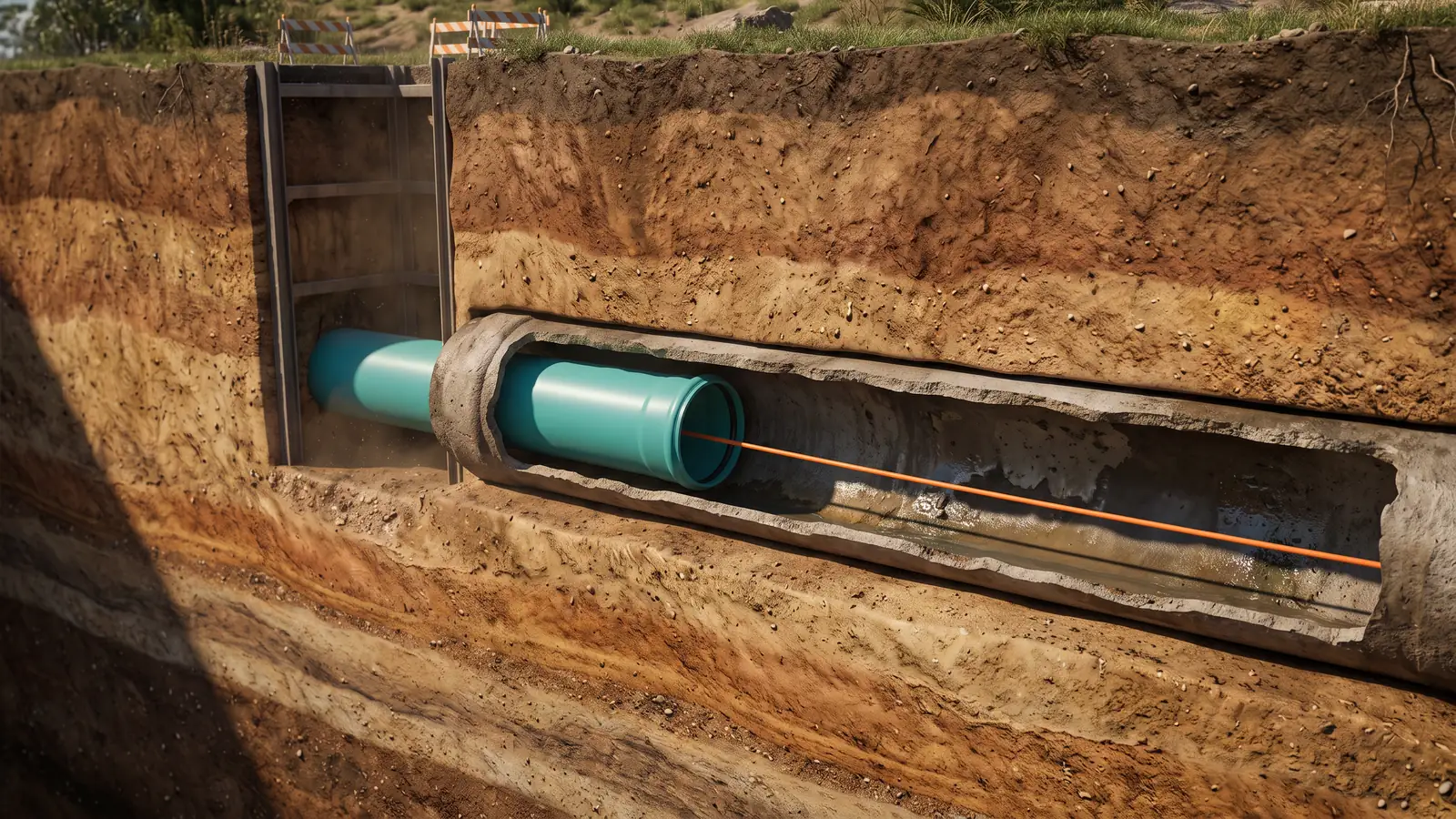
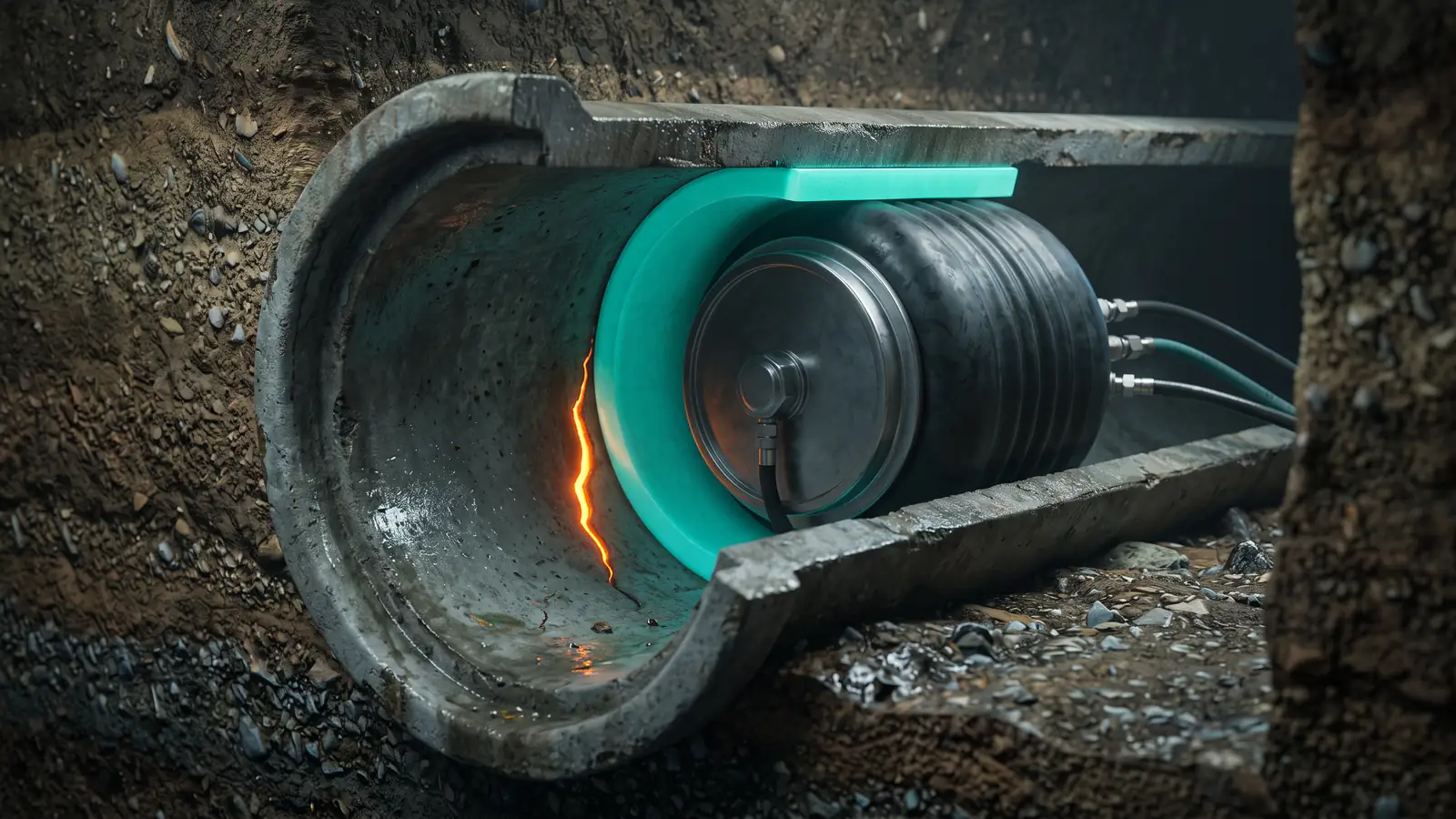
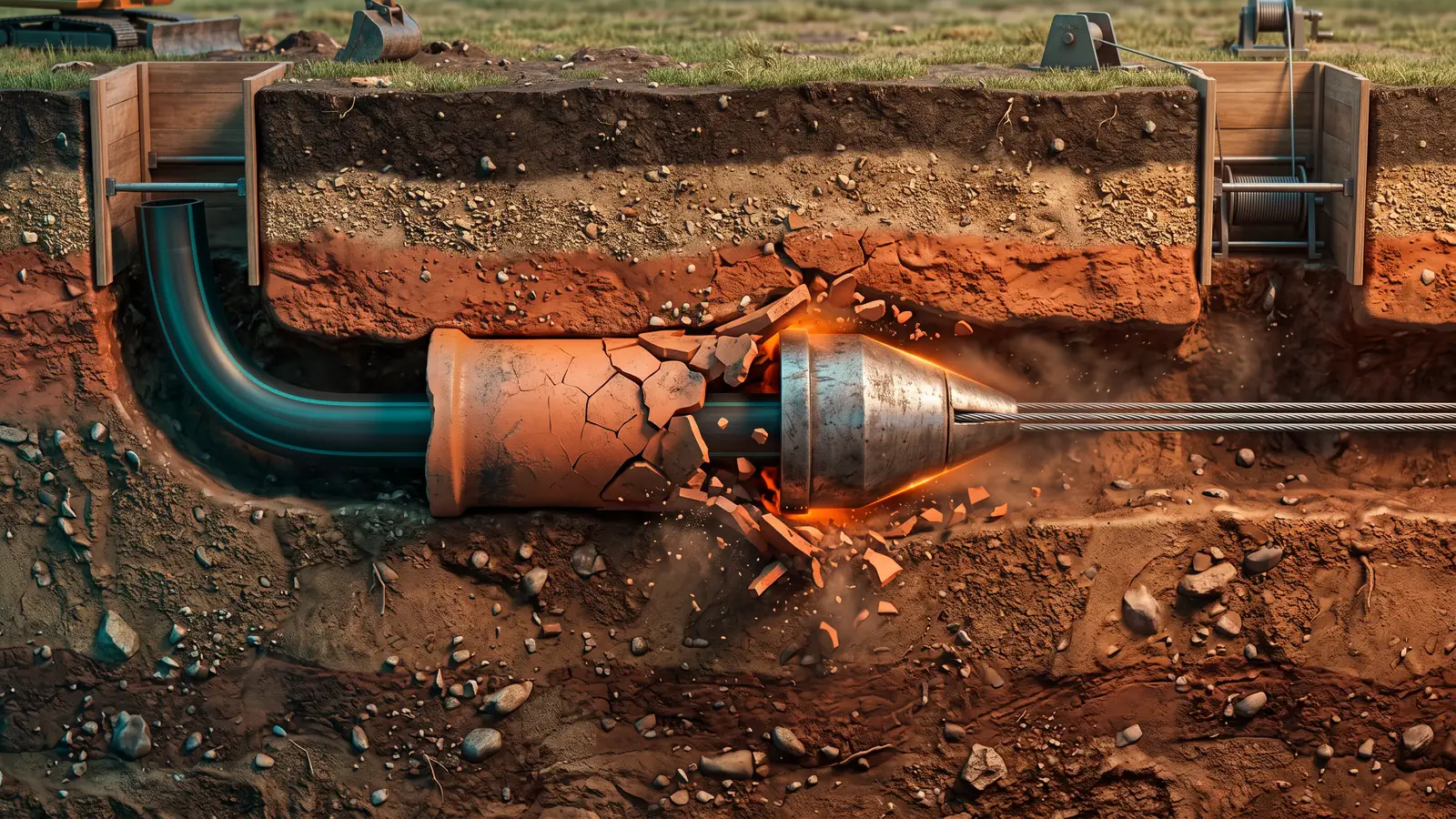
A hydraulic or pneumatic pulling system is set up at one pit and a cable runs through the old pipe from the other. A cone-shaped bursting head is attached to the cable and to the new pipe. As the cable is pulled, the head fractures the old pipe outward into the soil and pulls the new pipe into the space.
Cutters or expanders on the head help with tougher pipe materials.
What the new pipe is
New pipe is typically seamless HDPE joined above ground into one long length, or sections of strong plastic such as PVC. The new pipe can be the same size as the old one or a size larger, to boost capacity.
Connections are made at each end.
What it needs
Entry and exit pits at the ends of the run, enough clearance from other utilities and soil that can accept the fragments. Utility locates and a camera inspection come first. Runs with many connections or sharp bends can be harder.
The lawn between the pits is not dug up.
What it will not do
Bursting follows the old pipe’s path and grade. A sag in the old line will usually come with the new one, so a belly needs another fix. Where other utilities run very close, or in certain soils, another method may be safer.
We assess these questions before recommending bursting.
Quick answers
Does the old pipe stay in the ground?
Yes, as fragments pressed into the surrounding soil.
How long does a burst take?
Many runs take a day, with extra time for pit work and connections.
Have a pipe question?
Call (615) 952-0844 or send the form below, and we will suggest a recorded camera inspection and the options that fit.