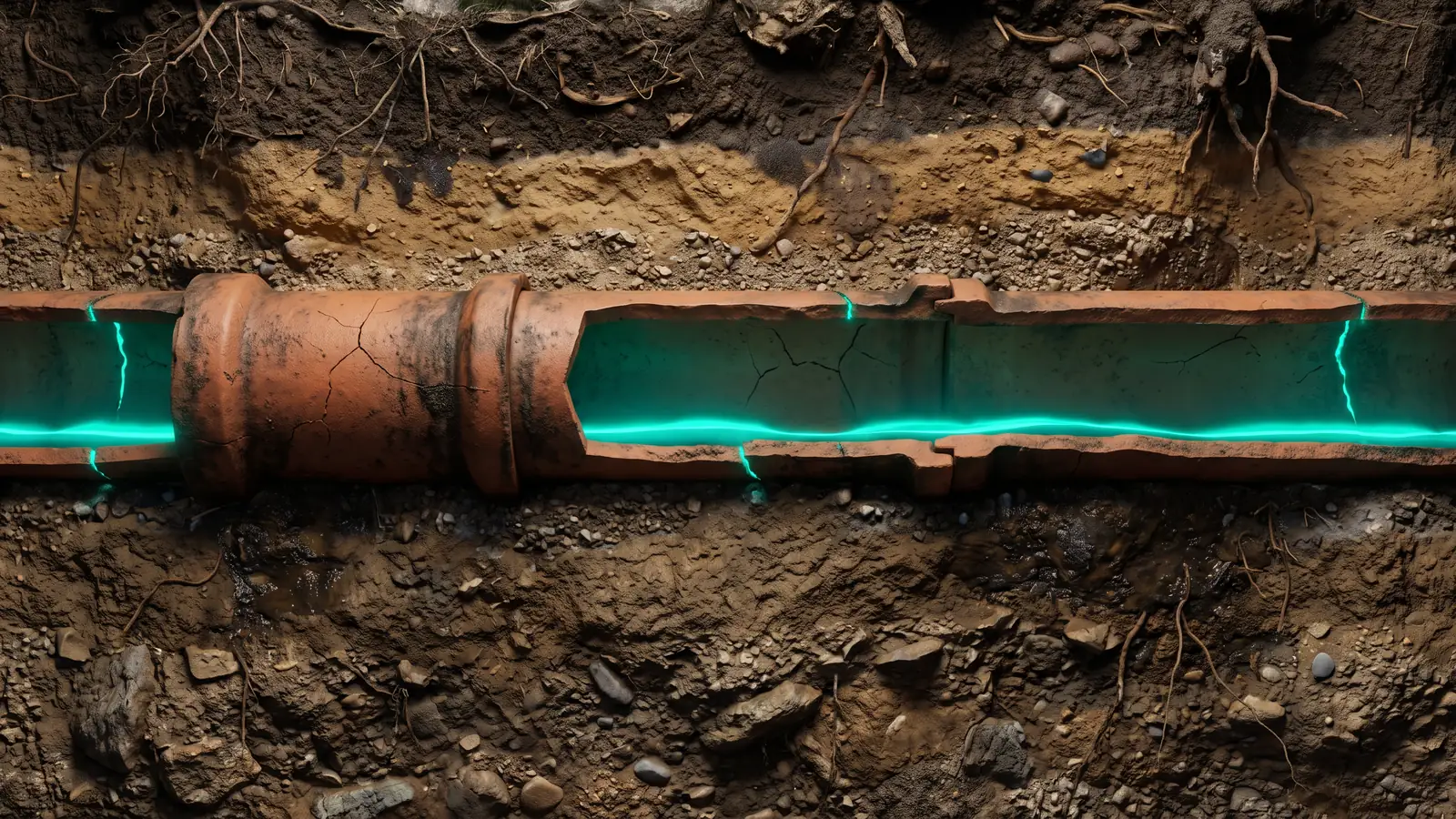
Key takeaways
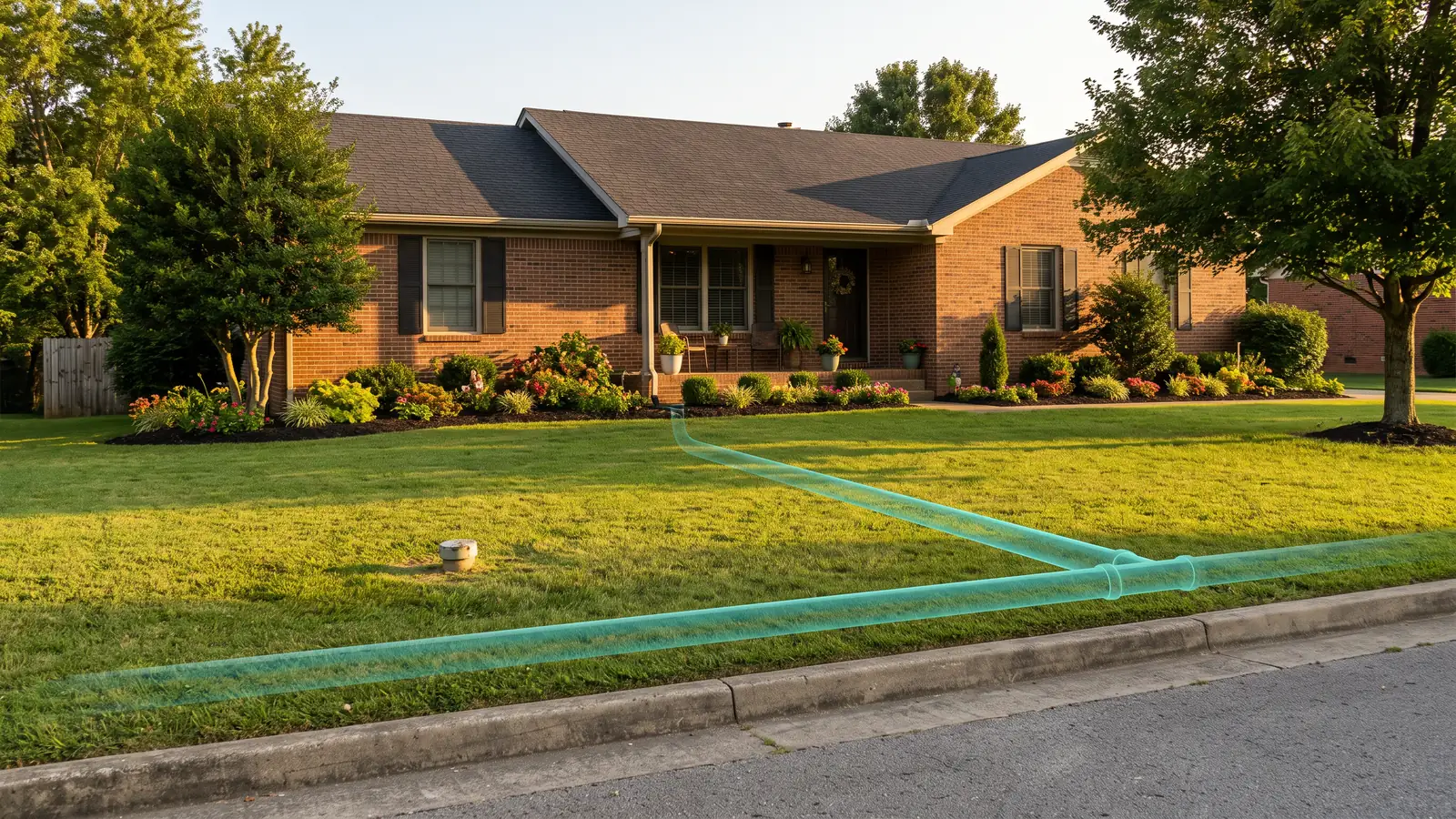
- The age of your home hints at the pipe material
- Clay and cast iron are old and long-lived but have weak points
- Orangeburg is soft fiber pipe that often fails
- PVC and ABS are modern, smooth and durable
Clay
Vitrified clay was used for sewers for generations. It resists chemicals well but comes in short sections with many joints, so roots love it. It is also brittle and can crack from loads or settling.
Lining often works well for round, aligned clay pipe.
Cast iron
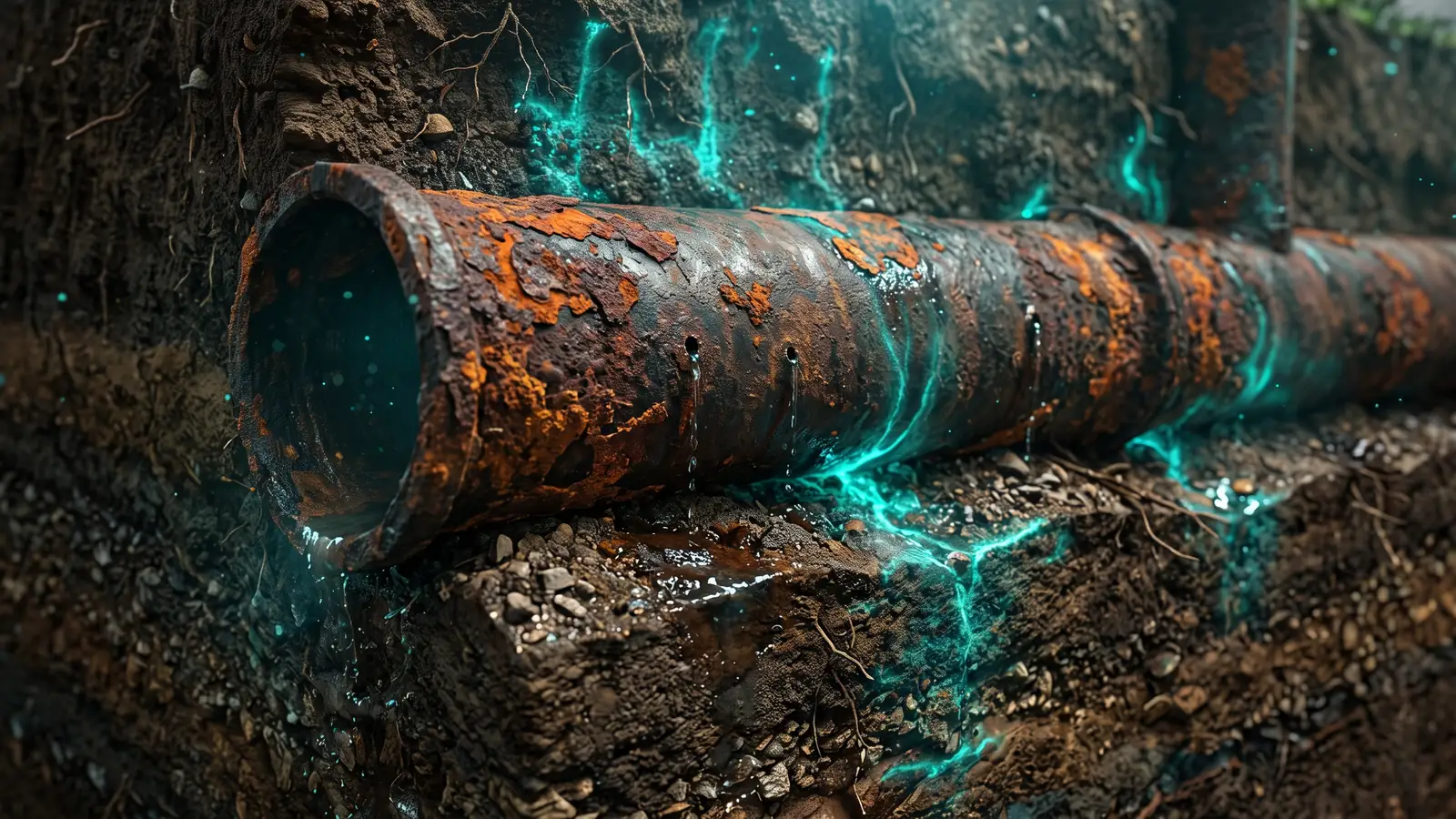
Cast iron was common in older buildings for drains and stacks and for some underground runs. It is strong and quiet, but it corrodes from the inside and can scale and pit over decades.
Descaling followed by lining or coating is often possible when the metal is still sound.
Orangeburg
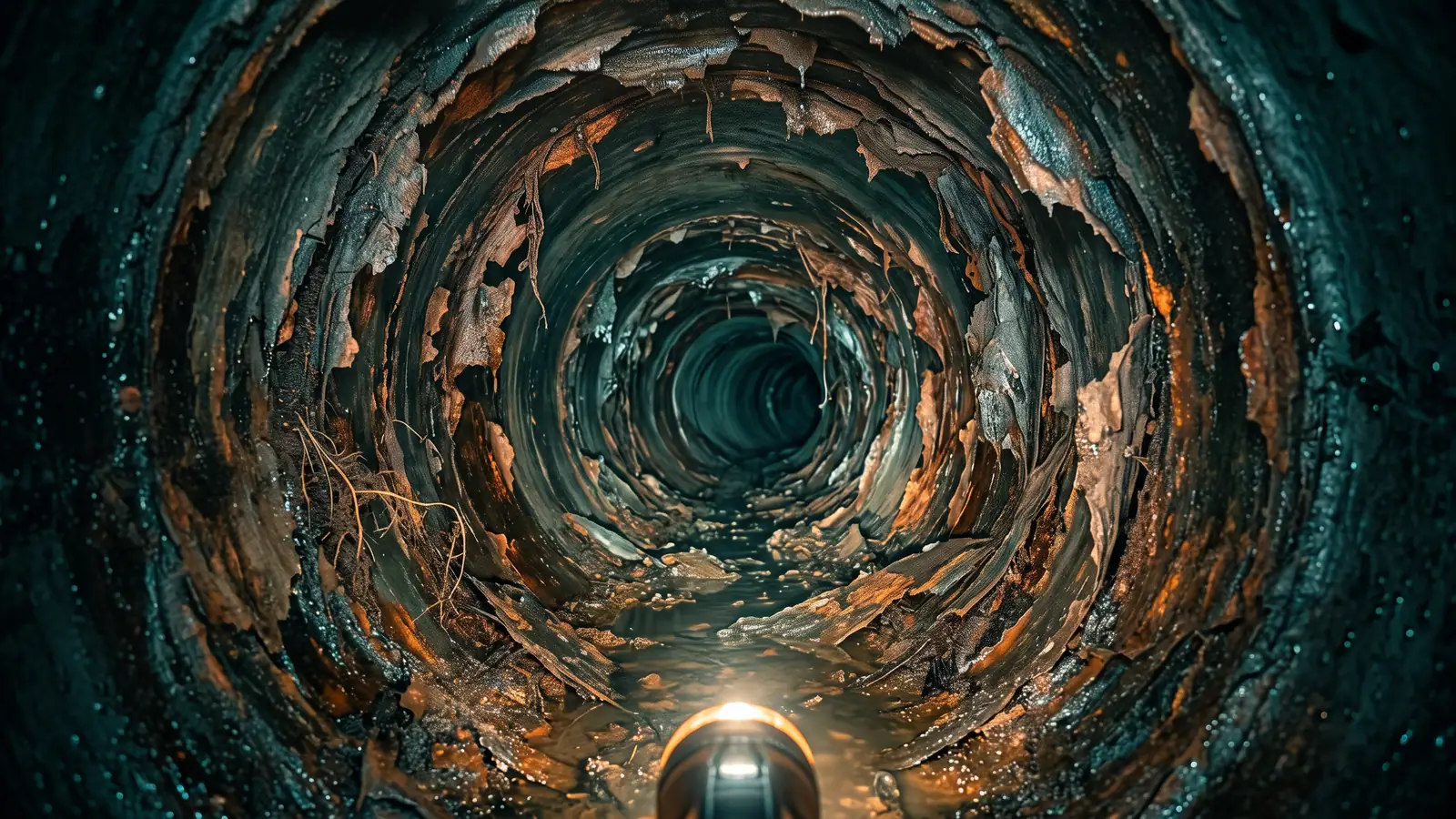
A fiber pipe bonded with pitch, used in the mid-century era, Orangeburg softens and deforms over time. It often turns oval, flakes inside or collapses. Some can be lined; much needs replacing.
A careful camera inspection is key to knowing which.
PVC and ABS
Modern plastic pipes are smooth, light and corrosion-resistant. They are common in newer homes and replacements. Problems are usually from installation, such as bellies or poor joints, rather than age.
They are usually the easiest to maintain and repair.
Quick answers
How can I tell what my pipe is?
A camera shows the wall and joints. Home age, region and cleanout appearance also offer clues.
Can different pipe types be mixed?
Yes. Many houses have repairs or additions in different materials along the same line.
Have a pipe question?
Call (615) 952-0844 or send the form below, and we will suggest a recorded camera inspection and the options that fit.