Key takeaways
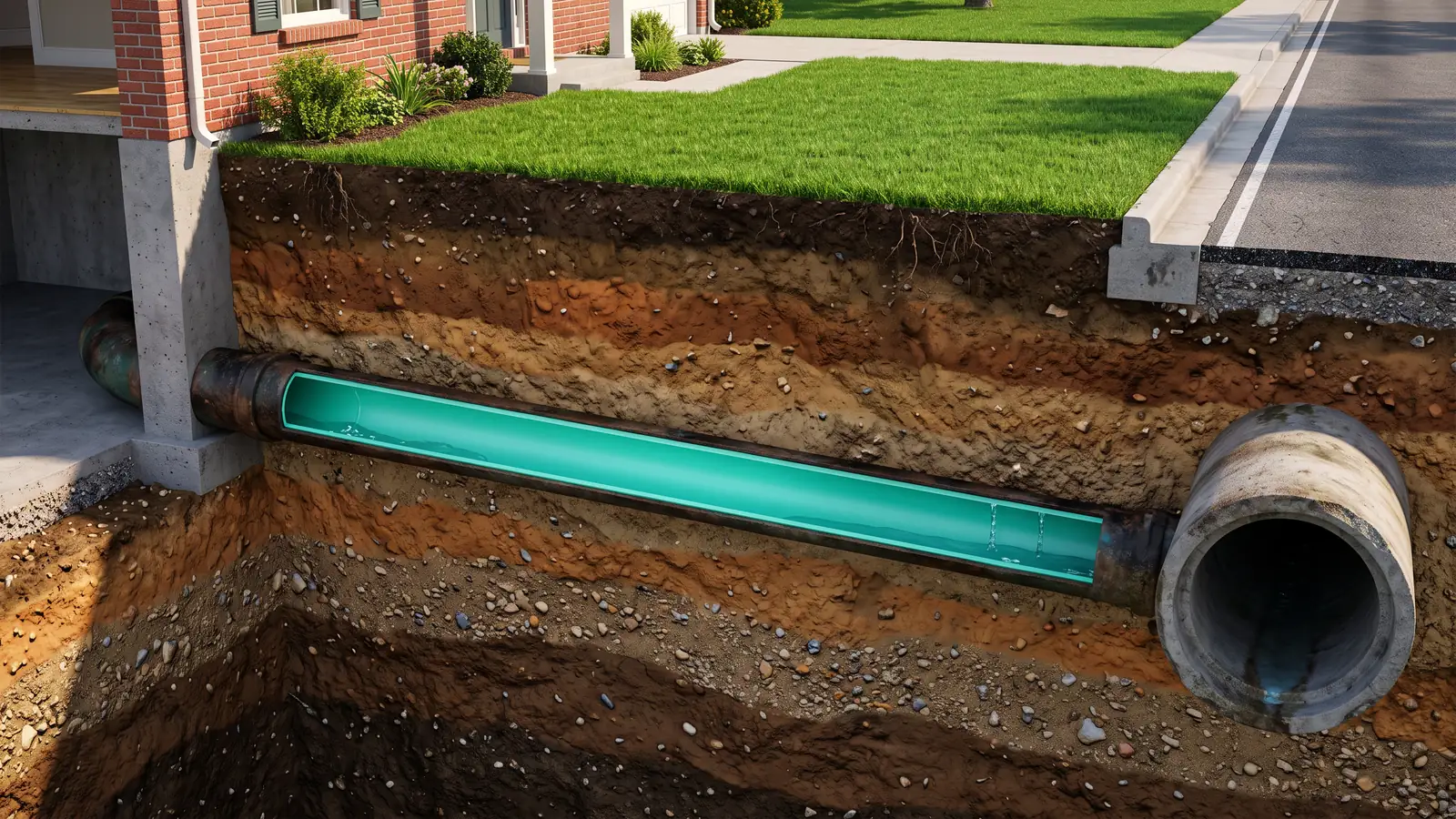
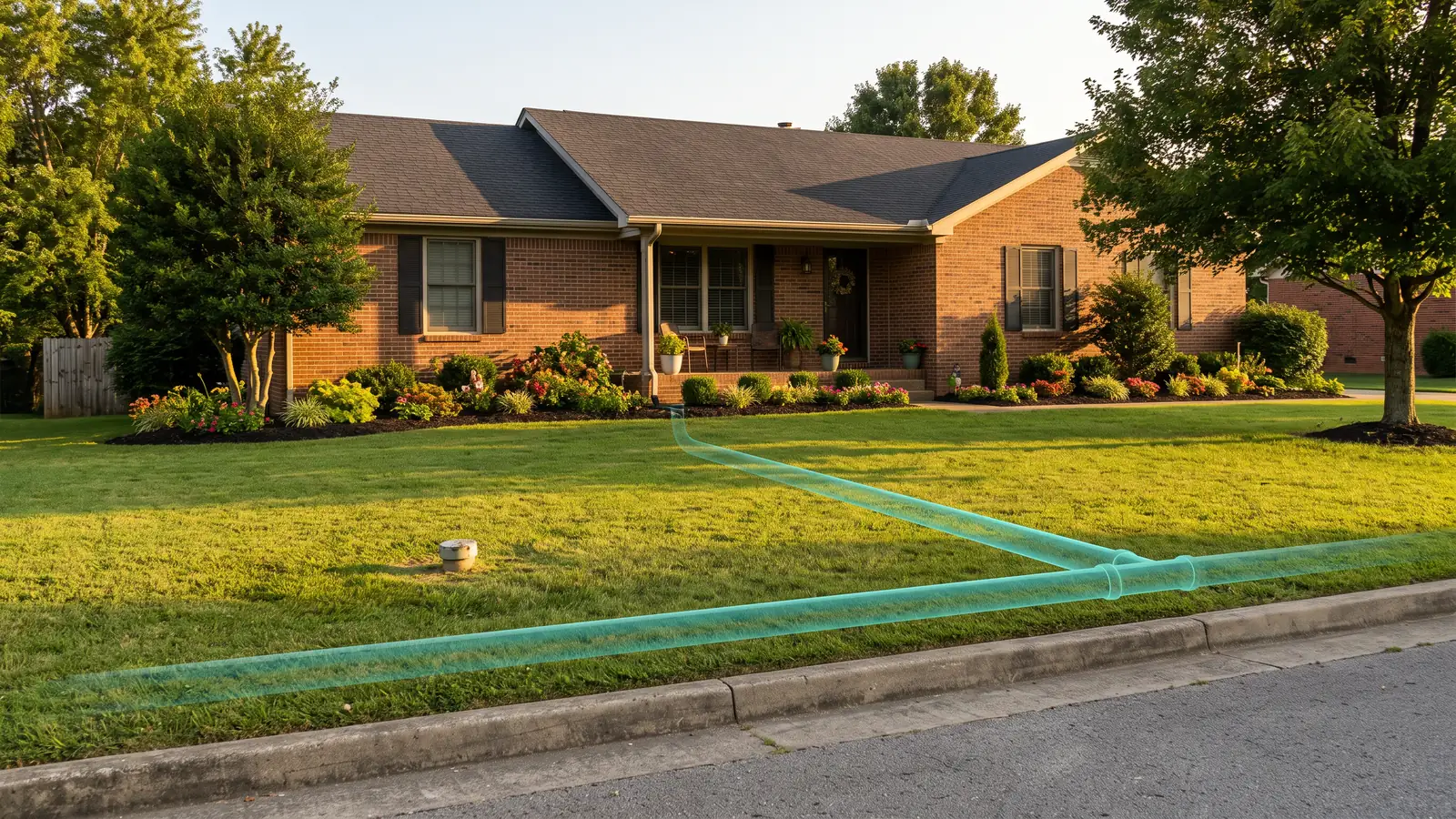
- The lateral runs from the house drain to the sewer main
- It relies on slope, not pressure, so gravity carries waste
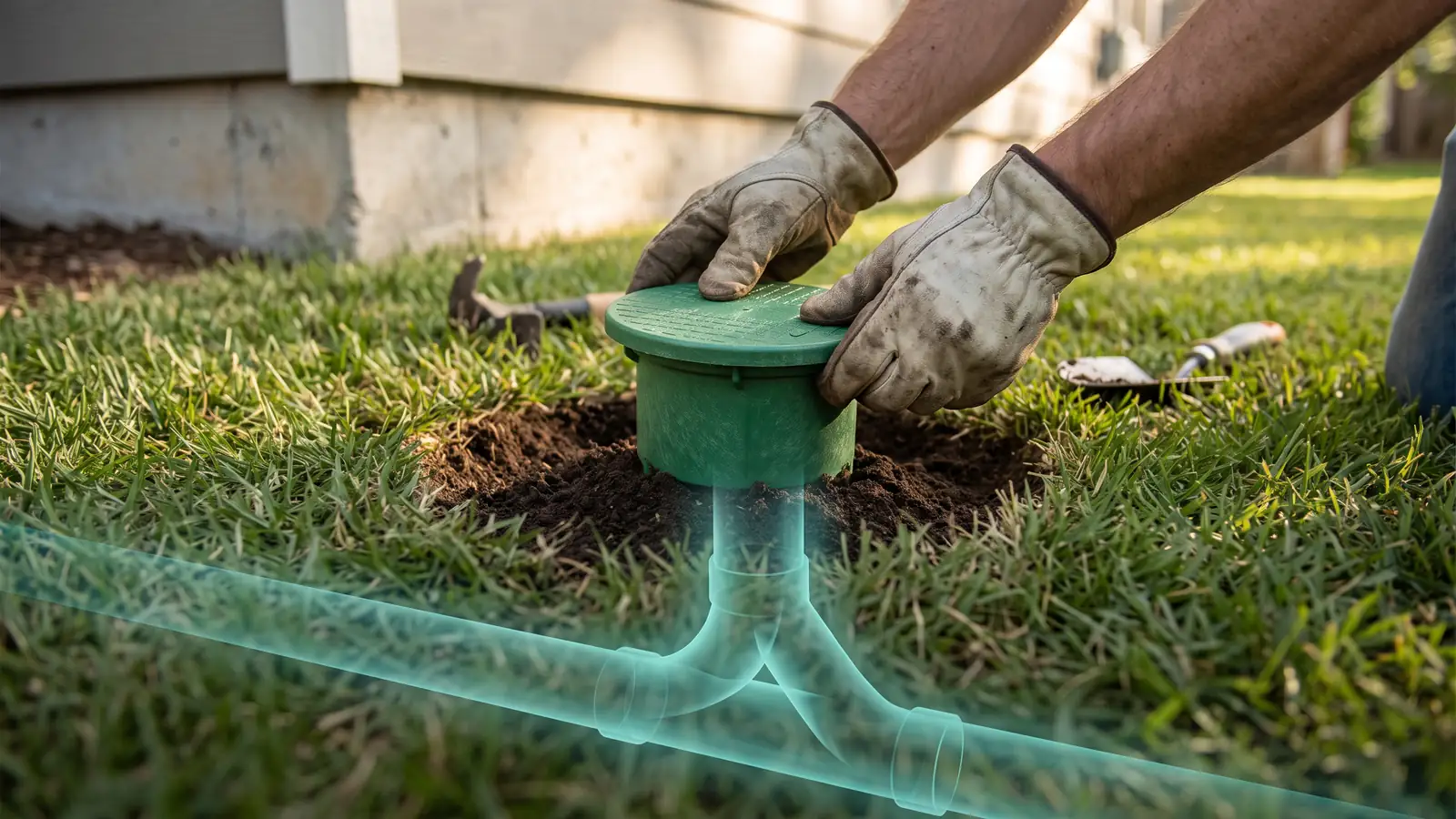
- A cleanout gives direct access to the line
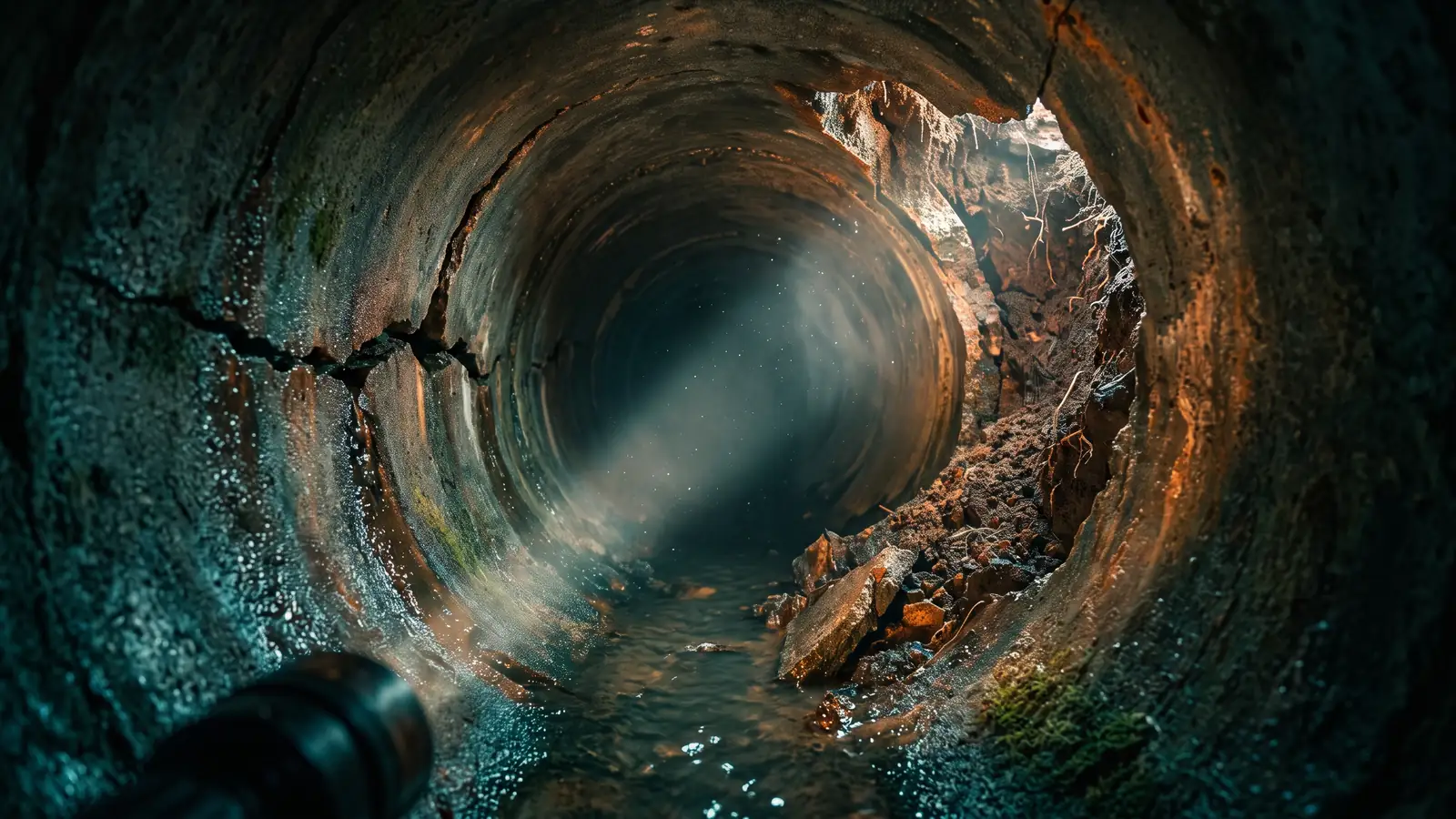
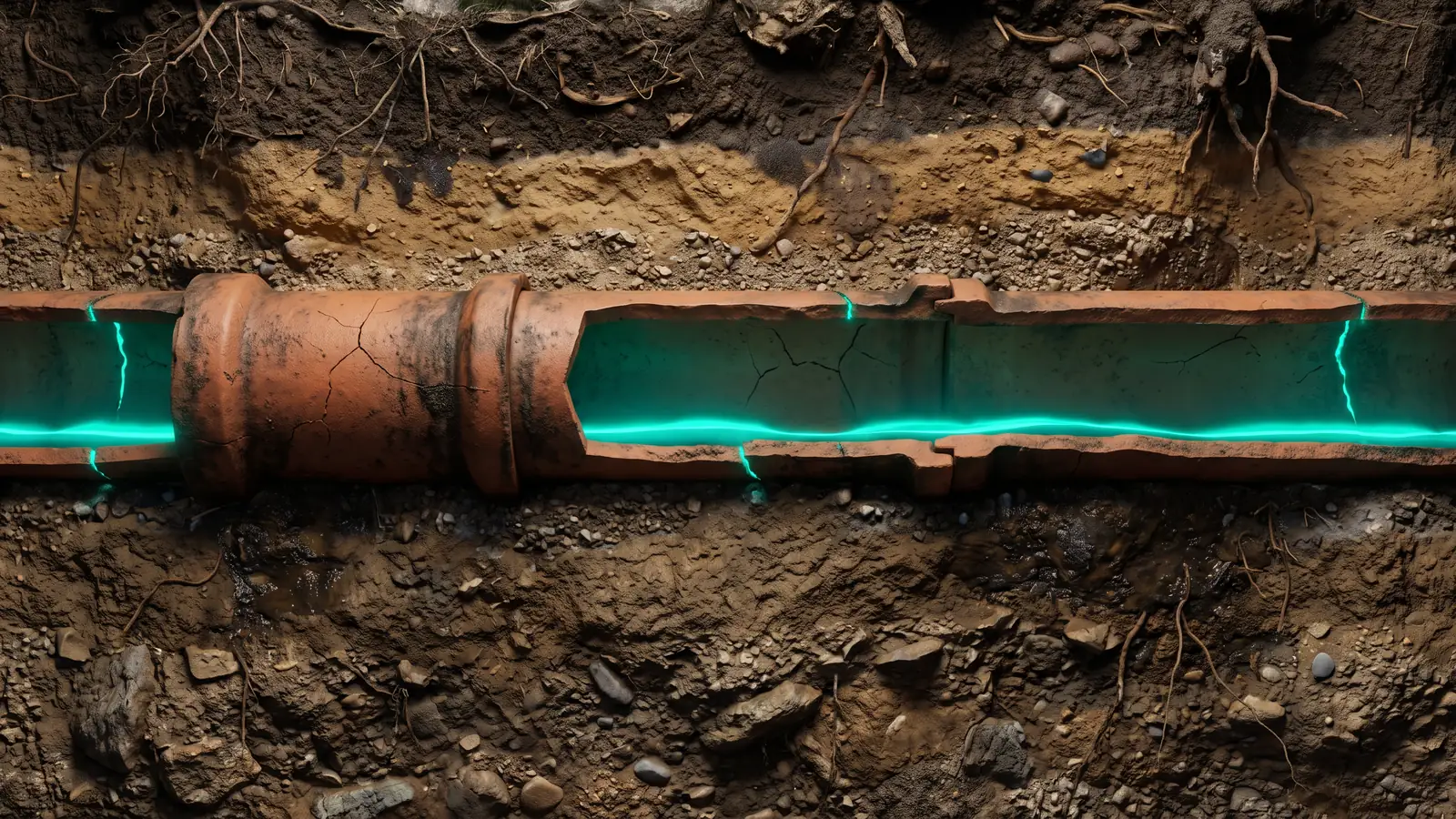
- Most failures come from age, roots and shifting soil
The basic layout
Every fixture in your house drains into branch lines that join a main drain under or beside the house. That drain leaves the building as the sewer lateral and runs underground, usually to the street, where it connects to the public sewer main.
Along the way it may pass under lawns, driveways, trees and sometimes other utilities. Its length can be a few dozen feet or well over a hundred.
Gravity does the work
Sewer laterals are not pressurized. They work because the pipe slopes slightly downhill all the way to the main. If the slope is lost, water pools and solids settle. That is why bellies cause so much trouble.
Vents let air in behind the flow so wastewater can move without gurgling.
Cleanouts
A cleanout is a capped pipe that gives direct access to the lateral. Many homes have one near the house or at the property line. It is the front door for cameras, cleaning and lining. If you do not have one, it is a good thing to add.
A two-way cleanout allows access in both directions along the line.
What goes wrong
Old materials crack and corrode. Joints open, roots get in, soil shifts and loads from above can crush pipe. Grease, wipes and other items slow flow and catch on rough spots.
A camera is the quickest way to see which problem you have.
Quick answers
How long is a typical lateral?
It varies widely with the lot, from a few dozen feet to well over a hundred.
Where does my lateral end?
It typically ends at the connection to the public main. Who owns which part varies by utility.
Have a pipe question?
Call (615) 952-0844 or send the form below, and we will suggest a recorded camera inspection and the options that fit.