Key takeaways
- CIPP stands for cured-in-place pipe
- A resin-soaked liner hardens inside the old pipe to form a new one
- It is installed through existing access points with little or no digging
- It suits pipe that is still round and mostly intact
The short version
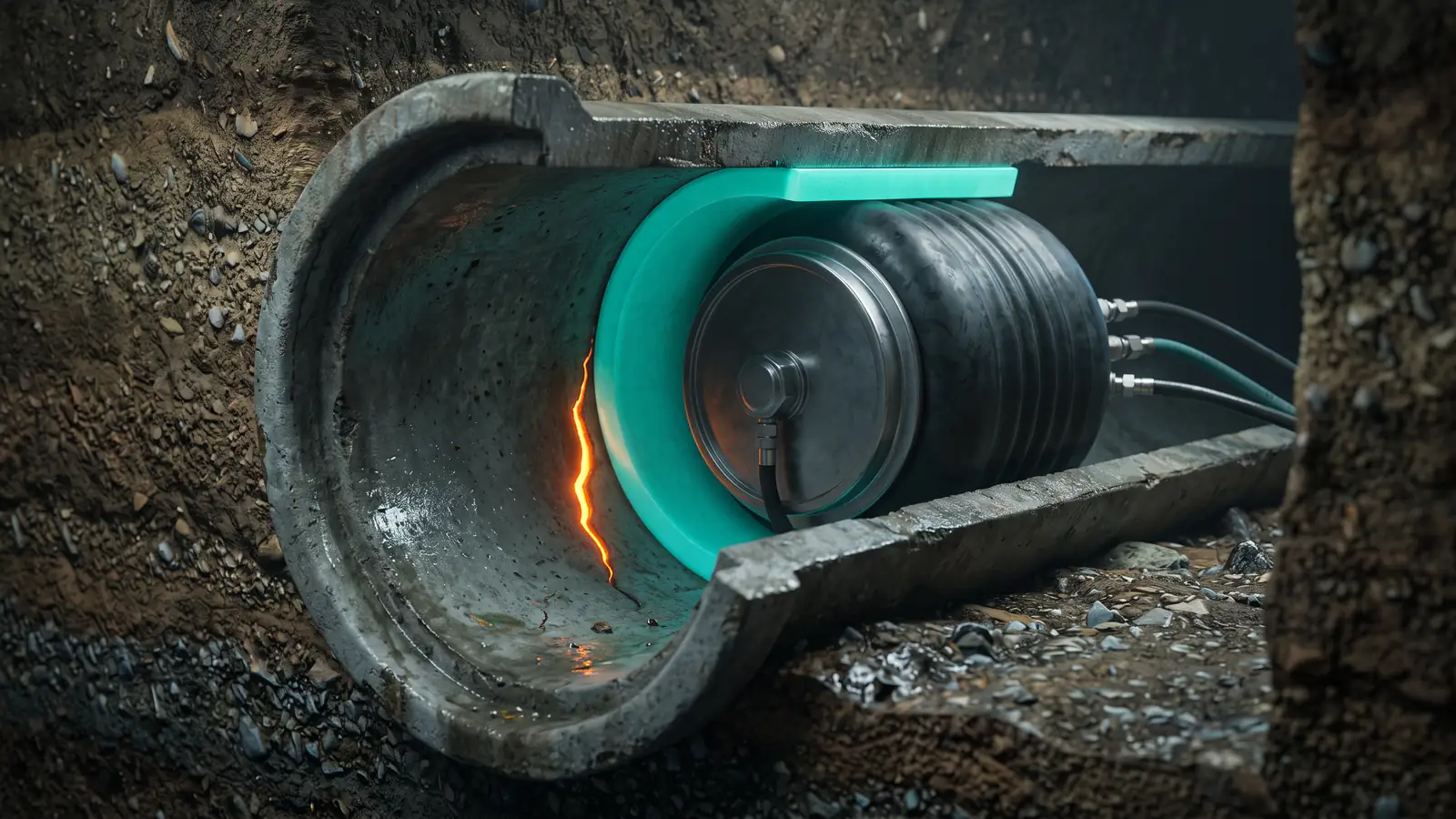
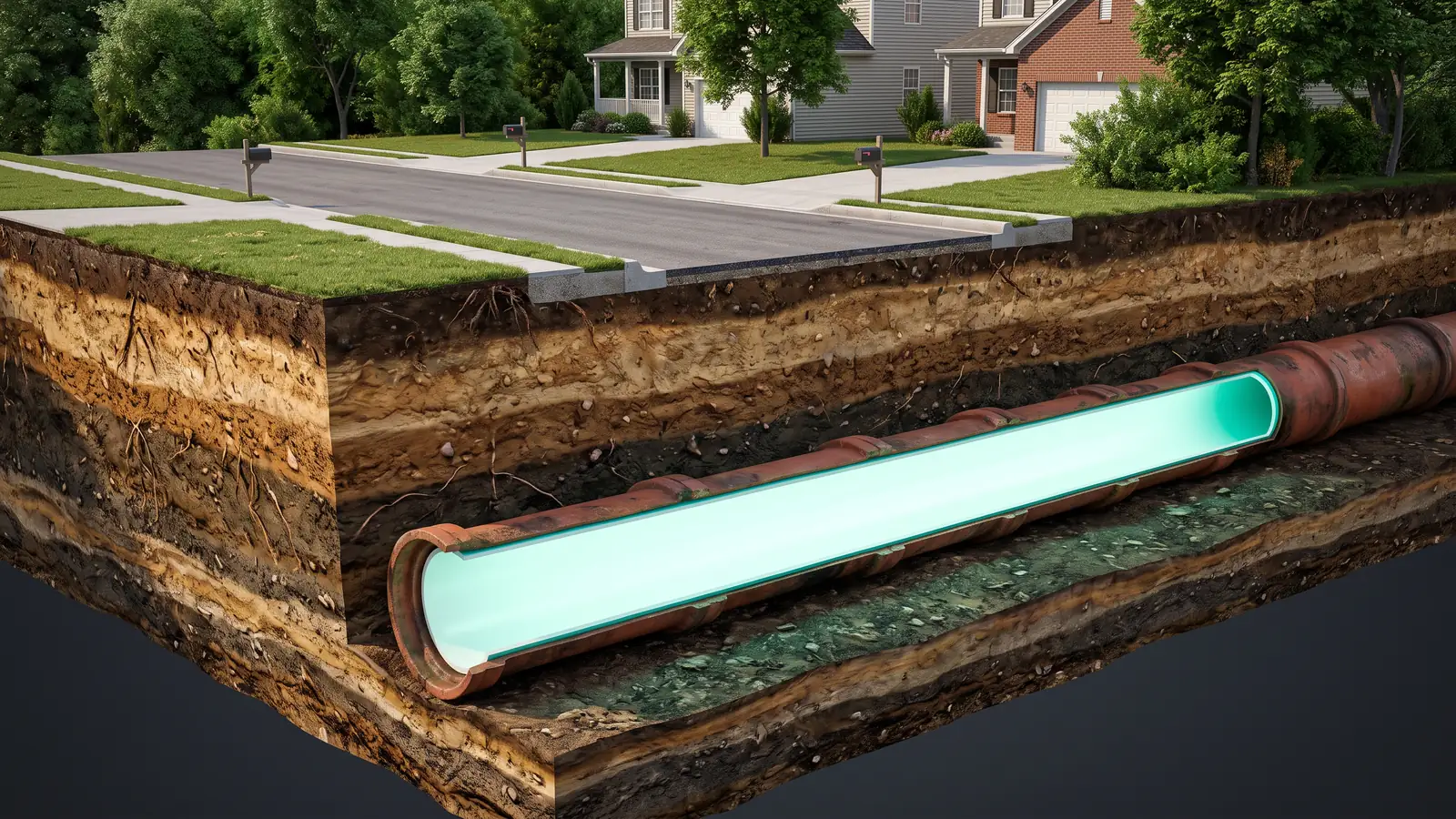
Cured-in-place pipe lining, usually shortened to CIPP, is a way of repairing an underground pipe from the inside. A flexible tube made of felt or fiberglass is saturated with resin, pulled or inverted into the old pipe and pressed against its walls. Once the resin hardens, the tube becomes a new, seamless pipe inside the old one.
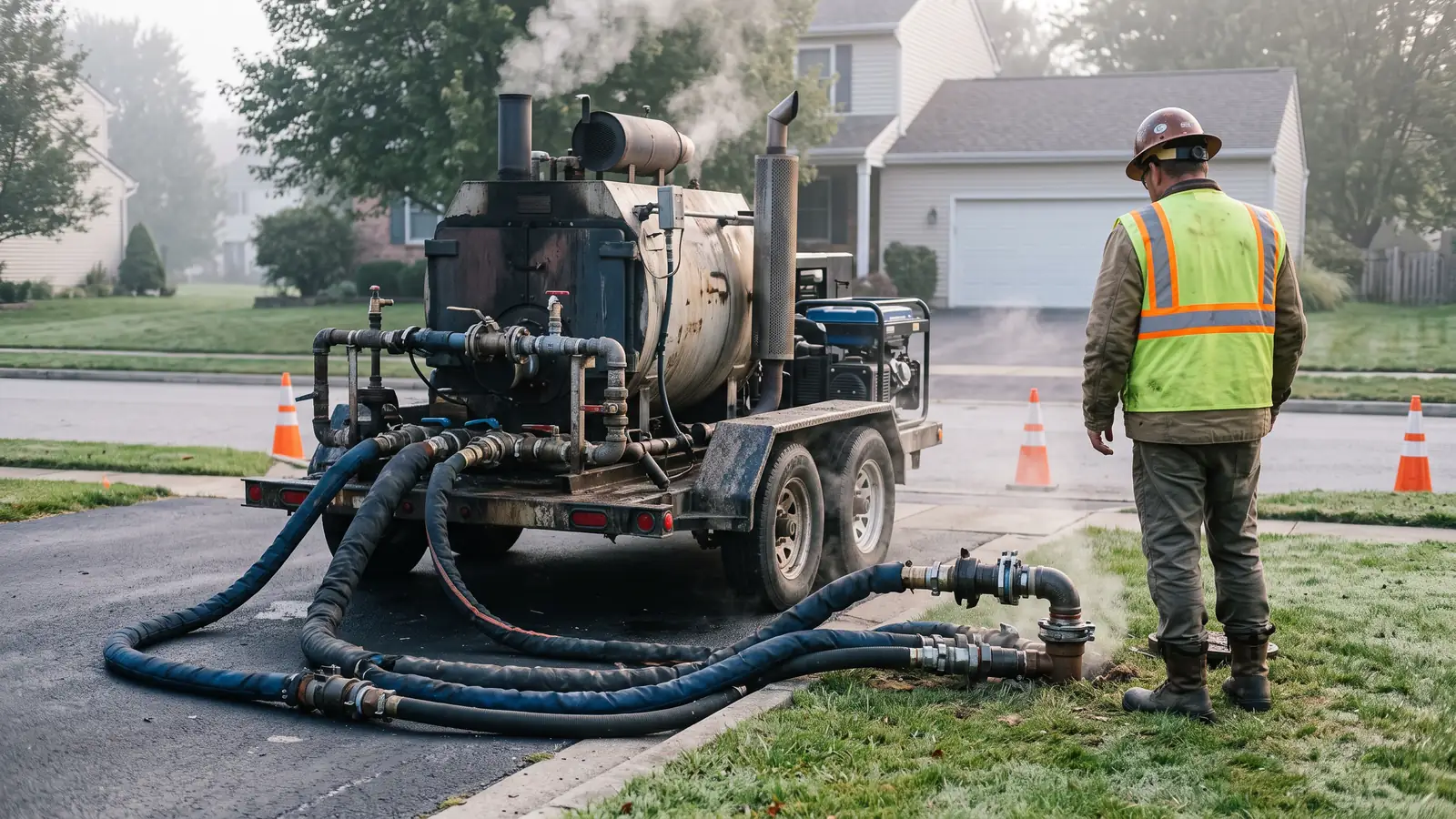
Because the work happens through a cleanout, a manhole or a small access point, there is no long trench through the yard, the driveway or the floor. That is the main appeal: the pipe gets fixed and most of the property stays as it was.
What it can repair
CIPP is a good answer for cracks, open joints, root entry, corrosion and general wear in a pipe that is still round and in place. It is widely used for sewer laterals, building drains and stacks, mains and storm pipes. The smooth, jointless interior also helps flow and gives roots and debris far fewer places to catch.
It is used on many pipe materials, including clay, cast iron, concrete and fiber, and on pipes from a few inches across to several feet.
What it cannot do
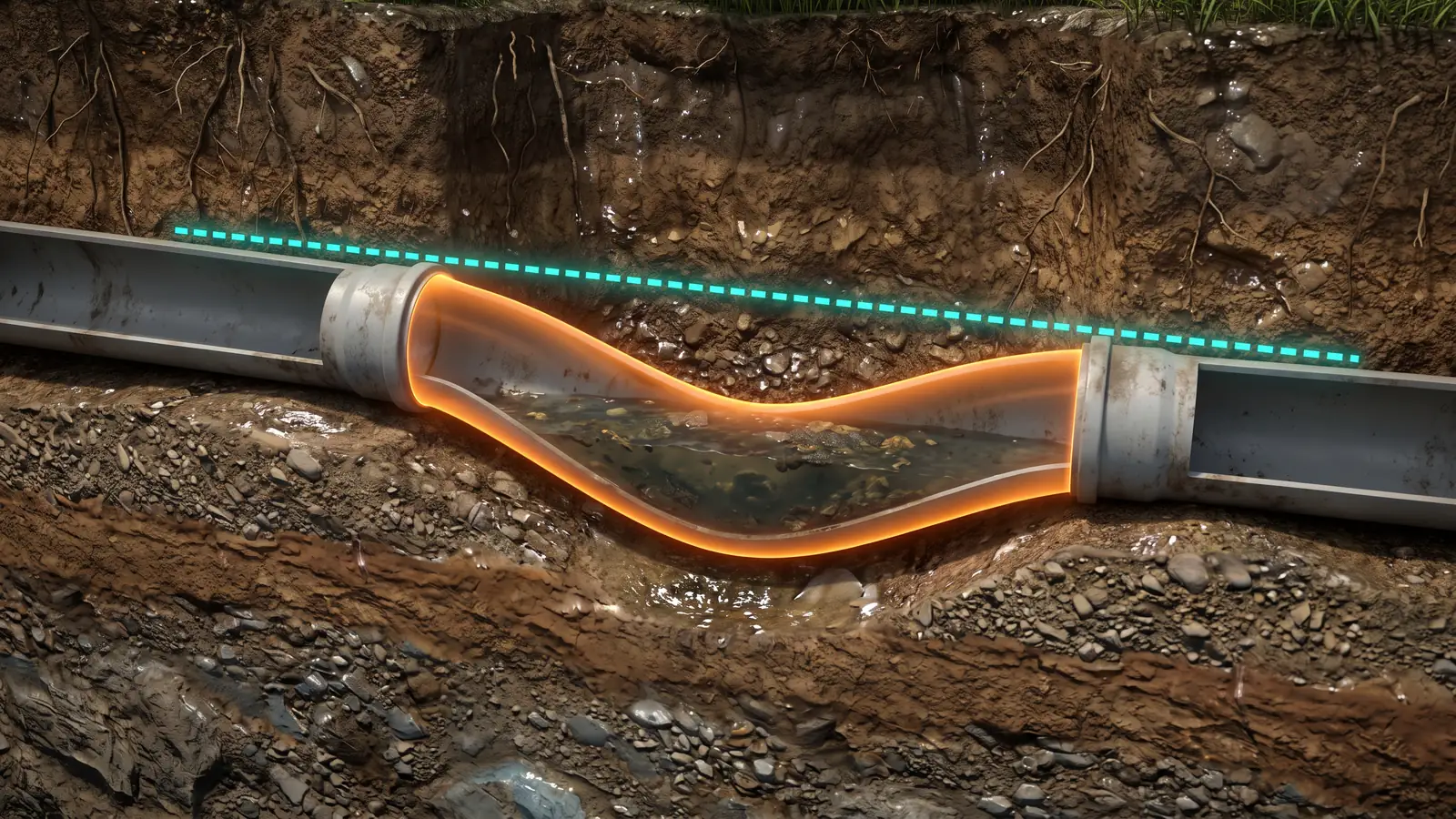
A liner follows the shape of the old pipe. It cannot lift a sag, straighten a pipe that has shifted far out of line or rebuild a pipe that has collapsed. In those cases the pipe has to be replaced or re-laid. A camera inspection shows which situation you have, and an honest contractor will tell you when lining is not the right method.
Lining is also not a magic seal for everything around the pipe. Voids in the soil or damage to a public main sit outside what the liner can do.
What to expect
A typical job starts with a camera and a cleaning, then the liner is installed and cured, side connections are reopened and a final camera pass records the result. You will not be able to use the plumbing during the work, and we tell you the window beforehand.
Industry standards commonly describe liner designs of around 50 years, but no repair is promised for life. What you can expect is a smooth new pipe with a recorded result.
Quick answers
Is CIPP the same as pipe relining?
Yes, people also say pipe relining or trenchless lining. They all describe putting a new liner inside an old pipe.
Do I need to dig anything up?
Often not. A cleanout or small access point is usually enough. Some jobs need a small pit at one end.
Have a pipe question?
Call (615) 952-0844 or send the form below, and we will suggest a recorded camera inspection and the options that fit.